| Author | |
|---|---|
| Imprint | |
| Publication Year | 2015 |
| Language | Marathi |
| Edition | 1 |
| Binding | Paperback |
| Pages | 86 |
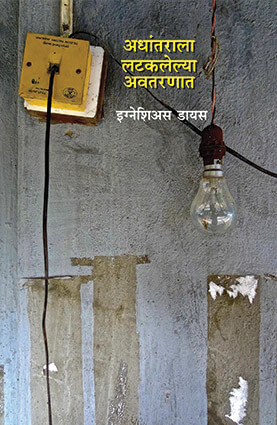
Andhantarala Lataklelya Avtarnat
$10
Out of stock
About the Book
This is Ignatius Dias’s first book of poems published by PoetryPrimero.
Related products
-
-
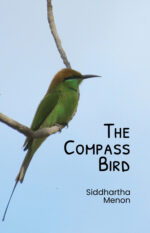
The Compass Bird
$15About the Book
Observant and meditative, lit with gentle whimsy, Siddhartha Menon’s work on the animal world leads us from ornithology to ontology, detail to dazzling insight, in a wingbeat. Here is a book in which the reverie of snails, the ‘mynahness’ of mynahs, the unhurried gaze of nilgai, becomes a way to reflect on all the eternal questions—time, belonging, love, purpose, a world ‘stained with stillness’, in which ‘those who attend have the last word’. One of the most delightful new books of poetry I have read this year.
– Arundhathi Subramaniam
-
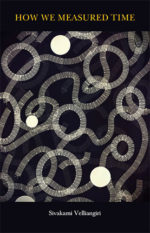
How We Measured Time
$12About the Book
“How we Measured Time by Sivakami Velliangiri, gives us poetry of a childhood remembered, perhaps now and then fictionalised –memory is such a dicey thing. The poetry is rooted in nostalgia, memories rooted in the house and the mill compound she grew up in, and yet there is no sentimentality attached to it. There are moments when the poetry is uplifting, her mother identifying ‘serpents/ by the design of their costume’, a grandfather lifting her ‘to the coastline of his shoulders’. And a past advances towards the reader, the silence before a solar eclipse, the hubbub of a Kerala elephant-chase.’
– Keki Daruwala
-
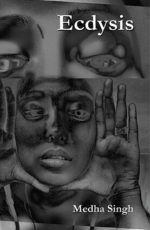
Ecdysis
$16About the Book
After reading the book, one is left with a haunting feeling of something that cannot be revived but lived only through the traces that it leaves in the mind. The poet dives deep into the labyrinths of time to fish out moments that are close to her.
Details that would otherwise be overlooked take on a life of their own and narrate their stories for those who are willing to listen. Medha Singh’s poems demand the reader to not be a mute spectator but feel these snippets of memories as much as they yearn to share. Powerful imagery and the attempt to capture them through words has been done beautifully. – Semeen Ali
For Medha Singh, the poem is often a subterfuge for story; the desire to be a poet is a circularity of purpose; and poetry itself is the beginning and end of trust. Prickling in all directions, uneven, at times unsteady, she chases “itinerant darkness”, achieves rare moments of equanimity, even grace. Mundane reality is a fitting anti-climax, closure an escape.
-
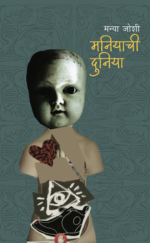
Maniyachi Duniya
$16About the Book
Maniyachi Duniya is a place where every poem begins in one register and slips, almost mischievously, into another. A phrase might start in the noise of a Mumbai street, brush against an old folk cadence, then suddenly tilt into the rhythm of an Instagram reel or a meme you half-remember. This referential drift isn’t random; it is the way we actually live now, surrounded by isms, social-justice vocabularies, shifting identities, and constant tech updates that rewrite our attention every few hours. Each poem absorbs that swirl and lets it tilt toward something unexpected, sometimes absurd, but always resonant and strangely tender. And though the work is laced with wit, it’s never sarcasm. Its irony is gentler. It is the kind that knows its own limits, that stays aware of the fragility of meaning, that smiles at the world without dismissing it. The delight of these poems comes from how they recognize the chaos of the present moment and still manage to turn each reference, each tonal slip, into a small, generous surprise.