| Author | |
|---|---|
| Imprint | |
| Language | |
| Edition | |
| Publication Year | 2018 |
| Binding | |
| Pages | 114 |

$12
Out of stock
About the Book
Ra Sh’s poems stand out in the world of Indian poetry in English because of their uniqueness in attitude and style. He has an eye for apt metaphors and ample adjectives that articulate the semantics of violence that have come to define our times: political, patriarchal and communal. The intensity of his concern perfectly matches the sharpness of his images. It is no wonder that his poems often seem like a ritual procession of self-flagellating devotees of a heartless god doling out selected torments or like aesthetic lessons in the anatomy of gore exposing the visceral asymmetries of existential angst. And during all the painful coitus, his poetry sings, yes, sings in many stabbing tongues invoking conversations in blood.
– K. Satchidanandan
Related products
-

First Infinities
$12About the Book
Hell, or a state very much like it, does feature in Nambisan’s poetic underworld, which is deep, intricate and enticing. …… – From the Preface by Adil Jussawala Nambisan’s view of humankind is bleak, his view of the possibilities of poetry even bleak
-

Zingonia Zingonechya Kavita
$10About the Book
b.1967 is an internationally well-known Marathi poet, editor, publisher and translator. His published works include Chautishiparyantchya Kavita Poems Till Thirty-Four, Thambtach Yet Nahi Just Cant Stop and Ya Roommadhye Aale Ki Life Suru Hote The Moment You Enter This Room, Life Begins. His poems have been translated into English, French, Spanish, German, Urdu, Arabic, Gujarati, Bengali, Hindi, Oriya, Tamil, Telugu, Kannada and Malayalam. The celebrated poet and translator Dilip Chitre translated Chautishiparyantchya Kavita into English and titled the book Virus Alert which then has been translated into Spanish-Alarma De Virus by Zingonia Zingone and in Irish as Folireamh Vris by Gabriel Rosenstock.
-
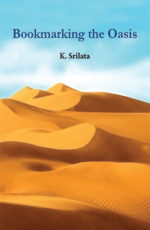
Bookmarking the Oasis
$15About the Book
The poems in Bookmarking the Oasis slide between water and land as they reflect on boundaries, partings, and the identities thrust on us. Luminous, quiet, courageous, Srilata’s poems plunge into the poetics of the everyday, recording fugitive moments with humour, irony and compassion. Nothing escapes the poet?s eye, whether the classroom’s tyranny for both teacher and taught, the blindness of experts, the vulnerabilities of childhood, or the volatile interiors of the human mind. Some poems draw on other poets’ voices, beginning conversations and uncovering strange resonances. Connecting it all is the image of the oasis, unexpected, delicious; a serene, fluid clearing in the mind, bookmarked for later, that allows poetry – and everything else – to happen
-
-
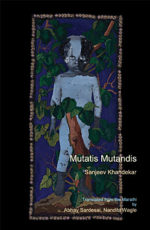
Mutatis Mutandis
$10About the Book
Through sex-dolls and addictions, for whom poetry can be just another narcotic throbbing in your vein. Khandekar’s man has stretched himself to the limits of the Machiavellian primate, modifying his behaviour and absurdum to fit in with the changing patterns of a world spinning out of control on the wheel of progress. Meet the ghost in the machine Sanjeev Khandekar’s poetry grins impishly, then socks you in the eye. It makes you feel horns on your head and inspect your skin for green stripes. Khandekar breaks conventions of belief, language and genre to offer a world with no certainties, where you are just a gob of self-awareness floating in a matrix of virtual reality, mutating every moment to balance your inner needs with social expectations. You are the Mutatis Mutandis Man the human ‘with necessary changes’ carried out the modified man tossed between inscrutable science and enigmatic religious faith, the creature who gropes for love and creativity that may lure you towards self-destruction. Meet Khandekar’s Monster and see if he seems familiar.
Khandekar’s poetry, like his art, is disturbingly unconventional; and Abhay Sardesai and Nandita Wagle’s excellent translation from Marathi now brings it to the English reader.
-Antara Dev Sen -
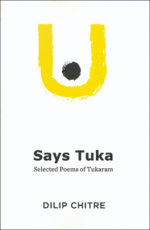
Says Tuka-Selected poems of Tukaram
$30About the Book
Tukaram was born in 1608 and vanished without a trace in 1650. what little we know of his life is a reconstruction from his own autobiographical poems, the contemporary poetess Bahinabai’s memoirs in verse, and the later biographer of Marathi poet-saints, Mahipati’s account. The rest is all folklore, though it cannot be dismissed on those grounds alone. Modern scholars such as the late V. S. Bendre have made arduous efforts to collate evidence from disparate contemporary sources to establish a well-researched biography of Tukaram. But even this is largely conjectural.
Tukaram is therefore not only the last great Bhakti poet in Marathi but he is also the first truly modern Marathi poet in terms of temper and thematic choice, technique and vision. He is certainly the most vital link between medieval and modern Marathi poetry. Tukaram’s stature in Marathi literature is comparable to that of Shakespeare in English or Goethe in German. He could be called the quintessential Marathi poet reflecting the genius of the language as well as its characteristic literary culture. There is no other Marathi writer who has so deeply and widely influenced Marathi literary culture since. Tukaram’s poetry has shaped the Marathi language, as it is spoken by 70 million people today and not just the literary language. Perhaps one should compare his influence with that of the King James version of the Bible upon speakers of the English language. For Tukaram’s poetry is also used by illiterate millions to voice their prayers or to express their love of God.