-
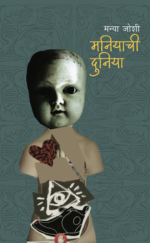
Maniyachi Duniya
$16About the Book
Maniyachi Duniya is a place where every poem begins in one register and slips, almost mischievously, into another. A phrase might start in the noise of a Mumbai street, brush against an old folk cadence, then suddenly tilt into the rhythm of an Instagram reel or a meme you half-remember. This referential drift isn’t random; it is the way we actually live now, surrounded by isms, social-justice vocabularies, shifting identities, and constant tech updates that rewrite our attention every few hours. Each poem absorbs that swirl and lets it tilt toward something unexpected, sometimes absurd, but always resonant and strangely tender. And though the work is laced with wit, it’s never sarcasm. Its irony is gentler. It is the kind that knows its own limits, that stays aware of the fragility of meaning, that smiles at the world without dismissing it. The delight of these poems comes from how they recognize the chaos of the present moment and still manage to turn each reference, each tonal slip, into a small, generous surprise.
-
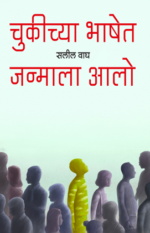
Chukichya Bhashet Janmala Aalo
$20About the Book
Saleel Wagh’s poetry represents a "post-nineties" (Post 90’s) shift in Marathi literature, characterised by a break from traditional lyricism toward a more fragmented, analytical, and metropolitan sensibility. His work explores the friction between a deeply rooted historical identity and the disorienting acceleration of the modern, globalised world.
1. The Linguistic Crisis: "Born in the Wrong Language" The central theme of Wagh’s work is the concept of linguistic inadequacy, as seen in the title "Chukichya Bhashet Janmala Alo" (I was born in the wrong language).
The Mismatch: This suggests that the inherited Marathi tongue is insufficient to articulate
the hyper-real, digital, and corporate experiences of the 21st century.
A New Idiom: By acknowledging this "wrongness," Wagh creates a space where slang, technical terms, and abstract philosophical inquiries can coexist with standard Marathi.
2. Temporal and Spatial Dislocation Wagh frequently uses imagery associated with time and physics to describe psychologicalstates:
The Mechanical Self: References to the "Minute hand" (Minutekata) and the act
of "jumping" suggest a life lived in increments of high-pressure bursts rather than a
continuous flow.
Hyper-awareness: The phrase "Kanat pran alela" (Life-force gathered in the ears)
depicts a state of modern anxiety and extreme sensory alertness.
Global Scattering: The poet observes that "the world is everywhere" and that the
self—likened to scattered beads—is dispersed across the world (Jagbhar), signalling
the loss of a localised, stable home.
3. Historical vs. Modern Landscape
A striking feature of Wagh's poetry is the juxtaposition of ancient geography with modern
existential dread:
Ancient Markers: By invoking "Bharatvarshe,"
"Jambudvipe," and "Dandakaranye," he places the reader in a vast, mytho-
historical timeline.
The Modern Ghost: Within these sacred spaces, he positions "Saleel
Prete" (Saleel’s ghost/corpse), suggesting that the modern individual exists as a
hollow or spectral figure within their own heritage.
4. The Fragmentation of Thought
Wagh’s imagery often focuses on the breakdown of unity:
The Broken String: He writes of the "string of the mind breaking" (Manachi maal
phutte), leading to a state where thoughts and identities—represented
as "beads"—are lost or scattered.
Sudden Flux: The description of "rafters whirring rapidly" (Sapasap vase phirle)
mirrors the chaotic, shifting architecture of both the modern city and the modern
mind. -

Nivdak AbhidhaNantar
$50About the Book
अभिधा सुरू असताना ग्लोबलायझेशझेनची प्रक्रिया सुरू झाली होती. आमच्या काही कविता आणि याच दरम्यान स्वतःला आलेलं जगण्याचं नवं भान, ग्लोबलायझेशझेनमुळेमुळे बदललेला भोवताल आणि या सर्वांमुळे उमजलेले लिहिण्याचंही नवीन भान ह्या ‘अभिधा’मधून आम्ही दिलेल्या किंवा आम्ही मिळविलेल्या काही गोष्टी.
१९९९ मध्ये अभिधा नंतर सुरू केलं तेव्हा ग्लोबलायझेशझेनचा परिणाम असलेले साहित्य आम्ही प्रसिद्ध करू असे धोरण होते आणि २०१४ साली अभिधानंतर बंद करेपर्यंत आम्ही ते लावून धरले. ग्लोबलायझेशनंतर जीवनाप्रमाणे साहित्यही बदलत होतं. हा बदल पकडण्याचा, डॉक्युमेण्ट करण्याचा, नवीन साहित्य लोकांपर्यंत पोहोचविण्याचा उद्देश होता. हा अवकाश ग्लोबलायझेशन’नंतर’चा आणि एका अर्थाने ‘अभिधा”नंतरचा’ अवकाश होता. या पुस्तकातून अभिधानंतरमध्ये प्रकाशित झालेल्या निवडक कविता, लेख, मुलाखती आणि संपादकीय देत आहोत. या सर्व लिखाणां मधून ग्लोबलायझेशन आणि डिजिटालायझेशनंतर निरंतर बदलत असलेली भाषा, संस्कृती,आणि जगणं अधोरेखित होतं. मराठीत सध्या लिहिणाऱ्या, वाचणाऱ्या, विचार करणाऱ्या, भाषेची आणि संस्कृतीची चिंता करणाऱ्या आणि भाषेसाठी झगडणाऱ्या लोकांसाठी हे पुस्तक खूप महत्त्वाचा दस्तऐवज ठरू शकेल याची खात्री आहे.
Feeling happy to see great documentation of our work in Marathi from the late nineteen nineties. Abhidhanantar was a major movement in Marathi that self-consciously highlighted the transformation of our society and culture due to the processes of the post-1989 phase of hyper globalisation that has created the world as we understand today. Our generation was at
the cusp of the dying old analogue world that the modernist and identitarian generation of the Cold War period we had inherited, and the emergent new world of digital natives we gave birth to. Our poetry, world view and thinking documents this shift and this was the periodical that provided the platform to express this discourse. It brought together and created not only new voices like Sanjeev Khandekar, Saleel Wagh, Shridhar Tilwe, Hemant Divate, Manya Joshi, Nitin Kulkarni, Mangesh Narayanrao Kale, Arun Kale, Varjesh Solanki and Nitin Rindhe among many
others but also created a new readership in Marathi.– Sachin Ketkar
-