
| Author | |
|---|---|
| Imprint | |
| Language | |
| Edition | |
| Publishing Year | January 2020 |
| Pages | 124 |
About the Book
Praise for Priya’s Poetry:
Written over a decade, Calling Over Water features poems in three movements. The first trails a wake of lacunae and dislocation but also remembrance and gratitude for departed loved ones. Next, the tempo shifts as the mind sifts through dazzlement, disappointments, riddles and resolutions. Poetry making and identity are explored and mapped. In the last movement, geographies of space and time are located through art, history and the act of journeying. The self is in part reconstituted and returned as a retuned being. “Are you recyclable?” “Why does art leap out of the window when there’s no terrorist attack, only collapse?” “What if you stop smelling of loathing?” These are some of the brave and probing questions Priya Sarukkai Chabria poses in Calling Over Water.
Related products
-
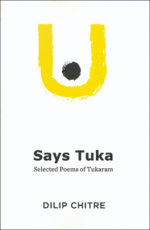
Says Tuka-Selected poems of Tukaram
$30About the Book
Tukaram was born in 1608 and vanished without a trace in 1650. what little we know of his life is a reconstruction from his own autobiographical poems, the contemporary poetess Bahinabai’s memoirs in verse, and the later biographer of Marathi poet-saints, Mahipati’s account. The rest is all folklore, though it cannot be dismissed on those grounds alone. Modern scholars such as the late V. S. Bendre have made arduous efforts to collate evidence from disparate contemporary sources to establish a well-researched biography of Tukaram. But even this is largely conjectural.
Tukaram is therefore not only the last great Bhakti poet in Marathi but he is also the first truly modern Marathi poet in terms of temper and thematic choice, technique and vision. He is certainly the most vital link between medieval and modern Marathi poetry. Tukaram’s stature in Marathi literature is comparable to that of Shakespeare in English or Goethe in German. He could be called the quintessential Marathi poet reflecting the genius of the language as well as its characteristic literary culture. There is no other Marathi writer who has so deeply and widely influenced Marathi literary culture since. Tukaram’s poetry has shaped the Marathi language, as it is spoken by 70 million people today and not just the literary language. Perhaps one should compare his influence with that of the King James version of the Bible upon speakers of the English language. For Tukaram’s poetry is also used by illiterate millions to voice their prayers or to express their love of God.
-
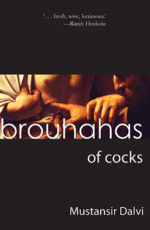
Brouhahas Of Cocks
$15About the Book
Hardback awakening The air is thick, and has revived my books, anticipating the first spell of a Bombay monsoon. Ambient moisture has slaked pages that shuffle and twist, arise to a wakefulness, unleaving. Feeling the discomfort of nearness,
-

First Infinities
$12About the Book
Hell, or a state very much like it, does feature in Nambisan’s poetic underworld, which is deep, intricate and enticing. …… – From the Preface by Adil Jussawala Nambisan’s view of humankind is bleak, his view of the possibilities of poetry even bleak
-
-

Walk Like Monsters
$12About the Book
These are late night poems of the body that sing also of catastrophe, how wide it is, how easy, like ‘being in one place instead of another.’ Anindita Sengupta’s new book is hot, harrowing and masterful. It will stay with me for a long time. ~ Jeet Thayil Anindita Sengupta is a poet of the precise line, the measured image, of mediated passion, the sure ending. Her observation is acute, her politics seldom theatrical and her passage from one world to another and from the object to the spirit smooth and subtle. Her poetry proves that silk can wound and knife can flower. ~ K. Satchidanandan “They rise in this landscape, the ancients – old loves, myths, cities, secret revolutions. Anindita Sengupta’s language is forever old and forever new. Fretful, explosive, terrifying. Her poetry will leave you with beautiful scars.” ~ Janice Pariat
-
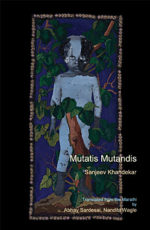
Mutatis Mutandis
$10About the Book
Through sex-dolls and addictions, for whom poetry can be just another narcotic throbbing in your vein. Khandekar’s man has stretched himself to the limits of the Machiavellian primate, modifying his behaviour and absurdum to fit in with the changing patterns of a world spinning out of control on the wheel of progress. Meet the ghost in the machine Sanjeev Khandekar’s poetry grins impishly, then socks you in the eye. It makes you feel horns on your head and inspect your skin for green stripes. Khandekar breaks conventions of belief, language and genre to offer a world with no certainties, where you are just a gob of self-awareness floating in a matrix of virtual reality, mutating every moment to balance your inner needs with social expectations. You are the Mutatis Mutandis Man the human ‘with necessary changes’ carried out the modified man tossed between inscrutable science and enigmatic religious faith, the creature who gropes for love and creativity that may lure you towards self-destruction. Meet Khandekar’s Monster and see if he seems familiar.
Khandekar’s poetry, like his art, is disturbingly unconventional; and Abhay Sardesai and Nandita Wagle’s excellent translation from Marathi now brings it to the English reader.
-Antara Dev Sen -
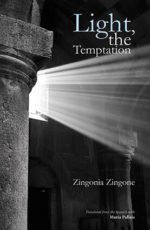
Light, the Temptation
$10About the Book
In Zingonia’s new poems it is a similar exercise that is happening. Instead of justifying the ways of God to men, these poems seem to me to be the ways of men and women to God. This daring act of a moment of surrender to the pristine unity of every thing cements the diverse poems here into one epic of mutations and metamorphoses. In this world the persona an Algerian beggar can merge into one of Jesus. Atoms and stars partake of the same reality as a flower. The fractured fates of Shen Fu, Maurice Utrillo and Max Jacob, which are acts of recurrent human tragedy become settings of Divine Comedy. Though the thrust of Zingonia’s poems is indubitably mystical, their mysticism goes beyond orthodoxies and heterodoxies of what is generally considered mystical. Their laconic beauty has the palpability of something militantly this- worldly as if Eternity is indissolubly in love with creations of time. At this point my words want to go back to the eloquent silence of these poems. I am sure other readers of this remarkable work will find these poems as enchanting and enlightening as I did. ‘Light, the Temptation’ is not a work to be read and abandoned. It invites us to contemplate on the rich resonances of its deceptively simple expressions in order to return the world to the world, ourselves to ourselves, meanings to our world where faceless robots are marching blindly towards irredeemable emptiness. – H S Shivaprakash (an excerpt from his introductory note)