| Author | |
|---|---|
| Imprint | |
| Publication Year | 2015 |
| Language | Marathi |
| Edition | 1 |
| Binding | Paperback |
| Pages | 86 |
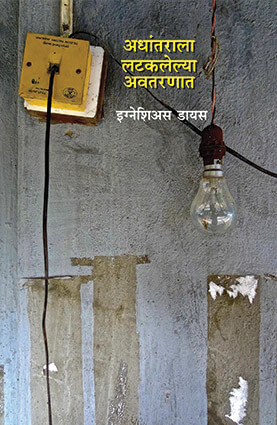
Andhantarala Lataklelya Avtarnat
$10
Out of stock
About the Book
This is Ignatius Dias’s first book of poems published by PoetryPrimero.
Related products
-
Chukichya Bhashet Janmala Aalo
$20About the Book
Saleel Wagh’s poetry represents a "post-nineties" (Post 90’s) shift in Marathi literature, characterised by a break from traditional lyricism toward a more fragmented, analytical, and metropolitan sensibility. His work explores the friction between a deeply rooted historical identity and the disorienting acceleration of the modern, globalised world.
1. The Linguistic Crisis: "Born in the Wrong Language" The central theme of Wagh’s work is the concept of linguistic inadequacy, as seen in the title "Chukichya Bhashet Janmala Alo" (I was born in the wrong language).
The Mismatch: This suggests that the inherited Marathi tongue is insufficient to articulate
the hyper-real, digital, and corporate experiences of the 21st century.
A New Idiom: By acknowledging this "wrongness," Wagh creates a space where slang, technical terms, and abstract philosophical inquiries can coexist with standard Marathi.
2. Temporal and Spatial Dislocation Wagh frequently uses imagery associated with time and physics to describe psychologicalstates:
The Mechanical Self: References to the "Minute hand" (Minutekata) and the act
of "jumping" suggest a life lived in increments of high-pressure bursts rather than a
continuous flow.
Hyper-awareness: The phrase "Kanat pran alela" (Life-force gathered in the ears)
depicts a state of modern anxiety and extreme sensory alertness.
Global Scattering: The poet observes that "the world is everywhere" and that the
self—likened to scattered beads—is dispersed across the world (Jagbhar), signalling
the loss of a localised, stable home.
3. Historical vs. Modern Landscape
A striking feature of Wagh's poetry is the juxtaposition of ancient geography with modern
existential dread:
Ancient Markers: By invoking "Bharatvarshe,"
"Jambudvipe," and "Dandakaranye," he places the reader in a vast, mytho-
historical timeline.
The Modern Ghost: Within these sacred spaces, he positions "Saleel
Prete" (Saleel’s ghost/corpse), suggesting that the modern individual exists as a
hollow or spectral figure within their own heritage.
4. The Fragmentation of Thought
Wagh’s imagery often focuses on the breakdown of unity:
The Broken String: He writes of the "string of the mind breaking" (Manachi maal
phutte), leading to a state where thoughts and identities—represented
as "beads"—are lost or scattered.
Sudden Flux: The description of "rafters whirring rapidly" (Sapasap vase phirle)
mirrors the chaotic, shifting architecture of both the modern city and the modern
mind. -
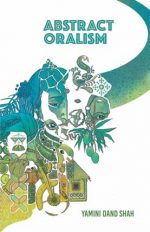
Abstract Oralism
$20About the Book
Yamini Dand Shah, with this new book Abstract Oralism, captures both precisely and remarkably the mysterious and elusive world of the Kachchh of Western Gujarat. Her metaphors and similes transport the reader towards this ancient terrain where Indus Valley peoples once flourished. Conceptually advanced and sophisticated, the poetry of this book causes us to reconsider our place in the world: in the light of the author’s extraordinary perception that translates earthly experience into a uniquely beautiful expression of the human condition.
-KEVIN MCGRATH, Poet Laureate, Harvard University
In the ‘Abstract Oralism’, Yamini reveals the beguiling mythic and mimetic history of the dangerously luminous, sensuous, and ephemeral beauty of the desert of Rann of Kachchh leaving us astonished and redeemed at once. ‘Sifting through soiled pages of an anti-modern, abridged dictionary’ of memories, she weaves embroidered tales of palaeolithic biographies of forgotten people in an experimental genre of speech-therapy with fierce emotional power. By turns poignant, playful and ironic, Yamini’s deceptively layered linguistic dreamscapes break new ground in experiencing hallucinatory minimalism in poetry. A mesmerizing debut!
-ASHWANI KUMAR, Poet, Writer and Public Policy Researcher
-
-
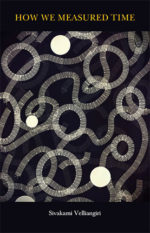
How We Measured Time
$12About the Book
“How we Measured Time by Sivakami Velliangiri, gives us poetry of a childhood remembered, perhaps now and then fictionalised –memory is such a dicey thing. The poetry is rooted in nostalgia, memories rooted in the house and the mill compound she grew up in, and yet there is no sentimentality attached to it. There are moments when the poetry is uplifting, her mother identifying ‘serpents/ by the design of their costume’, a grandfather lifting her ‘to the coastline of his shoulders’. And a past advances towards the reader, the silence before a solar eclipse, the hubbub of a Kerala elephant-chase.’
– Keki Daruwala
-
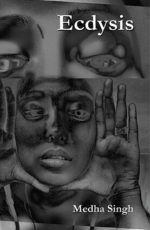
Ecdysis
$16About the Book
After reading the book, one is left with a haunting feeling of something that cannot be revived but lived only through the traces that it leaves in the mind. The poet dives deep into the labyrinths of time to fish out moments that are close to her.
Details that would otherwise be overlooked take on a life of their own and narrate their stories for those who are willing to listen. Medha Singh’s poems demand the reader to not be a mute spectator but feel these snippets of memories as much as they yearn to share. Powerful imagery and the attempt to capture them through words has been done beautifully. – Semeen Ali
For Medha Singh, the poem is often a subterfuge for story; the desire to be a poet is a circularity of purpose; and poetry itself is the beginning and end of trust. Prickling in all directions, uneven, at times unsteady, she chases “itinerant darkness”, achieves rare moments of equanimity, even grace. Mundane reality is a fitting anti-climax, closure an escape.