
| Author | |
|---|---|
| Imprint | |
| Publication Year | 2013 |
| Language | English |
| Edition | 1 |
| Binding | Paperback |
| Pages | 80 |

Anamnesia
$10
Related products
-
Brouhahas Of Cocks
$15About the Book
Hardback awakening The air is thick, and has revived my books, anticipating the first spell of a Bombay monsoon. Ambient moisture has slaked pages that shuffle and twist, arise to a wakefulness, unleaving. Feeling the discomfort of nearness,
-
Mutatis Mutandis
$10About the Book
Through sex-dolls and addictions, for whom poetry can be just another narcotic throbbing in your vein. Khandekar’s man has stretched himself to the limits of the Machiavellian primate, modifying his behaviour and absurdum to fit in with the changing patterns of a world spinning out of control on the wheel of progress. Meet the ghost in the machine Sanjeev Khandekar’s poetry grins impishly, then socks you in the eye. It makes you feel horns on your head and inspect your skin for green stripes. Khandekar breaks conventions of belief, language and genre to offer a world with no certainties, where you are just a gob of self-awareness floating in a matrix of virtual reality, mutating every moment to balance your inner needs with social expectations. You are the Mutatis Mutandis Man the human ‘with necessary changes’ carried out the modified man tossed between inscrutable science and enigmatic religious faith, the creature who gropes for love and creativity that may lure you towards self-destruction. Meet Khandekar’s Monster and see if he seems familiar.
Khandekar’s poetry, like his art, is disturbingly unconventional; and Abhay Sardesai and Nandita Wagle’s excellent translation from Marathi now brings it to the English reader.
-Antara Dev Sen -
Scripted in the Streams
$12About the Books
There is an intense humanity in these poems by Rati Saxena, a humanity that ennobles all of us who are humble enough to listen. There is an empathy is these poems for all living things – for the spider, for the ant, for the owl – and a similar understanding of all things that may not be alive. -Alan Titley, Professor Emeritus of Modern Irish, University College, Cork It has travelled a long, long way this voice?and we welcome it as we would do a stranger, into the West where despair, decline and decay are seemingly permanent lodgers, Saxena’s lyrics arrive like a fresh breeze. New-born, fresh and smelling of the earth, her poems draw on the well of Indo-European tradition, the intimate links that bind the female psyche and the landscape in all its fecundity. -Dr Michel h’Aodha, University of Limerick Saxena allows for different aeons to melt into each other. She creates a world in which humans interact with insects and animals. We are all of and from the same source. The image of the snake is a powerful one to explain the frustrations of modern women in today’s India. Her vision makes a mockery of the boundaries around our lives and we sail with her through a magical world, coming into contact with the source of life itself. There are echoes of Flann O’ Brien in the delightful poem about the bicycle of her youth. Taboos and rituals will not enslave her and poetry finds its way into the washing on the line and the fire that bakes our daily bread. – Ceaiti Ni Bheildiuin, poet In this selection of the poems of Rati Saxena we are drawn into a world of imagery where deep respect is shown for the low -Brian O Conchubhair, University of Notre Dame, USA
-

Durable Transit
$22About the Book
Ravi Shankar’s poems are immortal in the flesh, finding in The life of the mind its interpretations, its instrumentality. The surpassing, transient, lyrical moment; and in the life of the World’s body the permanent, unflinching presence of thought, Unconfined by time and space. They are the verbal artifacts of a Singular, many-sided, and distinguished consciousness.Pulitzer Prize winner Vijay Seshadri Engorged with image, thick, viscous and churning, Ravi Shankar’s Poems have the density of mercury as well as its fluidity and Mobility…The energy is visceral. The language is restless, hungry For surprise, the register swinging between the formal and the Demotic (both American and Indian). Underlying this is an Almost voluptuous need to embrace myth, history, metaphysics And pop culture, and bring all of it into a single book, and Sometimes a single poem. This is matched by an alertness to form with references ranging from the Bop to the pada — making for A playful, stylistically supple poetry. – Arundhathi Subramaniam Ravi Shankar’s poems have a fine-tuned sense of form, a rare Delight in language. Through wit and abstraction, they reveal a Metaphysics of longing, binding us to the elements of our moving World. – Meena Alexander
Ravi Shankar is truly, now, one of America’s finest younger poets.-Dick Allen
-
Banaras And The Other
$14About the Book
Ashwani Kumar’s poems in ‘Banaras and The Other” are a mischievous irreverence turned at times to the present and at times to the past. The personal and the political, memories and nostalgia, mythical characters and contemporary parodies mix and mingle in these poems in diverse proportions to produce a rare poetic energy that belongs entirely to our times of pain and paradox. –K. Satchidanandan
Ashwani Kumar’s Banaras and the Other captivates us as a delightful romp through myth, folklore and history. Read past the revelry, however, and you will see that it engages passionately and provocatively with the fissured, schismatic scenarios of 21st century India.–Ranjit Hoskote
-
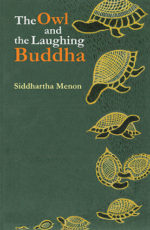
The Owl and the Laughing Buddha
$12About the Book
The poems in The Owl and the Laughing Buddha bring a ‘lighthouse sweep of attentiveness’ to their subjects. This is a book about noting, from the title poem’s companionable but contrasting figures on a writing desk to the devastating aftermath of a cloudburst in the mountains, and from a flier’s eye-view to a walker’s – and a mole’s. Here are poems interested in gods and figures of myth, and in observing houses, trees, birds and other creatures in a changing neighbourhood; poems that talk shop with fellow poets and respond to works of art and culture; and poems that watch our responses to the daily catastrophes that sometimes constitute ‘news’ – whose interest is no less a matter of whimsy, perhaps, than some of the tales narrated in the final section of the book. Yet the poems rest on an implicit conviction that everything must be given its due and treated seriously – though not solemnly, for it is mirth, after all, that is the laughing Buddha’s centre of gravity. Treading margins between the real and the imagined, the concerned and the tongue-in-cheek, this is Menon’s third collection of poems.
-

Frazil
$16About the Book
Menka Shivdasani’s poetry is both original and strikingly unusual, not just her tangential way of putting things across, but also how thought process and imagination run away with the poem, and make it exciting. An experience is translated into another experience and then gets mixed with fancy in a juice blender. Chopping lettuce, she’ll be assailed by visions—burning bride, politician, a ‘wounded Hiroshima’, and finally a finger-chopping Nazi. A poem about separation will end with her handling ‘alien porcelain’ at a tea party. For over three decades the excitement she brings to her fine poetry has never deserted her.
-

Grab your heart & follow me
$3About the Book
“In my wonderland, there are only beginnings, ‘there is no end’. Plunge into this book of?poems by Claus Ankersen where cat-gods rule, babies are born with stargates for eyes, kisses are catalogued and the 12th pen writes of celebratory sins. Expand the eternity of now. Be nomad, tiger, ‘soulhuntress.’ Head-dive into the mysteries of the world. Dance