| Author | |
|---|---|
| Imprint | |
| Language | |
| Edition | |
| Pages | 116 |
| Binding |
About the Book
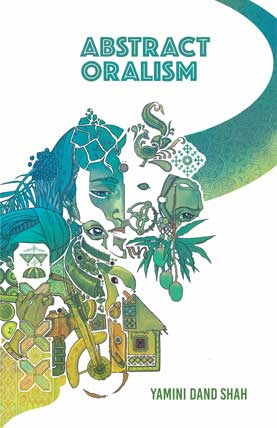
Yamini Dand Shah, with this new book Abstract Oralism, captures both precisely and remarkably the mysterious and elusive world of the Kachchh of Western Gujarat. Her metaphors and similes transport the reader towards this ancient terrain where Indus Valley peoples once flourished. Conceptually advanced and sophisticated, the poetry of this book causes us to reconsider our place in the world: in the light of the author’s extraordinary perception that translates earthly experience into a uniquely beautiful expression of the human condition.
-KEVIN MCGRATH, Poet Laureate, Harvard University
In the ‘Abstract Oralism’, Yamini reveals the beguiling mythic and mimetic history of the dangerously luminous, sensuous, and ephemeral beauty of the desert of Rann of Kachchh leaving us astonished and redeemed at once. ‘Sifting through soiled pages of an anti-modern, abridged dictionary’ of memories, she weaves embroidered tales of palaeolithic biographies of forgotten people in an experimental genre of speech-therapy with fierce emotional power. By turns poignant, playful and ironic, Yamini’s deceptively layered linguistic dreamscapes break new ground in experiencing hallucinatory minimalism in poetry. A mesmerizing debut!
-ASHWANI KUMAR, Poet, Writer and Public Policy Researcher
Related products
-

All that I Wanna Do (English)
$16About Book
Dear Sanjeev
I read your poem yesterday ( last evening). Globalisation, and the consequent private Americanisation, corporatisation, computers, mobiles, mall culture and the decline of humanity in every aspect of life is your concern, and mine too.
That you and I have felt that comes with this new kind of life, and the regret that we feel because we cannot deter this decline or escape from it, the sarcastic presentation of the never-ending story of our contemporary miseries appear in your in the poem one after another; and interestingly (your) style neither accepts any poetic form nor it is written in any poetic language, and just as you were exhausted while carving a new definition of poetry, I was exhausted while reading your poem – this is what precisely I want to tell you by writing this exhausting second sentence.
What you have expressed in this poem is the philosophy of this new way of life.
Of course, I think it’s significant that while presenting this philosophy afresh, you haven’t pretended that you are a philosopher!
Yours
Hemant Divate
August 28, 2004
-
All That I Wanna Do (Marathi)
$16About the Book
Dear Sanjeev,
I read your poem yesterday ( last evening). Globalisation, and the consequent private Americanisation, corporatisation, computers, mobiles, mall culture and the decline of humanity
in every aspect of life is your concern, and mine too. That you and I have felt that comes with this new kind of life, and the regret that we feel because we cannot deter this decline or escape from it, the sarcastic presentation of the never-ending story of our contemporary miseries appear in your in the poem one after another; and interestingly (your) style neither accepts any poetic form nor it is written in any poetic language, and just as you were exhausted while carving a new definition of poetry, I was exhausted while reading your poem – this is what precisely I want to tell you by writing this exhausting second sentence. What you have expressed in this poem is the philosophy of this new way of life. Of course, I think it's significant that while presenting this philosophy afresh, you haven’t pretended that you are a philosopher!
Yours
Hemant Divate
August 28, 2004 -

Folie Á Deux
$18About the Book
Jennifer Robertson’s first book of poems, Folie à Deux, introduces us to an assured and sophisticated new voice in the world of Anglophone poetry in India. Robertson celebrates the sensuousness, the warm flesh of language. Her poems sharpen our awareness of things viscerally experienced, our memories of things held and cherished, our desire to secure forever the ephemeral yet compelling images of photography and cinema. In her handling, the resonance of the breath crafted into sound takes concrete occupancy of its environment, becomes a percussive force; she writes: “I wonder about sound invading space, wounding, astounding space and stories rising like a Phoenix.”
Here is a poet who captivates us, enchants us into spaces that “have two doors and no exit”.
– Ranjit Hoskote, author of Jonahwhale
Jennifer Robertson’s poems invite us to a world of “intimate strangeness” where poetry is “nuts and waywardness” and poets are “hoodlums” who leave behind “delinquencies” as their legacy. Although thickly silted with references to literature, painting and cinema, this is not a world of glibness or slick cultural sophistication. A throbbing vein of disquiet runs through Folie à Deux reminding us of relationships that could lean towards “darkness and magic”; lives lived in “intermission” with fragments spilling over “in the dark, under the seat”; and a self that yearns to drown into “a sunken civilisation”. This is a poetry of crafted surfaces and unexpected trenches, beeping microwaves and buried cities – allusive and “alluvial” all at once. Folie à Deux is a strong, self-assured début.
– Arundhathi Subramaniam, author of Wild Women
Lexically restless, geodesic, and unapologetically omnivorous, Jennifer Robertson’s Folie à Deux is a dialectic that considers the fulcra of observance and animacy, liberation and stagnancy, tranquility and obsession. Robertson’s poetry applies a painterly heat to our bodies, and readers to scratch at persona, and to map a self through the historical detritus of art and signs. What disturbs me most about this book is that, ravenously, Robertson “reinvents time travel”.
– Jhani Randhawa, author of Time Regime
-
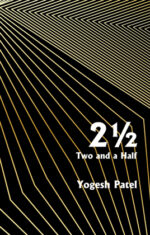
Two and a Half
$16About the Book
Yogesh Patel's poems in "2½" are “sparks of fire”, igniting language into flames of inspiration in a world that fails us, but only if we permit it. Patel magnifies the
humanitarian failures in our world society with poetry of vision that is at once daring and profoundly humane. These are tales of hopes…and lost dreams, rising out of the simmering ash of society's arrested conscience, into the healing blaze of universal truths. One cannot fail to be inspired by the power of compassion in these poems.
– James Ragan, author of ‘The Hunger Wall’ and ‘The Chanter’s Reed’ and
recipient of a Poetry Society of America citation and Swan Foundation Humanitarian
Award==============
These poems are filled with recurring potent images of place and personal histories which successfully invite the reader into intimate spaces. Those spaces include everything from socks to shaving brush but also bravely address disturbing and distressing subject matter. The violence at the heart of this collection is never expressed directly but infuses the poetry, so that the reader is left shaken and thoughtful.
– Maura Dooley, Judge’s comment, Aryamati Prize 2023
-
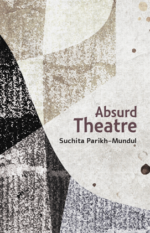
Absurd Theatre
$16About the Book
Suchita Parikh-Mundul’s long-overdue collection is rich in music and metaphor. These deeply
perceptive poems compress intense emotion into taut language, and her work takes flight in
unexpected ways. Everyday life and the chaos and complexities of urban spaces gain new meaning here, and her question, ‘What is writing?’ finds its answer in the flapping of a pigeon’s wings. Suchita’s voice is sharp and sensitive, knife-edged and feminist, caustic and tender. This book is a triumph.— MENKA SHIVDASANI
Co-Chair, Asia Pacific Writers and Translators=====
In Absurd Theatre, the personal and the civic share a single stage. It traces a consciousness moving through the body, the city, and time. These poems attend to the ordinary until it yields its strangeness, allowing irony, devotion, and desire to coexist without resolution. Spare and resonant — what emerges is a poetics of attention.
— YAMINI DAND SHAH
Poet, Academic and Curator=====
In this compelling collection, Suchita Parikh-Mundul investigates themes as varied as writing,
cityscapes, broken husbands in need of mending, corporate jobs and the documentary, bureaucratic validation of life and self-hood. Poetry becomes a daily burial of flesh into paper or a salmon caught against the current. Rows of desks join together to worship corporate goals as time acquires a different sort of density. With images that are spare and tensile and form that is often bold and experimental, Parikh-Mundul crafts her own poetics.
— K. SRILATA
Poet, Translator and Academic====
-

Variations on Silence
$16About the Book
Throughout Variations on Silence, Nadia Mifsud draws us into intimate scenes and gestures,
as if overhearing lovers mid-conversation. The central figure – almost mythic in scale – is
silence itself, which Mifsud imbues with weight, texture, physical presence. Silence shelters,
stirs, shakes, unwinds, “tastes / of red soil and conifer.” Miriam Calleja’s translation conveys
the ache and longing of that silence with a sensual clarity rare in English. A fabulous book.
– John Wall Barger, The Elephant of SilenceAs Dante said, love is what moves the sun and the other stars – but it is also what flows
through all things, binding them together. This is what breathes in the silences – namely, in
the poems – of Nadia Mifsud : a listening rooted in love, which through love transforms and
reintegrates lovers into the cosmos, restoring the world to something deeply connected to
our humanity. Calleja’s admirable translation – herself a poet – captures this dynamic with
striking clarity and preserves it as the central energy of the work. The encounter between
these two poets ultimately offers us a book of poetry, not merely a book of poems – I repeat:
a cohesive and coherent work, held together by a vision both profound and vast. Ovid’s
Metamorphoses, Rilke’s Duino Elegies… The poetry found in this book is capable of
traversing time and resisting it, of crossing space to bind us – irrevocably – to this cosmos,
and in that bond, to reveal the secret of life.– Pietro Federico, Most of the Stars
Every verb in Nadia Mifsud's work shimmers, echoes, and rappels down the cliffside of a
stanza. Valences expand through repetition; "waves like jaws" locate the oceanic motion. One physically hears and feels the island of Malta in the tension between the isolation,
refrain, and the sea returning to shore, empty-handed. Miriam Calleja's attentive translation brings these affects and "sea-scented places" into English without forsaking the resonances and echoes of "cockleshells" past. Variations on Silence touches the hem where displacement circles the idea of place and results in lyric. The mode is modern; the echoes are ancient; the book is irresistible.– Alina Stefanescu, My Heresies
-