
| Author | |
|---|---|
| Imprint | |
| Language | |
| Edition | |
| Pages | 116 |
| Binding |
About the Book
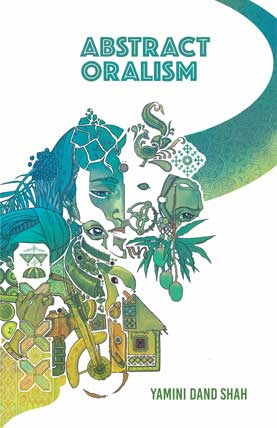
Yamini Dand Shah, with this new book Abstract Oralism, captures both precisely and remarkably the mysterious and elusive world of the Kachchh of Western Gujarat. Her metaphors and similes transport the reader towards this ancient terrain where Indus Valley peoples once flourished. Conceptually advanced and sophisticated, the poetry of this book causes us to reconsider our place in the world: in the light of the author’s extraordinary perception that translates earthly experience into a uniquely beautiful expression of the human condition.
-KEVIN MCGRATH, Poet Laureate, Harvard University
In the ‘Abstract Oralism’, Yamini reveals the beguiling mythic and mimetic history of the dangerously luminous, sensuous, and ephemeral beauty of the desert of Rann of Kachchh leaving us astonished and redeemed at once. ‘Sifting through soiled pages of an anti-modern, abridged dictionary’ of memories, she weaves embroidered tales of palaeolithic biographies of forgotten people in an experimental genre of speech-therapy with fierce emotional power. By turns poignant, playful and ironic, Yamini’s deceptively layered linguistic dreamscapes break new ground in experiencing hallucinatory minimalism in poetry. A mesmerizing debut!
-ASHWANI KUMAR, Poet, Writer and Public Policy Researcher
Related products
-
Two and a Half
$16About the Book
Yogesh Patel's poems in "2½" are “sparks of fire”, igniting language into flames of inspiration in a world that fails us, but only if we permit it. Patel magnifies the
humanitarian failures in our world society with poetry of vision that is at once daring and profoundly humane. These are tales of hopes…and lost dreams, rising out of the simmering ash of society's arrested conscience, into the healing blaze of universal truths. One cannot fail to be inspired by the power of compassion in these poems.
– James Ragan, author of ‘The Hunger Wall’ and ‘The Chanter’s Reed’ and
recipient of a Poetry Society of America citation and Swan Foundation Humanitarian
Award==============
These poems are filled with recurring potent images of place and personal histories which successfully invite the reader into intimate spaces. Those spaces include everything from socks to shaving brush but also bravely address disturbing and distressing subject matter. The violence at the heart of this collection is never expressed directly but infuses the poetry, so that the reader is left shaken and thoughtful.
– Maura Dooley, Judge’s comment, Aryamati Prize 2023
-
Forty Five Shades of Brown
$16About the Book
Babitha Marina Justin’s poems, woven around self, nature, and body, have an organic architecture, gothic or temple-like, with metaphors working like sculpted images or murals around a central experience. They are honest, at times confessional, often with memories from childhood and adolescence for their raw materials; but they do not shy away from natural calamities and existential crises. Babitha's poems are at once deeply Indian and instinctively feminine in their deployment of images and the organization of experiences.
– K SatchidanandanBabitha Marina Justin has a distinct voice that is passionately lyrical and personal to the point of abandon, and in these COVID times, poetry too has also taken a Corona-Shaped turn. Her world is not only herself, but her neighbourhood, and the larger country which she peppers with a persistent historical awareness, of the Muziris and the Jews. She celebrates their joys and mourns the murky, screaming out the lurking fury in her unique verses.
– Sivakami Velliangiri -
Only the Forest Knows
$20About the Book
“Wings sense what they must”. And poets too. In her third poetry collection, Anindita Sengupta receives and transmits the hues of a planet mad with want, fear, breakdown. At the heart of a maelstrom of (in)humanity and conflagration, dispossession and disease, her poems bite and rage and mourn. From forage fish to polar bears, she is enmeshed and implicated. With her, we sense the natural world’s mysteries as apprehensible, but “not teachable”. In these poems, breath is the seam that will rip and tear; pain the only climate we can count on. As we embrace deception and vulnerability, we coil in and out of the quieter spaces we contain and are contained by. Hers is our hunger to understand, even hope, so that we might begin again to believe in “small miracles”, to persist, like the algae, “in a world without light.”
– Sampurna Chattarji
Anindita Sengupta asks: “How to speak of violence without /repeating it. What language? What tone? What / memory?” Throughout this coruscating collection, her fluid and inventive poiesis attempts to answer these questions, weaving contingent and deeply human meanings out of personal and collective trauma. Only the Forest Knows is a profoundly accomplished, intelligent work. Sengupta creates an urgent, sensual language that speaks out of the raw contradictions and anguish of the present. This is a poetry tempered by fire, loss and sorrow that
yet, as Rilke said, “nevertheless still praises”: a hard-won beauty that is its own hope.—Alison Croggon
-

My Home is Dissent
$16About the Book
Pooja Ugrani listens to nature amidst the thump-thump-thump of construction. Forest fires, dragons and rabbits materialise without warning, a series of ambushes that test the city-dweller’s hard-won survival instincts. Words stick their tongues out, cheekily unfamiliar. Ugrani participates physically in the making of her poems, not only through photos, but also through the palpability of the body’s smears, spills and stains. Here is a poet testing her wings, where dissension may well be a heartbeat away from dissection.
—SAMPURNA CHATTARJI, author of Unmappable Moves and Space Gulliver.Pooja’s poems do what women’s poetry has been doing forever. They shut their mouth so tight that the stifled words ricochet back in and make their hearts thud like a talking drum. And they sign it off with today's date. – MAITHREYI KARNOOR, novelist and author.
Pooja Ugrani constructs poems as one might build a home; brick by tender brick, with the mortar of memory, desire, and defiance. Her verse moves fluidly between the everyday and the elemental, where the domestic is never mundane but a site of quiet resistance and reimagining. This world of words measures the dimensions of love, labour, and loss through the delicate instruments of memory, architecture, and motherhood. She writes of labour, love, and dissent as acts of design – as deliberate gestures that hold the self together.
Ugrani’s dissent is luminous, not loud. It hums through acts of nurture, through refusal, through the courage to remain soft in a world that demands armour. Formally supple and sensorial, cerebral and sensuous, her poems fold the architectural and the emotional into one continuum.
– SRIVIDYA SIVAKUMAR, poet. -
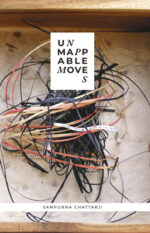
Unmappable Moves
$20About the Book
Reading Unmappable Moves, I had the strangest sensation of time expanding and closing in. These are taut, enigmatic poems—lightning flashes with bright, insistent heartbeats.—TISHANI DOSHILethal tales of sex and death that left me pining for more of Sampurna Chattarji’s mysterious lyric inventions.—JEET THAYIL -
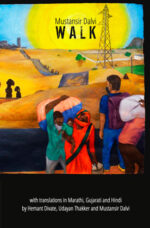
WALK
$20About the Book
This is a breath-taking experiment involving three poets, four languages, a pandemic and a million miles of migration. You will not find a bleeding heart here nor any cheap sentiment. Here is a watchful eye and a savage tongue. Here is a calligrapher’s pen and a bow to Ezra Pound. Mustansir Dalvi’s poetry has always meant something more to me than the best words in the best order. Here he shows us the order of things in a disordered world and we are humbled by this act of bravery and of empathy.
Jerry Pinto, poet and translator
Asylum, I want a poem and other poems
First published as an e-chapbook by Yavanika Press in that dreadful plague year, 2020, Mustansir Dalvi’s brilliant and memorable WALK is an act of homage to the suffering of those millions of Indians, already living precariously between village and metropolis, who were turned into migrants in their own land – forced to walk thousands of miles home, on what was effectively a death march, by a callous State and a society that improvises rather than systematising effective forms of compassion.
WALK now returns, under the Poetrywala imprint, as a surging polyphony. Dalvi is joined in this splendid quadriga of a book by Hemant Divate and Udayan Thakker, who have translated these poems into Marathi and Gujarati respectively; the author has rendered himself into a vibrant Hindi. This relay of versions is completed by Sudhir Patwardhan’s painterly testimony to the anguish of the Covid refugees caught up in a humanitarian catastrophe. A poet and translator, Dalvi infuses his writing with multilingual resonance and quicksilver diversity, shuttling among idioms and registers, in-group argot and makeshift patois. As befits the gravity and universal urgency of its subject, this book will reach readers in four languages simultaneously, saying to them, to us: Never forget!
Ranjit Hoskote, Poet, art critic and cultural theorist
-

Bewilderness
$30About the Book
Devashish Makhija’s Bewilderness announces its visceral bridging of self and nature in its title. The baffling challenges are outside the self, coming at the self as a profusion of stimuli from the mega-city, nature’s receding kingdom, and the horrors of the political. But they are inside the self too, as it fashions itself from fragments of childhood memory, responses to paintings that hold out inspiration, and empathetic connections forged with vulnerable Others in predicaments of distress. These poems bear resonant witness to the age in which they are written – an age governed by the call of the siren and the insistence of the curfew, the militarization of civil life and the degradation of rivers and mountains. Bewilderness captivates us with its vividly palpable images, its exhilarating shifts of tempo, and its plangent, deeply moving tonality.
– Ranjit Hoskote
-

All that I Wanna Do (English)
$16About Book
Dear Sanjeev
I read your poem yesterday ( last evening). Globalisation, and the consequent private Americanisation, corporatisation, computers, mobiles, mall culture and the decline of humanity in every aspect of life is your concern, and mine too.
That you and I have felt that comes with this new kind of life, and the regret that we feel because we cannot deter this decline or escape from it, the sarcastic presentation of the never-ending story of our contemporary miseries appear in your in the poem one after another; and interestingly (your) style neither accepts any poetic form nor it is written in any poetic language, and just as you were exhausted while carving a new definition of poetry, I was exhausted while reading your poem – this is what precisely I want to tell you by writing this exhausting second sentence.
What you have expressed in this poem is the philosophy of this new way of life.
Of course, I think it’s significant that while presenting this philosophy afresh, you haven’t pretended that you are a philosopher!
Yours
Hemant Divate
August 28, 2004