
| Author | |
|---|---|
| Imprint | |
| Language | |
| Edition | |
| Pages | 116 |
| Binding |
About the Book
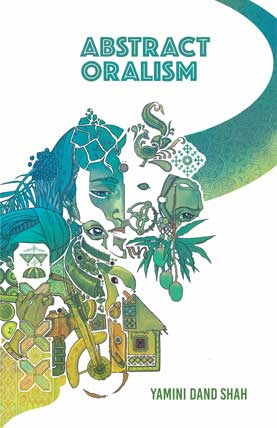
Yamini Dand Shah, with this new book Abstract Oralism, captures both precisely and remarkably the mysterious and elusive world of the Kachchh of Western Gujarat. Her metaphors and similes transport the reader towards this ancient terrain where Indus Valley peoples once flourished. Conceptually advanced and sophisticated, the poetry of this book causes us to reconsider our place in the world: in the light of the author’s extraordinary perception that translates earthly experience into a uniquely beautiful expression of the human condition.
-KEVIN MCGRATH, Poet Laureate, Harvard University
In the ‘Abstract Oralism’, Yamini reveals the beguiling mythic and mimetic history of the dangerously luminous, sensuous, and ephemeral beauty of the desert of Rann of Kachchh leaving us astonished and redeemed at once. ‘Sifting through soiled pages of an anti-modern, abridged dictionary’ of memories, she weaves embroidered tales of palaeolithic biographies of forgotten people in an experimental genre of speech-therapy with fierce emotional power. By turns poignant, playful and ironic, Yamini’s deceptively layered linguistic dreamscapes break new ground in experiencing hallucinatory minimalism in poetry. A mesmerizing debut!
-ASHWANI KUMAR, Poet, Writer and Public Policy Researcher
Related products
-
Ecdysis
$16About the Book
After reading the book, one is left with a haunting feeling of something that cannot be revived but lived only through the traces that it leaves in the mind. The poet dives deep into the labyrinths of time to fish out moments that are close to her.
Details that would otherwise be overlooked take on a life of their own and narrate their stories for those who are willing to listen. Medha Singh’s poems demand the reader to not be a mute spectator but feel these snippets of memories as much as they yearn to share. Powerful imagery and the attempt to capture them through words has been done beautifully. – Semeen Ali
For Medha Singh, the poem is often a subterfuge for story; the desire to be a poet is a circularity of purpose; and poetry itself is the beginning and end of trust. Prickling in all directions, uneven, at times unsteady, she chases “itinerant darkness”, achieves rare moments of equanimity, even grace. Mundane reality is a fitting anti-climax, closure an escape.
-

The Tattooed Teetotaller and other wonders
$18About the Book
We say mind the book, it’s out of control.
But it’s author says
‘Nonsense verse helps its writers escape their resident demons,
setting them free to deal with the more transient ones of mischief.
At time I’ve tried to use that freedom to highlight contemporary absurdities,
at other times to write about those of a not-too-distant colonial past.
Readers will find that not everything here is nonsense, like the poem below.
But I hope they also find that however disastrous our falls into folly may be,
they can also be luminous’
Like Dictators
Rats are strict in their regulations.
Like dictators they regulate
meals and nations
along lines of bite. -
UNLIKELY JOURNEY
$12About the Book
As happens on all trips, in the pages of this book we find unforeseen questions and unexpected landscapes. These verses are transparent because they speak to us not about what is intuited or remembered but what is seen while trying to establish order, specify limits, and vanquish shadows.
-

Variations on Silence
$16About the Book
Throughout Variations on Silence, Nadia Mifsud draws us into intimate scenes and gestures,
as if overhearing lovers mid-conversation. The central figure – almost mythic in scale – is
silence itself, which Mifsud imbues with weight, texture, physical presence. Silence shelters,
stirs, shakes, unwinds, “tastes / of red soil and conifer.” Miriam Calleja’s translation conveys
the ache and longing of that silence with a sensual clarity rare in English. A fabulous book.
– John Wall Barger, The Elephant of SilenceAs Dante said, love is what moves the sun and the other stars – but it is also what flows
through all things, binding them together. This is what breathes in the silences – namely, in
the poems – of Nadia Mifsud : a listening rooted in love, which through love transforms and
reintegrates lovers into the cosmos, restoring the world to something deeply connected to
our humanity. Calleja’s admirable translation – herself a poet – captures this dynamic with
striking clarity and preserves it as the central energy of the work. The encounter between
these two poets ultimately offers us a book of poetry, not merely a book of poems – I repeat:
a cohesive and coherent work, held together by a vision both profound and vast. Ovid’s
Metamorphoses, Rilke’s Duino Elegies… The poetry found in this book is capable of
traversing time and resisting it, of crossing space to bind us – irrevocably – to this cosmos,
and in that bond, to reveal the secret of life.– Pietro Federico, Most of the Stars
Every verb in Nadia Mifsud's work shimmers, echoes, and rappels down the cliffside of a
stanza. Valences expand through repetition; "waves like jaws" locate the oceanic motion. One physically hears and feels the island of Malta in the tension between the isolation,
refrain, and the sea returning to shore, empty-handed. Miriam Calleja's attentive translation brings these affects and "sea-scented places" into English without forsaking the resonances and echoes of "cockleshells" past. Variations on Silence touches the hem where displacement circles the idea of place and results in lyric. The mode is modern; the echoes are ancient; the book is irresistible.– Alina Stefanescu, My Heresies
-
CogVerse
$20About the Book
Vivekanand Selvaraj’s debut book of poems, ‘Cog Verse’ has clever cogs that rotate and fit snugly into the amiable cog machine in succinct poetry. His prose poetry dealing with the internal life of a freshman and the business of medicine as a profession is unflinchingly incisive. Speaking of his ancestors and grandparents on both sides, nowhere does he forget his Tamil ethos and the book comes off as startlingly original.
— Sivakami Velliangiri
_____________________
Here, in these poems, the object-worlds of a pre-liberalized India rub shoulders with the pandemic present, incongruent, yet strangely essential. Here, failure is rebellion, and rebellion in itself, becomes an illusion. Yet, Selvaraj’s poems document a severe critique of the institutions we hold as pristine – the medical school, the hospital, the deep state. Oftentimes, this critique is that of an insider, who, in spite of the said critique, feels depleted, hopeless, leaving us – the readers – asking for more. And, it is often done through careful manipulation of the white spaces on a page, unconventional line-break and a playful engagement with the very idea of lyric subjectivity.
— Nandini Dhar
___________________
Vivekanand is a poet of spaces. He isn’t interested in the broader themes of things that happen every day. But he is still interested in the façade of equanimity, everyday cruelty, and mundanity. These poems are Vivekanand’s way of chronicling stories for posterity, but also because everyone else has simply forgotten to catalogue them. These aren’t poems you’ve read before. Vivekanand isn’t a poet you’ve met before. Unique in his writing and assured in his voice, Vivekanand’s CogVerse is a necessary addition to your poetry collection.
—- Manjiri Indurkar
-
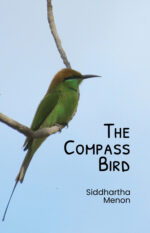
The Compass Bird
$15About the Book
Observant and meditative, lit with gentle whimsy, Siddhartha Menon’s work on the animal world leads us from ornithology to ontology, detail to dazzling insight, in a wingbeat. Here is a book in which the reverie of snails, the ‘mynahness’ of mynahs, the unhurried gaze of nilgai, becomes a way to reflect on all the eternal questions—time, belonging, love, purpose, a world ‘stained with stillness’, in which ‘those who attend have the last word’. One of the most delightful new books of poetry I have read this year.
– Arundhathi Subramaniam
-
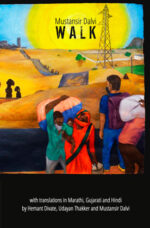
WALK
$20About the Book
This is a breath-taking experiment involving three poets, four languages, a pandemic and a million miles of migration. You will not find a bleeding heart here nor any cheap sentiment. Here is a watchful eye and a savage tongue. Here is a calligrapher’s pen and a bow to Ezra Pound. Mustansir Dalvi’s poetry has always meant something more to me than the best words in the best order. Here he shows us the order of things in a disordered world and we are humbled by this act of bravery and of empathy.
Jerry Pinto, poet and translator
Asylum, I want a poem and other poems
First published as an e-chapbook by Yavanika Press in that dreadful plague year, 2020, Mustansir Dalvi’s brilliant and memorable WALK is an act of homage to the suffering of those millions of Indians, already living precariously between village and metropolis, who were turned into migrants in their own land – forced to walk thousands of miles home, on what was effectively a death march, by a callous State and a society that improvises rather than systematising effective forms of compassion.
WALK now returns, under the Poetrywala imprint, as a surging polyphony. Dalvi is joined in this splendid quadriga of a book by Hemant Divate and Udayan Thakker, who have translated these poems into Marathi and Gujarati respectively; the author has rendered himself into a vibrant Hindi. This relay of versions is completed by Sudhir Patwardhan’s painterly testimony to the anguish of the Covid refugees caught up in a humanitarian catastrophe. A poet and translator, Dalvi infuses his writing with multilingual resonance and quicksilver diversity, shuttling among idioms and registers, in-group argot and makeshift patois. As befits the gravity and universal urgency of its subject, this book will reach readers in four languages simultaneously, saying to them, to us: Never forget!
Ranjit Hoskote, Poet, art critic and cultural theorist
-

Folie Á Deux
$18About the Book
Jennifer Robertson’s first book of poems, Folie à Deux, introduces us to an assured and sophisticated new voice in the world of Anglophone poetry in India. Robertson celebrates the sensuousness, the warm flesh of language. Her poems sharpen our awareness of things viscerally experienced, our memories of things held and cherished, our desire to secure forever the ephemeral yet compelling images of photography and cinema. In her handling, the resonance of the breath crafted into sound takes concrete occupancy of its environment, becomes a percussive force; she writes: “I wonder about sound invading space, wounding, astounding space and stories rising like a Phoenix.”
Here is a poet who captivates us, enchants us into spaces that “have two doors and no exit”.
– Ranjit Hoskote, author of Jonahwhale
Jennifer Robertson’s poems invite us to a world of “intimate strangeness” where poetry is “nuts and waywardness” and poets are “hoodlums” who leave behind “delinquencies” as their legacy. Although thickly silted with references to literature, painting and cinema, this is not a world of glibness or slick cultural sophistication. A throbbing vein of disquiet runs through Folie à Deux reminding us of relationships that could lean towards “darkness and magic”; lives lived in “intermission” with fragments spilling over “in the dark, under the seat”; and a self that yearns to drown into “a sunken civilisation”. This is a poetry of crafted surfaces and unexpected trenches, beeping microwaves and buried cities – allusive and “alluvial” all at once. Folie à Deux is a strong, self-assured début.
– Arundhathi Subramaniam, author of Wild Women
Lexically restless, geodesic, and unapologetically omnivorous, Jennifer Robertson’s Folie à Deux is a dialectic that considers the fulcra of observance and animacy, liberation and stagnancy, tranquility and obsession. Robertson’s poetry applies a painterly heat to our bodies, and readers to scratch at persona, and to map a self through the historical detritus of art and signs. What disturbs me most about this book is that, ravenously, Robertson “reinvents time travel”.
– Jhani Randhawa, author of Time Regime