
| Author | |
|---|---|
| Imprint | |
| Language | |
| Edition | |
| Pages | 116 |
| Binding |
About the Book
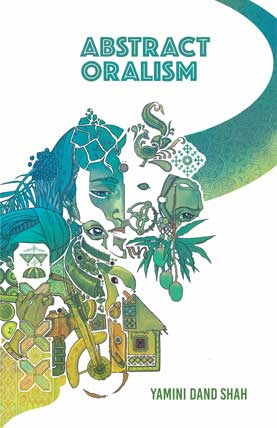
Yamini Dand Shah, with this new book Abstract Oralism, captures both precisely and remarkably the mysterious and elusive world of the Kachchh of Western Gujarat. Her metaphors and similes transport the reader towards this ancient terrain where Indus Valley peoples once flourished. Conceptually advanced and sophisticated, the poetry of this book causes us to reconsider our place in the world: in the light of the author’s extraordinary perception that translates earthly experience into a uniquely beautiful expression of the human condition.
-KEVIN MCGRATH, Poet Laureate, Harvard University
In the ‘Abstract Oralism’, Yamini reveals the beguiling mythic and mimetic history of the dangerously luminous, sensuous, and ephemeral beauty of the desert of Rann of Kachchh leaving us astonished and redeemed at once. ‘Sifting through soiled pages of an anti-modern, abridged dictionary’ of memories, she weaves embroidered tales of palaeolithic biographies of forgotten people in an experimental genre of speech-therapy with fierce emotional power. By turns poignant, playful and ironic, Yamini’s deceptively layered linguistic dreamscapes break new ground in experiencing hallucinatory minimalism in poetry. A mesmerizing debut!
-ASHWANI KUMAR, Poet, Writer and Public Policy Researcher
Related products
-

Folie Á Deux
$18About the Book
Jennifer Robertson’s first book of poems, Folie à Deux, introduces us to an assured and sophisticated new voice in the world of Anglophone poetry in India. Robertson celebrates the sensuousness, the warm flesh of language. Her poems sharpen our awareness of things viscerally experienced, our memories of things held and cherished, our desire to secure forever the ephemeral yet compelling images of photography and cinema. In her handling, the resonance of the breath crafted into sound takes concrete occupancy of its environment, becomes a percussive force; she writes: “I wonder about sound invading space, wounding, astounding space and stories rising like a Phoenix.”
Here is a poet who captivates us, enchants us into spaces that “have two doors and no exit”.
– Ranjit Hoskote, author of Jonahwhale
Jennifer Robertson’s poems invite us to a world of “intimate strangeness” where poetry is “nuts and waywardness” and poets are “hoodlums” who leave behind “delinquencies” as their legacy. Although thickly silted with references to literature, painting and cinema, this is not a world of glibness or slick cultural sophistication. A throbbing vein of disquiet runs through Folie à Deux reminding us of relationships that could lean towards “darkness and magic”; lives lived in “intermission” with fragments spilling over “in the dark, under the seat”; and a self that yearns to drown into “a sunken civilisation”. This is a poetry of crafted surfaces and unexpected trenches, beeping microwaves and buried cities – allusive and “alluvial” all at once. Folie à Deux is a strong, self-assured début.
– Arundhathi Subramaniam, author of Wild Women
Lexically restless, geodesic, and unapologetically omnivorous, Jennifer Robertson’s Folie à Deux is a dialectic that considers the fulcra of observance and animacy, liberation and stagnancy, tranquility and obsession. Robertson’s poetry applies a painterly heat to our bodies, and readers to scratch at persona, and to map a self through the historical detritus of art and signs. What disturbs me most about this book is that, ravenously, Robertson “reinvents time travel”.
– Jhani Randhawa, author of Time Regime
-
Mapping Gondwana
$16About the Book
I was moved by the ways in which, at key moments in the dialogue, rhythms shift, and instead of call-response between the poems, we go into each poet’s memory – a call-response between present and past. As they traversed back and forth between private parallel hum – after all, hum is “we” in Hindi – and direct synapse, I loved how freely they responded to both inner reverie and external stimuli. In some of Ari’s poems it felt like he was revisiting earlier trips to India – so that the duet was not restricted to what has just been received but what has always been residual – suggesting collaboration as a pretext – for return? Ari’s riverine contemplations counterpoint Subhro’s archetypal majhi (the boatman) made unmetaphorical. From Tagore’s golden boat to Subhro’s carbon kayak, what rapids have been crossed?
—Sampurna Chattarji
-
Lighthouse for drowning memories
$16About the Book
It’s in Delhi, dystopian as ever, that Sujatha Mathai continues to live and write today, and I fear her words—“I cannot save my city / Against the degradation of dust”—will echo long into the future, acquiring new meanings. And yet I’m so happy to read a new book of hers, to see that she’s still writing her poems sharp and clear as glass, full of sympathy for the world and those who suffer. It makes me feel that literature survives and helps us survive, that it carries more continuity than we think.
— Vivek Narayanan
Assistant Professor, Department of English, George Mason University -
Only the Forest Knows
$20About the Book
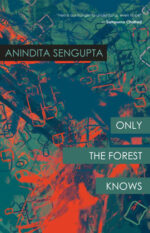
“Wings sense what they must”. And poets too. In her third poetry collection, Anindita Sengupta receives and transmits the hues of a planet mad with want, fear, breakdown. At the heart of a maelstrom of (in)humanity and conflagration, dispossession and disease, her poems bite and rage and mourn. From forage fish to polar bears, she is enmeshed and implicated. With her, we sense the natural world’s mysteries as apprehensible, but “not teachable”. In these poems, breath is the seam that will rip and tear; pain the only climate we can count on. As we embrace deception and vulnerability, we coil in and out of the quieter spaces we contain and are contained by. Hers is our hunger to understand, even hope, so that we might begin again to believe in “small miracles”, to persist, like the algae, “in a world without light.”
– Sampurna Chattarji
Anindita Sengupta asks: “How to speak of violence without /repeating it. What language? What tone? What / memory?” Throughout this coruscating collection, her fluid and inventive poiesis attempts to answer these questions, weaving contingent and deeply human meanings out of personal and collective trauma. Only the Forest Knows is a profoundly accomplished, intelligent work. Sengupta creates an urgent, sensual language that speaks out of the raw contradictions and anguish of the present. This is a poetry tempered by fire, loss and sorrow that
yet, as Rilke said, “nevertheless still praises”: a hard-won beauty that is its own hope.—Alison Croggon
-

My Home is Dissent
$16About the Book
Pooja Ugrani listens to nature amidst the thump-thump-thump of construction. Forest fires, dragons and rabbits materialise without warning, a series of ambushes that test the city-dweller’s hard-won survival instincts. Words stick their tongues out, cheekily unfamiliar. Ugrani participates physically in the making of her poems, not only through photos, but also through the palpability of the body’s smears, spills and stains. Here is a poet testing her wings, where dissension may well be a heartbeat away from dissection.
—SAMPURNA CHATTARJI, author of Unmappable Moves and Space Gulliver.Pooja’s poems do what women’s poetry has been doing forever. They shut their mouth so tight that the stifled words ricochet back in and make their hearts thud like a talking drum. And they sign it off with today's date. – MAITHREYI KARNOOR, novelist and author.
Pooja Ugrani constructs poems as one might build a home; brick by tender brick, with the mortar of memory, desire, and defiance. Her verse moves fluidly between the everyday and the elemental, where the domestic is never mundane but a site of quiet resistance and reimagining. This world of words measures the dimensions of love, labour, and loss through the delicate instruments of memory, architecture, and motherhood. She writes of labour, love, and dissent as acts of design – as deliberate gestures that hold the self together.
Ugrani’s dissent is luminous, not loud. It hums through acts of nurture, through refusal, through the courage to remain soft in a world that demands armour. Formally supple and sensorial, cerebral and sensuous, her poems fold the architectural and the emotional into one continuum.
– SRIVIDYA SIVAKUMAR, poet. -

The Tattooed Teetotaller and other wonders
$18About the Book
We say mind the book, it’s out of control.
But it’s author says
‘Nonsense verse helps its writers escape their resident demons,
setting them free to deal with the more transient ones of mischief.
At time I’ve tried to use that freedom to highlight contemporary absurdities,
at other times to write about those of a not-too-distant colonial past.
Readers will find that not everything here is nonsense, like the poem below.
But I hope they also find that however disastrous our falls into folly may be,
they can also be luminous’
Like Dictators
Rats are strict in their regulations.
Like dictators they regulate
meals and nations
along lines of bite. -

All That I Wanna Do (Marathi)
$16About the Book
Dear Sanjeev,
I read your poem yesterday ( last evening). Globalisation, and the consequent private Americanisation, corporatisation, computers, mobiles, mall culture and the decline of humanity
in every aspect of life is your concern, and mine too. That you and I have felt that comes with this new kind of life, and the regret that we feel because we cannot deter this decline or escape from it, the sarcastic presentation of the never-ending story of our contemporary miseries appear in your in the poem one after another; and interestingly (your) style neither accepts any poetic form nor it is written in any poetic language, and just as you were exhausted while carving a new definition of poetry, I was exhausted while reading your poem – this is what precisely I want to tell you by writing this exhausting second sentence. What you have expressed in this poem is the philosophy of this new way of life. Of course, I think it's significant that while presenting this philosophy afresh, you haven’t pretended that you are a philosopher!
Yours
Hemant Divate
August 28, 2004