
| Author | |
|---|---|
| Imprint | |
| Language | |
| Edition | |
| Pages | 116 |
| Binding |
About the Book
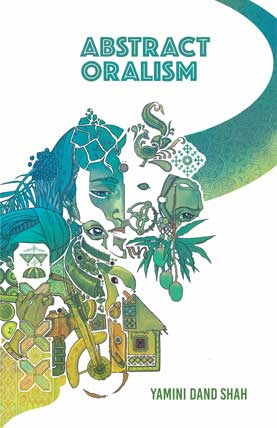
Yamini Dand Shah, with this new book Abstract Oralism, captures both precisely and remarkably the mysterious and elusive world of the Kachchh of Western Gujarat. Her metaphors and similes transport the reader towards this ancient terrain where Indus Valley peoples once flourished. Conceptually advanced and sophisticated, the poetry of this book causes us to reconsider our place in the world: in the light of the author’s extraordinary perception that translates earthly experience into a uniquely beautiful expression of the human condition.
-KEVIN MCGRATH, Poet Laureate, Harvard University
In the ‘Abstract Oralism’, Yamini reveals the beguiling mythic and mimetic history of the dangerously luminous, sensuous, and ephemeral beauty of the desert of Rann of Kachchh leaving us astonished and redeemed at once. ‘Sifting through soiled pages of an anti-modern, abridged dictionary’ of memories, she weaves embroidered tales of palaeolithic biographies of forgotten people in an experimental genre of speech-therapy with fierce emotional power. By turns poignant, playful and ironic, Yamini’s deceptively layered linguistic dreamscapes break new ground in experiencing hallucinatory minimalism in poetry. A mesmerizing debut!
-ASHWANI KUMAR, Poet, Writer and Public Policy Researcher
Related products
-
Unmappable Moves
$20About the Book
Reading Unmappable Moves, I had the strangest sensation of time expanding and closing in. These are taut, enigmatic poems—lightning flashes with bright, insistent heartbeats.—TISHANI DOSHILethal tales of sex and death that left me pining for more of Sampurna Chattarji’s mysterious lyric inventions.—JEET THAYIL -
Forty Five Shades of Brown
$16About the Book
Babitha Marina Justin’s poems, woven around self, nature, and body, have an organic architecture, gothic or temple-like, with metaphors working like sculpted images or murals around a central experience. They are honest, at times confessional, often with memories from childhood and adolescence for their raw materials; but they do not shy away from natural calamities and existential crises. Babitha's poems are at once deeply Indian and instinctively feminine in their deployment of images and the organization of experiences.
– K SatchidanandanBabitha Marina Justin has a distinct voice that is passionately lyrical and personal to the point of abandon, and in these COVID times, poetry too has also taken a Corona-Shaped turn. Her world is not only herself, but her neighbourhood, and the larger country which she peppers with a persistent historical awareness, of the Muziris and the Jews. She celebrates their joys and mourns the murky, screaming out the lurking fury in her unique verses.
– Sivakami Velliangiri -
The Tattooed Teetotaller and other wonders
$18About the Book
We say mind the book, it’s out of control.
But it’s author says
‘Nonsense verse helps its writers escape their resident demons,
setting them free to deal with the more transient ones of mischief.
At time I’ve tried to use that freedom to highlight contemporary absurdities,
at other times to write about those of a not-too-distant colonial past.
Readers will find that not everything here is nonsense, like the poem below.
But I hope they also find that however disastrous our falls into folly may be,
they can also be luminous’
Like Dictators
Rats are strict in their regulations.
Like dictators they regulate
meals and nations
along lines of bite. -
The Compass Bird
$15About the Book
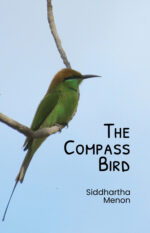
Observant and meditative, lit with gentle whimsy, Siddhartha Menon’s work on the animal world leads us from ornithology to ontology, detail to dazzling insight, in a wingbeat. Here is a book in which the reverie of snails, the ‘mynahness’ of mynahs, the unhurried gaze of nilgai, becomes a way to reflect on all the eternal questions—time, belonging, love, purpose, a world ‘stained with stillness’, in which ‘those who attend have the last word’. One of the most delightful new books of poetry I have read this year.
– Arundhathi Subramaniam
-
Ecdysis
$16About the Book
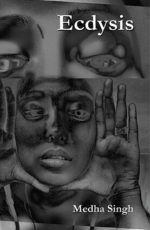
After reading the book, one is left with a haunting feeling of something that cannot be revived but lived only through the traces that it leaves in the mind. The poet dives deep into the labyrinths of time to fish out moments that are close to her.
Details that would otherwise be overlooked take on a life of their own and narrate their stories for those who are willing to listen. Medha Singh’s poems demand the reader to not be a mute spectator but feel these snippets of memories as much as they yearn to share. Powerful imagery and the attempt to capture them through words has been done beautifully. – Semeen Ali
For Medha Singh, the poem is often a subterfuge for story; the desire to be a poet is a circularity of purpose; and poetry itself is the beginning and end of trust. Prickling in all directions, uneven, at times unsteady, she chases “itinerant darkness”, achieves rare moments of equanimity, even grace. Mundane reality is a fitting anti-climax, closure an escape.
-
UNLIKELY JOURNEY
$12About the Book
As happens on all trips, in the pages of this book we find unforeseen questions and unexpected landscapes. These verses are transparent because they speak to us not about what is intuited or remembered but what is seen while trying to establish order, specify limits, and vanquish shadows.
-
Two and a Half
$16About the Book
Yogesh Patel's poems in "2½" are “sparks of fire”, igniting language into flames of inspiration in a world that fails us, but only if we permit it. Patel magnifies the
humanitarian failures in our world society with poetry of vision that is at once daring and profoundly humane. These are tales of hopes…and lost dreams, rising out of the simmering ash of society's arrested conscience, into the healing blaze of universal truths. One cannot fail to be inspired by the power of compassion in these poems.
– James Ragan, author of ‘The Hunger Wall’ and ‘The Chanter’s Reed’ and
recipient of a Poetry Society of America citation and Swan Foundation Humanitarian
Award==============
These poems are filled with recurring potent images of place and personal histories which successfully invite the reader into intimate spaces. Those spaces include everything from socks to shaving brush but also bravely address disturbing and distressing subject matter. The violence at the heart of this collection is never expressed directly but infuses the poetry, so that the reader is left shaken and thoughtful.
– Maura Dooley, Judge’s comment, Aryamati Prize 2023
-
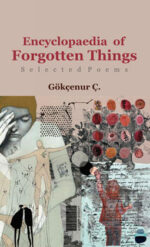
Encyclopaedia of Forgotten Things
$20About The BooK
Gökçenur Ç distils poetry from of the quotidian, revealing everyday objects, surroundings, and relationships in a new light, marvelling at the miracle of their poetic potential. This is perhaps because he lives the double life of someone whose “perfect routine of a married middle-aged engineer” couldn’t be further from the literary world he inhabits so fully and effortlessly as a poet, translator, festival organiser and initiator of many exchanges and poetry translation gatherings. All these roles are indispensable, and in his poems, he pays equal homage to the great poets he has translated, the poet friends of his generation some of whom have translated him, the woman he shares his life with — and language itself, often at odds with all the words that populate his universe. This long overdue English edition of his selected poems with a list of translation credits and acknowledgements not only makes his work available to a new readership, but also tells a story of deep affinities, friendships and collaborations that are the lifeblood of his creative practice.
– Alexandra Buchler, Director of LAF Literature Across Frontiers
“What a vigorous, deep thinking, and companionable voice is Gokcenur C.’s. He may be a new poet to us English speakers and readers, but he’s been active and well-respected in European circles, and especially in Turkish contemporary literature, for many years now. Encyclopedia of Forgotten Things offers us a big-hearted gathering of his rich narrative lyrics—poems of family, culture, and cities of “soaked neighborhoods,” poems of brilliant aphorisms (“Stones grow heavier where they stand”) and expansive attentions, poems of sorrow, eroticism, and a bountiful yearning for natural connections: “If could speak urdu / I would teach urdu to the rain….” The clarity of Gokcenur C.’s poetic idiom is especially striking—intimate, friendly, and possessed of an intense depth of passion, personal intelligence, and social engagement. It’s a poetry elixir made of measurement, music, and that intangible ingredient, soulfulness. Add paradox, his primary tool, and you have Gokcenur C.’s deepest delightful secret in Encyclopedia of Forgotten Things. If something is forgotten, how can it be catalogued for our reference, our pleasure? Maybe that’s been poetry’s magic, all along.”
– David Baker, Poet, Editor Kenyon Review
The poetry of Gökçenur Ç is vibrantly alive and teeming with images, full of the details and patterns of everyday life while alert to the larger forces that shape it. It is ‘world’ poetry in that it engages as eloquently with the textures of locality as it does the global communities of writers and translators with which it is in dialogue. A quiet pulse of humour runs though this fine selection in which the universe is animated, made strange, and returned to us full of meaning in ‘the scribble of the space’.
– Zoë Skoulding, Poet, Professor of Poetry and Creative Writing, Bangor University