| Author | |
|---|---|
| Imprint | |
| Language | |
| Edition | |
| Pages | 116 |
| Binding |
About the Book
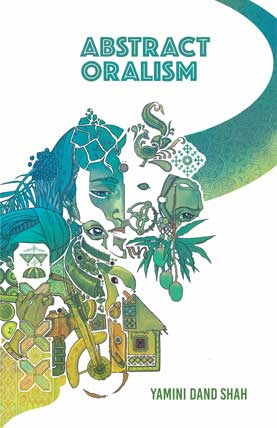
Yamini Dand Shah, with this new book Abstract Oralism, captures both precisely and remarkably the mysterious and elusive world of the Kachchh of Western Gujarat. Her metaphors and similes transport the reader towards this ancient terrain where Indus Valley peoples once flourished. Conceptually advanced and sophisticated, the poetry of this book causes us to reconsider our place in the world: in the light of the author’s extraordinary perception that translates earthly experience into a uniquely beautiful expression of the human condition.
-KEVIN MCGRATH, Poet Laureate, Harvard University
In the ‘Abstract Oralism’, Yamini reveals the beguiling mythic and mimetic history of the dangerously luminous, sensuous, and ephemeral beauty of the desert of Rann of Kachchh leaving us astonished and redeemed at once. ‘Sifting through soiled pages of an anti-modern, abridged dictionary’ of memories, she weaves embroidered tales of palaeolithic biographies of forgotten people in an experimental genre of speech-therapy with fierce emotional power. By turns poignant, playful and ironic, Yamini’s deceptively layered linguistic dreamscapes break new ground in experiencing hallucinatory minimalism in poetry. A mesmerizing debut!
-ASHWANI KUMAR, Poet, Writer and Public Policy Researcher
Related products
-

Variations on Silence
$16About the Book
Throughout Variations on Silence, Nadia Mifsud draws us into intimate scenes and gestures,
as if overhearing lovers mid-conversation. The central figure – almost mythic in scale – is
silence itself, which Mifsud imbues with weight, texture, physical presence. Silence shelters,
stirs, shakes, unwinds, “tastes / of red soil and conifer.” Miriam Calleja’s translation conveys
the ache and longing of that silence with a sensual clarity rare in English. A fabulous book.
– John Wall Barger, The Elephant of SilenceAs Dante said, love is what moves the sun and the other stars – but it is also what flows
through all things, binding them together. This is what breathes in the silences – namely, in
the poems – of Nadia Mifsud : a listening rooted in love, which through love transforms and
reintegrates lovers into the cosmos, restoring the world to something deeply connected to
our humanity. Calleja’s admirable translation – herself a poet – captures this dynamic with
striking clarity and preserves it as the central energy of the work. The encounter between
these two poets ultimately offers us a book of poetry, not merely a book of poems – I repeat:
a cohesive and coherent work, held together by a vision both profound and vast. Ovid’s
Metamorphoses, Rilke’s Duino Elegies… The poetry found in this book is capable of
traversing time and resisting it, of crossing space to bind us – irrevocably – to this cosmos,
and in that bond, to reveal the secret of life.– Pietro Federico, Most of the Stars
Every verb in Nadia Mifsud's work shimmers, echoes, and rappels down the cliffside of a
stanza. Valences expand through repetition; "waves like jaws" locate the oceanic motion. One physically hears and feels the island of Malta in the tension between the isolation,
refrain, and the sea returning to shore, empty-handed. Miriam Calleja's attentive translation brings these affects and "sea-scented places" into English without forsaking the resonances and echoes of "cockleshells" past. Variations on Silence touches the hem where displacement circles the idea of place and results in lyric. The mode is modern; the echoes are ancient; the book is irresistible.– Alina Stefanescu, My Heresies
-

My Home is Dissent
$16About the Book
Pooja Ugrani listens to nature amidst the thump-thump-thump of construction. Forest fires, dragons and rabbits materialise without warning, a series of ambushes that test the city-dweller’s hard-won survival instincts. Words stick their tongues out, cheekily unfamiliar. Ugrani participates physically in the making of her poems, not only through photos, but also through the palpability of the body’s smears, spills and stains. Here is a poet testing her wings, where dissension may well be a heartbeat away from dissection.
—SAMPURNA CHATTARJI, author of Unmappable Moves and Space Gulliver.Pooja’s poems do what women’s poetry has been doing forever. They shut their mouth so tight that the stifled words ricochet back in and make their hearts thud like a talking drum. And they sign it off with today's date. – MAITHREYI KARNOOR, novelist and author.
Pooja Ugrani constructs poems as one might build a home; brick by tender brick, with the mortar of memory, desire, and defiance. Her verse moves fluidly between the everyday and the elemental, where the domestic is never mundane but a site of quiet resistance and reimagining. This world of words measures the dimensions of love, labour, and loss through the delicate instruments of memory, architecture, and motherhood. She writes of labour, love, and dissent as acts of design – as deliberate gestures that hold the self together.
Ugrani’s dissent is luminous, not loud. It hums through acts of nurture, through refusal, through the courage to remain soft in a world that demands armour. Formally supple and sensorial, cerebral and sensuous, her poems fold the architectural and the emotional into one continuum.
– SRIVIDYA SIVAKUMAR, poet. -

The Tattooed Teetotaller and other wonders
$18About the Book
We say mind the book, it’s out of control.
But it’s author says
‘Nonsense verse helps its writers escape their resident demons,
setting them free to deal with the more transient ones of mischief.
At time I’ve tried to use that freedom to highlight contemporary absurdities,
at other times to write about those of a not-too-distant colonial past.
Readers will find that not everything here is nonsense, like the poem below.
But I hope they also find that however disastrous our falls into folly may be,
they can also be luminous’
Like Dictators
Rats are strict in their regulations.
Like dictators they regulate
meals and nations
along lines of bite. -
-
Mapping Gondwana
$16About the Book
I was moved by the ways in which, at key moments in the dialogue, rhythms shift, and instead of call-response between the poems, we go into each poet’s memory – a call-response between present and past. As they traversed back and forth between private parallel hum – after all, hum is “we” in Hindi – and direct synapse, I loved how freely they responded to both inner reverie and external stimuli. In some of Ari’s poems it felt like he was revisiting earlier trips to India – so that the duet was not restricted to what has just been received but what has always been residual – suggesting collaboration as a pretext – for return? Ari’s riverine contemplations counterpoint Subhro’s archetypal majhi (the boatman) made unmetaphorical. From Tagore’s golden boat to Subhro’s carbon kayak, what rapids have been crossed?
—Sampurna Chattarji
-
Encyclopaedia of Forgotten Things
$20About The BooK
Gökçenur Ç distils poetry from of the quotidian, revealing everyday objects, surroundings, and relationships in a new light, marvelling at the miracle of their poetic potential. This is perhaps because he lives the double life of someone whose “perfect routine of a married middle-aged engineer” couldn’t be further from the literary world he inhabits so fully and effortlessly as a poet, translator, festival organiser and initiator of many exchanges and poetry translation gatherings. All these roles are indispensable, and in his poems, he pays equal homage to the great poets he has translated, the poet friends of his generation some of whom have translated him, the woman he shares his life with — and language itself, often at odds with all the words that populate his universe. This long overdue English edition of his selected poems with a list of translation credits and acknowledgements not only makes his work available to a new readership, but also tells a story of deep affinities, friendships and collaborations that are the lifeblood of his creative practice.
– Alexandra Buchler, Director of LAF Literature Across Frontiers
“What a vigorous, deep thinking, and companionable voice is Gokcenur C.’s. He may be a new poet to us English speakers and readers, but he’s been active and well-respected in European circles, and especially in Turkish contemporary literature, for many years now. Encyclopedia of Forgotten Things offers us a big-hearted gathering of his rich narrative lyrics—poems of family, culture, and cities of “soaked neighborhoods,” poems of brilliant aphorisms (“Stones grow heavier where they stand”) and expansive attentions, poems of sorrow, eroticism, and a bountiful yearning for natural connections: “If could speak urdu / I would teach urdu to the rain….” The clarity of Gokcenur C.’s poetic idiom is especially striking—intimate, friendly, and possessed of an intense depth of passion, personal intelligence, and social engagement. It’s a poetry elixir made of measurement, music, and that intangible ingredient, soulfulness. Add paradox, his primary tool, and you have Gokcenur C.’s deepest delightful secret in Encyclopedia of Forgotten Things. If something is forgotten, how can it be catalogued for our reference, our pleasure? Maybe that’s been poetry’s magic, all along.”
– David Baker, Poet, Editor Kenyon Review
The poetry of Gökçenur Ç is vibrantly alive and teeming with images, full of the details and patterns of everyday life while alert to the larger forces that shape it. It is ‘world’ poetry in that it engages as eloquently with the textures of locality as it does the global communities of writers and translators with which it is in dialogue. A quiet pulse of humour runs though this fine selection in which the universe is animated, made strange, and returned to us full of meaning in ‘the scribble of the space’.
– Zoë Skoulding, Poet, Professor of Poetry and Creative Writing, Bangor University
-

All that I Wanna Do (English)
$16About Book
Dear Sanjeev
I read your poem yesterday ( last evening). Globalisation, and the consequent private Americanisation, corporatisation, computers, mobiles, mall culture and the decline of humanity in every aspect of life is your concern, and mine too.
That you and I have felt that comes with this new kind of life, and the regret that we feel because we cannot deter this decline or escape from it, the sarcastic presentation of the never-ending story of our contemporary miseries appear in your in the poem one after another; and interestingly (your) style neither accepts any poetic form nor it is written in any poetic language, and just as you were exhausted while carving a new definition of poetry, I was exhausted while reading your poem – this is what precisely I want to tell you by writing this exhausting second sentence.
What you have expressed in this poem is the philosophy of this new way of life.
Of course, I think it’s significant that while presenting this philosophy afresh, you haven’t pretended that you are a philosopher!
Yours
Hemant Divate
August 28, 2004
-
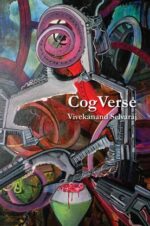
CogVerse
$20About the Book
Vivekanand Selvaraj’s debut book of poems, ‘Cog Verse’ has clever cogs that rotate and fit snugly into the amiable cog machine in succinct poetry. His prose poetry dealing with the internal life of a freshman and the business of medicine as a profession is unflinchingly incisive. Speaking of his ancestors and grandparents on both sides, nowhere does he forget his Tamil ethos and the book comes off as startlingly original.
— Sivakami Velliangiri
_____________________
Here, in these poems, the object-worlds of a pre-liberalized India rub shoulders with the pandemic present, incongruent, yet strangely essential. Here, failure is rebellion, and rebellion in itself, becomes an illusion. Yet, Selvaraj’s poems document a severe critique of the institutions we hold as pristine – the medical school, the hospital, the deep state. Oftentimes, this critique is that of an insider, who, in spite of the said critique, feels depleted, hopeless, leaving us – the readers – asking for more. And, it is often done through careful manipulation of the white spaces on a page, unconventional line-break and a playful engagement with the very idea of lyric subjectivity.
— Nandini Dhar
___________________
Vivekanand is a poet of spaces. He isn’t interested in the broader themes of things that happen every day. But he is still interested in the façade of equanimity, everyday cruelty, and mundanity. These poems are Vivekanand’s way of chronicling stories for posterity, but also because everyone else has simply forgotten to catalogue them. These aren’t poems you’ve read before. Vivekanand isn’t a poet you’ve met before. Unique in his writing and assured in his voice, Vivekanand’s CogVerse is a necessary addition to your poetry collection.
—- Manjiri Indurkar