| Author | |
|---|---|
| Translated by | |
| Edited by | |
| Imprint | |
| Publication Year | 2018 |
| Language | Bengali, English |
| Edition | 1st |
| Binding | Paperback |
| Pages | 90 |

Aerial Roots
$12
Out of stock
Related products
-

Walk Like Monsters
$12About the Book
These are late night poems of the body that sing also of catastrophe, how wide it is, how easy, like ‘being in one place instead of another.’ Anindita Sengupta’s new book is hot, harrowing and masterful. It will stay with me for a long time. ~ Jeet Thayil Anindita Sengupta is a poet of the precise line, the measured image, of mediated passion, the sure ending. Her observation is acute, her politics seldom theatrical and her passage from one world to another and from the object to the spirit smooth and subtle. Her poetry proves that silk can wound and knife can flower. ~ K. Satchidanandan “They rise in this landscape, the ancients – old loves, myths, cities, secret revolutions. Anindita Sengupta’s language is forever old and forever new. Fretful, explosive, terrifying. Her poetry will leave you with beautiful scars.” ~ Janice Pariat
-
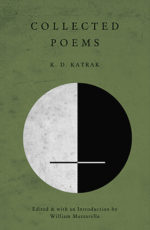
Collected Poems
$20About the Book
Adman, householder, mystic, public intellectual and ashram devotee, Kersy Katrak (1936-2007) has never quite received his due as a poet. Katrak’s ‘lush, provocative, and very readable’verse has, with its rare but persistent appearance in anthologies of Indian poetry in English, remained in a curious way at once unforgotten and unrecognized. This book aims, at long last,to remedy this state of affairs. It is the very first comprehensive collection of Katrak’s poetic work, most of it long out of print,some of it previously published only in hard-to-find periodicals. Katrak’s poetry resonates powerfully with Wallace Steven’s observation that ‘It is equal to living in a tragic land, To live in a tragic time’. His concerns remain,palpably,our concerns: a search for the everyday alchemy that might translate the visceral potentials of collective life into generative forms of belonging. This problem of the relation between inner energies and outer forms is at the core of Katrak’s work as a poet and a mystic. And it is what binds his esoteric commitments to his career in advertising. The anthropologist William Mazzarella’s critical introduction to the present volume is the first substantive exploration of these connections in Katrak’s life and work.
-

Frazil
$16About the Book
Menka Shivdasani’s poetry is both original and strikingly unusual, not just her tangential way of putting things across, but also how thought process and imagination run away with the poem, and make it exciting. An experience is translated into another experience and then gets mixed with fancy in a juice blender. Chopping lettuce, she’ll be assailed by visions—burning bride, politician, a ‘wounded Hiroshima’, and finally a finger-chopping Nazi. A poem about separation will end with her handling ‘alien porcelain’ at a tea party. For over three decades the excitement she brings to her fine poetry has never deserted her.
-

First Infinities
$12About the Book
Hell, or a state very much like it, does feature in Nambisan’s poetic underworld, which is deep, intricate and enticing. …… – From the Preface by Adil Jussawala Nambisan’s view of humankind is bleak, his view of the possibilities of poetry even bleak
-
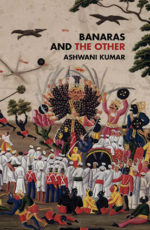
Banaras And The Other
$14About the Book
Ashwani Kumar’s poems in ‘Banaras and The Other” are a mischievous irreverence turned at times to the present and at times to the past. The personal and the political, memories and nostalgia, mythical characters and contemporary parodies mix and mingle in these poems in diverse proportions to produce a rare poetic energy that belongs entirely to our times of pain and paradox. –K. Satchidanandan
Ashwani Kumar’s Banaras and the Other captivates us as a delightful romp through myth, folklore and history. Read past the revelry, however, and you will see that it engages passionately and provocatively with the fissured, schismatic scenarios of 21st century India.–Ranjit Hoskote