
| Author | |
|---|---|
| Imprint | |
| Language | |
| Edition | |
| Publication Year | Feb 2019 |
| Binding | |
| Pages | 64 |
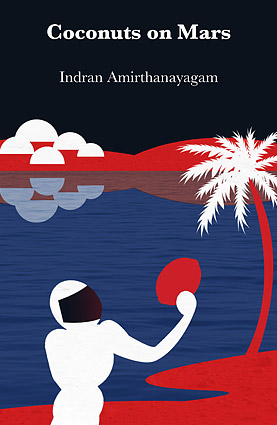
$12
About the Book
Indran Amirthanayagam has been writing poems that will outlive his time, and they have been translated already into several world languages. These new poems both look bravely into the future as they turn back, at the same time, to the remembered mists of his childhood. Indran embraces various contradictions in his capacious heart and mind, that have enabled him to love in many languages, to cross all sorts of borders, geographic, linguistic, and political, and to champion liberty of expression wherever he goes. Indran?s is a journey beyond limits, and these poems take you much of the way along with him on his restless exploration of his multiple worlds.
-Shashi Tharoor
Related products
-
Mutatis Mutandis
$10About the Book
Through sex-dolls and addictions, for whom poetry can be just another narcotic throbbing in your vein. Khandekar’s man has stretched himself to the limits of the Machiavellian primate, modifying his behaviour and absurdum to fit in with the changing patterns of a world spinning out of control on the wheel of progress. Meet the ghost in the machine Sanjeev Khandekar’s poetry grins impishly, then socks you in the eye. It makes you feel horns on your head and inspect your skin for green stripes. Khandekar breaks conventions of belief, language and genre to offer a world with no certainties, where you are just a gob of self-awareness floating in a matrix of virtual reality, mutating every moment to balance your inner needs with social expectations. You are the Mutatis Mutandis Man the human ‘with necessary changes’ carried out the modified man tossed between inscrutable science and enigmatic religious faith, the creature who gropes for love and creativity that may lure you towards self-destruction. Meet Khandekar’s Monster and see if he seems familiar.
Khandekar’s poetry, like his art, is disturbingly unconventional; and Abhay Sardesai and Nandita Wagle’s excellent translation from Marathi now brings it to the English reader.
-Antara Dev Sen -

Grab your heart & follow me
$3About the Book
“In my wonderland, there are only beginnings, ‘there is no end’. Plunge into this book of?poems by Claus Ankersen where cat-gods rule, babies are born with stargates for eyes, kisses are catalogued and the 12th pen writes of celebratory sins. Expand the eternity of now. Be nomad, tiger, ‘soulhuntress.’ Head-dive into the mysteries of the world. Dance
-
Brouhahas Of Cocks
$15About the Book
Hardback awakening The air is thick, and has revived my books, anticipating the first spell of a Bombay monsoon. Ambient moisture has slaked pages that shuffle and twist, arise to a wakefulness, unleaving. Feeling the discomfort of nearness,
-
Hieroglyphs
$29About the Book
Hieroglyphs is a translation of Sahitya Akademi Award winning collection in Marathi- Chitralipi by Vasant Abaji Dahake. It has been translated into the English by Rahee Dahake.
-

Last-Ditch Ecstasy
$14About the Book
Adrian Grima in collaboration with his talented and unusually resourceful translator, Albert Gatt – has produced a rich and memorable compilation of poems. Their geographical and emotional stew is international in its flavours yet always Maltese in its complex marinations. Grima succeeds in being – and these are potent combinations – both lyrical and true-to-life, both tender and unblinking, both comforting and challenging. His collection is a thought-provoking joy.- Jim Crace
How can the soul survive the world’s brutality. This is the essential, unanswerable question that Adrian Grima asks in and through his poems, beautifully translated from the Maltese by Albert Gatt. Taut with unexpected collusions, the poems walk the tightrope tensions of time and space. Turmoil, both emotional and political, is contained within the ascetic rigour of the lines; the mysteries of the distant are brought closer through eyes and lips, taste and touch. In Grima’s world, a lull can be as keen as a knife, blood can be the ultimate betrayal. An arterial anxiety courses through his work. Between “thistle and sun”, between skin and skin, between “departure and return”, the poet repeatedly alerts us to the heart-breaking fragility of the body, besieged. Coexistent with his bruising awareness of damage is his faith in contact, in simple human pleasures, a conversation, a pot of flowers, a meal. Deeply intelligent and moving, here is a book with “sky in its wings, migration in its heart”. Read it, be shattered, then soar.- Sampurna Chattarji
-

Zingonia Zingonechya Kavita
$10About the Book
b.1967 is an internationally well-known Marathi poet, editor, publisher and translator. His published works include Chautishiparyantchya Kavita Poems Till Thirty-Four, Thambtach Yet Nahi Just Cant Stop and Ya Roommadhye Aale Ki Life Suru Hote The Moment You Enter This Room, Life Begins. His poems have been translated into English, French, Spanish, German, Urdu, Arabic, Gujarati, Bengali, Hindi, Oriya, Tamil, Telugu, Kannada and Malayalam. The celebrated poet and translator Dilip Chitre translated Chautishiparyantchya Kavita into English and titled the book Virus Alert which then has been translated into Spanish-Alarma De Virus by Zingonia Zingone and in Irish as Folireamh Vris by Gabriel Rosenstock.
-
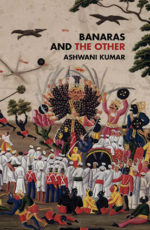
Banaras And The Other
$14About the Book
Ashwani Kumar’s poems in ‘Banaras and The Other” are a mischievous irreverence turned at times to the present and at times to the past. The personal and the political, memories and nostalgia, mythical characters and contemporary parodies mix and mingle in these poems in diverse proportions to produce a rare poetic energy that belongs entirely to our times of pain and paradox. –K. Satchidanandan
Ashwani Kumar’s Banaras and the Other captivates us as a delightful romp through myth, folklore and history. Read past the revelry, however, and you will see that it engages passionately and provocatively with the fissured, schismatic scenarios of 21st century India.–Ranjit Hoskote
-
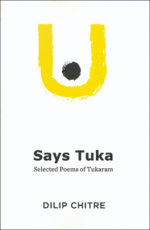
Says Tuka-Selected poems of Tukaram
$30About the Book
Tukaram was born in 1608 and vanished without a trace in 1650. what little we know of his life is a reconstruction from his own autobiographical poems, the contemporary poetess Bahinabai’s memoirs in verse, and the later biographer of Marathi poet-saints, Mahipati’s account. The rest is all folklore, though it cannot be dismissed on those grounds alone. Modern scholars such as the late V. S. Bendre have made arduous efforts to collate evidence from disparate contemporary sources to establish a well-researched biography of Tukaram. But even this is largely conjectural.
Tukaram is therefore not only the last great Bhakti poet in Marathi but he is also the first truly modern Marathi poet in terms of temper and thematic choice, technique and vision. He is certainly the most vital link between medieval and modern Marathi poetry. Tukaram’s stature in Marathi literature is comparable to that of Shakespeare in English or Goethe in German. He could be called the quintessential Marathi poet reflecting the genius of the language as well as its characteristic literary culture. There is no other Marathi writer who has so deeply and widely influenced Marathi literary culture since. Tukaram’s poetry has shaped the Marathi language, as it is spoken by 70 million people today and not just the literary language. Perhaps one should compare his influence with that of the King James version of the Bible upon speakers of the English language. For Tukaram’s poetry is also used by illiterate millions to voice their prayers or to express their love of God.