| Author | |
|---|---|
| Imprint | |
| Language | |
| Edition | |
| Publishing Year | |
| Pages | 108 |
| Binding |

Lighthouse for drowning memories
$16
About the Book
It’s in Delhi, dystopian as ever, that Sujatha Mathai continues to live and write today, and I fear her words—“I cannot save my city / Against the degradation of dust”—will echo long into the future, acquiring new meanings. And yet I’m so happy to read a new book of hers, to see that she’s still writing her poems sharp and clear as glass, full of sympathy for the world and those who suffer. It makes me feel that literature survives and helps us survive, that it carries more continuity than we think.
— Vivek Narayanan
Assistant Professor, Department of English, George Mason University
Related products
-
Banaras And The Other
$14About the Book
Ashwani Kumar’s poems in ‘Banaras and The Other” are a mischievous irreverence turned at times to the present and at times to the past. The personal and the political, memories and nostalgia, mythical characters and contemporary parodies mix and mingle in these poems in diverse proportions to produce a rare poetic energy that belongs entirely to our times of pain and paradox. –K. Satchidanandan
Ashwani Kumar’s Banaras and the Other captivates us as a delightful romp through myth, folklore and history. Read past the revelry, however, and you will see that it engages passionately and provocatively with the fissured, schismatic scenarios of 21st century India.–Ranjit Hoskote
-
Frazil
$16About the Book
Menka Shivdasani’s poetry is both original and strikingly unusual, not just her tangential way of putting things across, but also how thought process and imagination run away with the poem, and make it exciting. An experience is translated into another experience and then gets mixed with fancy in a juice blender. Chopping lettuce, she’ll be assailed by visions—burning bride, politician, a ‘wounded Hiroshima’, and finally a finger-chopping Nazi. A poem about separation will end with her handling ‘alien porcelain’ at a tea party. For over three decades the excitement she brings to her fine poetry has never deserted her.
-
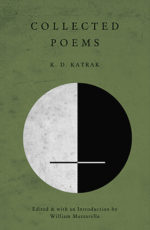
Collected Poems
$20About the Book
Adman, householder, mystic, public intellectual and ashram devotee, Kersy Katrak (1936-2007) has never quite received his due as a poet. Katrak’s ‘lush, provocative, and very readable’verse has, with its rare but persistent appearance in anthologies of Indian poetry in English, remained in a curious way at once unforgotten and unrecognized. This book aims, at long last,to remedy this state of affairs. It is the very first comprehensive collection of Katrak’s poetic work, most of it long out of print,some of it previously published only in hard-to-find periodicals. Katrak’s poetry resonates powerfully with Wallace Steven’s observation that ‘It is equal to living in a tragic land, To live in a tragic time’. His concerns remain,palpably,our concerns: a search for the everyday alchemy that might translate the visceral potentials of collective life into generative forms of belonging. This problem of the relation between inner energies and outer forms is at the core of Katrak’s work as a poet and a mystic. And it is what binds his esoteric commitments to his career in advertising. The anthropologist William Mazzarella’s critical introduction to the present volume is the first substantive exploration of these connections in Katrak’s life and work.
-
-

Durable Transit
$22About the Book
Ravi Shankar’s poems are immortal in the flesh, finding in The life of the mind its interpretations, its instrumentality. The surpassing, transient, lyrical moment; and in the life of the World’s body the permanent, unflinching presence of thought, Unconfined by time and space. They are the verbal artifacts of a Singular, many-sided, and distinguished consciousness.Pulitzer Prize winner Vijay Seshadri Engorged with image, thick, viscous and churning, Ravi Shankar’s Poems have the density of mercury as well as its fluidity and Mobility…The energy is visceral. The language is restless, hungry For surprise, the register swinging between the formal and the Demotic (both American and Indian). Underlying this is an Almost voluptuous need to embrace myth, history, metaphysics And pop culture, and bring all of it into a single book, and Sometimes a single poem. This is matched by an alertness to form with references ranging from the Bop to the pada — making for A playful, stylistically supple poetry. – Arundhathi Subramaniam Ravi Shankar’s poems have a fine-tuned sense of form, a rare Delight in language. Through wit and abstraction, they reveal a Metaphysics of longing, binding us to the elements of our moving World. – Meena Alexander
Ravi Shankar is truly, now, one of America’s finest younger poets.-Dick Allen
-

Last-Ditch Ecstasy
$14About the Book
Adrian Grima in collaboration with his talented and unusually resourceful translator, Albert Gatt – has produced a rich and memorable compilation of poems. Their geographical and emotional stew is international in its flavours yet always Maltese in its complex marinations. Grima succeeds in being – and these are potent combinations – both lyrical and true-to-life, both tender and unblinking, both comforting and challenging. His collection is a thought-provoking joy.- Jim Crace
How can the soul survive the world’s brutality. This is the essential, unanswerable question that Adrian Grima asks in and through his poems, beautifully translated from the Maltese by Albert Gatt. Taut with unexpected collusions, the poems walk the tightrope tensions of time and space. Turmoil, both emotional and political, is contained within the ascetic rigour of the lines; the mysteries of the distant are brought closer through eyes and lips, taste and touch. In Grima’s world, a lull can be as keen as a knife, blood can be the ultimate betrayal. An arterial anxiety courses through his work. Between “thistle and sun”, between skin and skin, between “departure and return”, the poet repeatedly alerts us to the heart-breaking fragility of the body, besieged. Coexistent with his bruising awareness of damage is his faith in contact, in simple human pleasures, a conversation, a pot of flowers, a meal. Deeply intelligent and moving, here is a book with “sky in its wings, migration in its heart”. Read it, be shattered, then soar.- Sampurna Chattarji
-
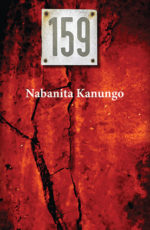
159
$12About the Book
Nabanita Kanungo’s collection is simultaneously an elegy and a victory song. A documentation of the heartbreaks that have plagued our subcontinent for the past century or so, her poems re-define the lyric form, chronicling the unfolding of a personal self framed by larger political events. Here, history appears as a long, continuous saga of violence, in which Partition memories remain juxtaposed within the everyday lived realities and violences of neoliberal Indian cities. With this collection, Kanungo provides a ghostly account of quotidian survival?stories that remain forever out of official histories?and re-defines the meaning of Anglophone India political poetry of contemporary times.Nabanita Kanungo’s poems ache with an awareness of how poetry cannot truly evoke anything but absence, of how ‘It rains and words say nothing’; ‘Only memory is green’. In this tragedy, Kanungo finds the only solace available to the poet: a luminous quality in the every day, the ‘Mirror where things are simply written with light’. These poems work in the liminal spaces of the world and of the self, between the present moment and its turning into memory, between words and rain.