| Author | |
|---|---|
| Imprint | |
| Language | |
| Edition | |
| Publishing Year | |
| Pages | 108 |
| Binding |

Lighthouse for drowning memories
$16
About the Book
It’s in Delhi, dystopian as ever, that Sujatha Mathai continues to live and write today, and I fear her words—“I cannot save my city / Against the degradation of dust”—will echo long into the future, acquiring new meanings. And yet I’m so happy to read a new book of hers, to see that she’s still writing her poems sharp and clear as glass, full of sympathy for the world and those who suffer. It makes me feel that literature survives and helps us survive, that it carries more continuity than we think.
— Vivek Narayanan
Assistant Professor, Department of English, George Mason University
Related products
-

First Infinities
$12About the Book
Hell, or a state very much like it, does feature in Nambisan’s poetic underworld, which is deep, intricate and enticing. …… – From the Preface by Adil Jussawala Nambisan’s view of humankind is bleak, his view of the possibilities of poetry even bleak
-
Mutatis Mutandis
$10About the Book
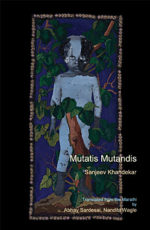
Through sex-dolls and addictions, for whom poetry can be just another narcotic throbbing in your vein. Khandekar’s man has stretched himself to the limits of the Machiavellian primate, modifying his behaviour and absurdum to fit in with the changing patterns of a world spinning out of control on the wheel of progress. Meet the ghost in the machine Sanjeev Khandekar’s poetry grins impishly, then socks you in the eye. It makes you feel horns on your head and inspect your skin for green stripes. Khandekar breaks conventions of belief, language and genre to offer a world with no certainties, where you are just a gob of self-awareness floating in a matrix of virtual reality, mutating every moment to balance your inner needs with social expectations. You are the Mutatis Mutandis Man the human ‘with necessary changes’ carried out the modified man tossed between inscrutable science and enigmatic religious faith, the creature who gropes for love and creativity that may lure you towards self-destruction. Meet Khandekar’s Monster and see if he seems familiar.
Khandekar’s poetry, like his art, is disturbingly unconventional; and Abhay Sardesai and Nandita Wagle’s excellent translation from Marathi now brings it to the English reader.
-Antara Dev Sen -
The Owl and the Laughing Buddha
$12About the Book
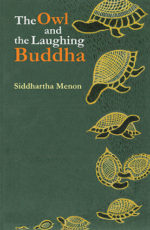
The poems in The Owl and the Laughing Buddha bring a ‘lighthouse sweep of attentiveness’ to their subjects. This is a book about noting, from the title poem’s companionable but contrasting figures on a writing desk to the devastating aftermath of a cloudburst in the mountains, and from a flier’s eye-view to a walker’s – and a mole’s. Here are poems interested in gods and figures of myth, and in observing houses, trees, birds and other creatures in a changing neighbourhood; poems that talk shop with fellow poets and respond to works of art and culture; and poems that watch our responses to the daily catastrophes that sometimes constitute ‘news’ – whose interest is no less a matter of whimsy, perhaps, than some of the tales narrated in the final section of the book. Yet the poems rest on an implicit conviction that everything must be given its due and treated seriously – though not solemnly, for it is mirth, after all, that is the laughing Buddha’s centre of gravity. Treading margins between the real and the imagined, the concerned and the tongue-in-cheek, this is Menon’s third collection of poems.
-
-

Grab your heart & follow me
$3About the Book
“In my wonderland, there are only beginnings, ‘there is no end’. Plunge into this book of?poems by Claus Ankersen where cat-gods rule, babies are born with stargates for eyes, kisses are catalogued and the 12th pen writes of celebratory sins. Expand the eternity of now. Be nomad, tiger, ‘soulhuntress.’ Head-dive into the mysteries of the world. Dance
-

Bookmarking the Oasis
$15About the Book
The poems in Bookmarking the Oasis slide between water and land as they reflect on boundaries, partings, and the identities thrust on us. Luminous, quiet, courageous, Srilata’s poems plunge into the poetics of the everyday, recording fugitive moments with humour, irony and compassion. Nothing escapes the poet?s eye, whether the classroom’s tyranny for both teacher and taught, the blindness of experts, the vulnerabilities of childhood, or the volatile interiors of the human mind. Some poems draw on other poets’ voices, beginning conversations and uncovering strange resonances. Connecting it all is the image of the oasis, unexpected, delicious; a serene, fluid clearing in the mind, bookmarked for later, that allows poetry – and everything else – to happen
-
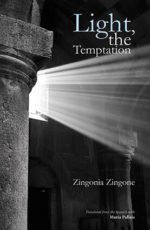
Light, the Temptation
$10About the Book
In Zingonia’s new poems it is a similar exercise that is happening. Instead of justifying the ways of God to men, these poems seem to me to be the ways of men and women to God. This daring act of a moment of surrender to the pristine unity of every thing cements the diverse poems here into one epic of mutations and metamorphoses. In this world the persona an Algerian beggar can merge into one of Jesus. Atoms and stars partake of the same reality as a flower. The fractured fates of Shen Fu, Maurice Utrillo and Max Jacob, which are acts of recurrent human tragedy become settings of Divine Comedy. Though the thrust of Zingonia’s poems is indubitably mystical, their mysticism goes beyond orthodoxies and heterodoxies of what is generally considered mystical. Their laconic beauty has the palpability of something militantly this- worldly as if Eternity is indissolubly in love with creations of time. At this point my words want to go back to the eloquent silence of these poems. I am sure other readers of this remarkable work will find these poems as enchanting and enlightening as I did. ‘Light, the Temptation’ is not a work to be read and abandoned. It invites us to contemplate on the rich resonances of its deceptively simple expressions in order to return the world to the world, ourselves to ourselves, meanings to our world where faceless robots are marching blindly towards irredeemable emptiness. – H S Shivaprakash (an excerpt from his introductory note)