| Author | |
|---|---|
| Translated by | |
| Imprint | |
| Language | |
| Edition | |
| Publishing Year | |
| Binding | |
| Pages | 88 |
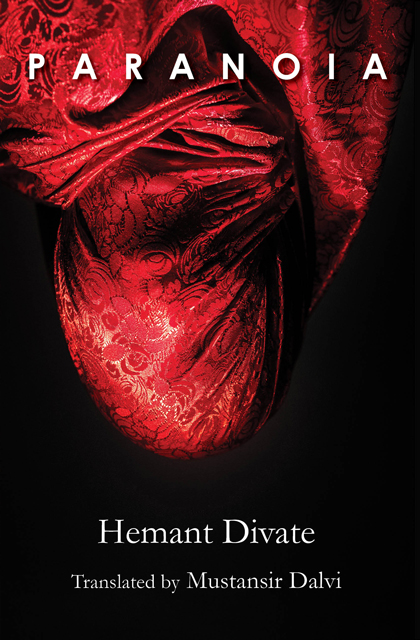
Paranoia Second Ed
$16
About the Book
Related products
-

Frazil
$16About the Book
Menka Shivdasani’s poetry is both original and strikingly unusual, not just her tangential way of putting things across, but also how thought process and imagination run away with the poem, and make it exciting. An experience is translated into another experience and then gets mixed with fancy in a juice blender. Chopping lettuce, she’ll be assailed by visions—burning bride, politician, a ‘wounded Hiroshima’, and finally a finger-chopping Nazi. A poem about separation will end with her handling ‘alien porcelain’ at a tea party. For over three decades the excitement she brings to her fine poetry has never deserted her.
-

Zingonia Zingonechya Kavita
$10About the Book
b.1967 is an internationally well-known Marathi poet, editor, publisher and translator. His published works include Chautishiparyantchya Kavita Poems Till Thirty-Four, Thambtach Yet Nahi Just Cant Stop and Ya Roommadhye Aale Ki Life Suru Hote The Moment You Enter This Room, Life Begins. His poems have been translated into English, French, Spanish, German, Urdu, Arabic, Gujarati, Bengali, Hindi, Oriya, Tamil, Telugu, Kannada and Malayalam. The celebrated poet and translator Dilip Chitre translated Chautishiparyantchya Kavita into English and titled the book Virus Alert which then has been translated into Spanish-Alarma De Virus by Zingonia Zingone and in Irish as Folireamh Vris by Gabriel Rosenstock.
-
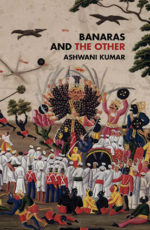
Banaras And The Other
$14About the Book
Ashwani Kumar’s poems in ‘Banaras and The Other” are a mischievous irreverence turned at times to the present and at times to the past. The personal and the political, memories and nostalgia, mythical characters and contemporary parodies mix and mingle in these poems in diverse proportions to produce a rare poetic energy that belongs entirely to our times of pain and paradox. –K. Satchidanandan
Ashwani Kumar’s Banaras and the Other captivates us as a delightful romp through myth, folklore and history. Read past the revelry, however, and you will see that it engages passionately and provocatively with the fissured, schismatic scenarios of 21st century India.–Ranjit Hoskote
-
Brouhahas Of Cocks
$15About the Book
Hardback awakening The air is thick, and has revived my books, anticipating the first spell of a Bombay monsoon. Ambient moisture has slaked pages that shuffle and twist, arise to a wakefulness, unleaving. Feeling the discomfort of nearness,
-
Scripted in the Streams
$12About the Books
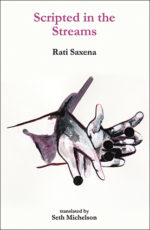
There is an intense humanity in these poems by Rati Saxena, a humanity that ennobles all of us who are humble enough to listen. There is an empathy is these poems for all living things – for the spider, for the ant, for the owl – and a similar understanding of all things that may not be alive. -Alan Titley, Professor Emeritus of Modern Irish, University College, Cork It has travelled a long, long way this voice?and we welcome it as we would do a stranger, into the West where despair, decline and decay are seemingly permanent lodgers, Saxena’s lyrics arrive like a fresh breeze. New-born, fresh and smelling of the earth, her poems draw on the well of Indo-European tradition, the intimate links that bind the female psyche and the landscape in all its fecundity. -Dr Michel h’Aodha, University of Limerick Saxena allows for different aeons to melt into each other. She creates a world in which humans interact with insects and animals. We are all of and from the same source. The image of the snake is a powerful one to explain the frustrations of modern women in today’s India. Her vision makes a mockery of the boundaries around our lives and we sail with her through a magical world, coming into contact with the source of life itself. There are echoes of Flann O’ Brien in the delightful poem about the bicycle of her youth. Taboos and rituals will not enslave her and poetry finds its way into the washing on the line and the fire that bakes our daily bread. – Ceaiti Ni Bheildiuin, poet In this selection of the poems of Rati Saxena we are drawn into a world of imagery where deep respect is shown for the low -Brian O Conchubhair, University of Notre Dame, USA
-
The Owl and the Laughing Buddha
$12About the Book
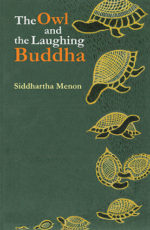
The poems in The Owl and the Laughing Buddha bring a ‘lighthouse sweep of attentiveness’ to their subjects. This is a book about noting, from the title poem’s companionable but contrasting figures on a writing desk to the devastating aftermath of a cloudburst in the mountains, and from a flier’s eye-view to a walker’s – and a mole’s. Here are poems interested in gods and figures of myth, and in observing houses, trees, birds and other creatures in a changing neighbourhood; poems that talk shop with fellow poets and respond to works of art and culture; and poems that watch our responses to the daily catastrophes that sometimes constitute ‘news’ – whose interest is no less a matter of whimsy, perhaps, than some of the tales narrated in the final section of the book. Yet the poems rest on an implicit conviction that everything must be given its due and treated seriously – though not solemnly, for it is mirth, after all, that is the laughing Buddha’s centre of gravity. Treading margins between the real and the imagined, the concerned and the tongue-in-cheek, this is Menon’s third collection of poems.
-
Collected Poems
$20About the Book
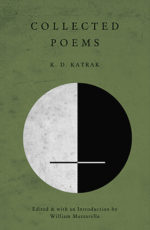
Adman, householder, mystic, public intellectual and ashram devotee, Kersy Katrak (1936-2007) has never quite received his due as a poet. Katrak’s ‘lush, provocative, and very readable’verse has, with its rare but persistent appearance in anthologies of Indian poetry in English, remained in a curious way at once unforgotten and unrecognized. This book aims, at long last,to remedy this state of affairs. It is the very first comprehensive collection of Katrak’s poetic work, most of it long out of print,some of it previously published only in hard-to-find periodicals. Katrak’s poetry resonates powerfully with Wallace Steven’s observation that ‘It is equal to living in a tragic land, To live in a tragic time’. His concerns remain,palpably,our concerns: a search for the everyday alchemy that might translate the visceral potentials of collective life into generative forms of belonging. This problem of the relation between inner energies and outer forms is at the core of Katrak’s work as a poet and a mystic. And it is what binds his esoteric commitments to his career in advertising. The anthropologist William Mazzarella’s critical introduction to the present volume is the first substantive exploration of these connections in Katrak’s life and work.