| Author | |
|---|---|
| Imprint | |
| Language | |
| Pages | 114 |
| Binding | |
| Edition | |
| Publishing Year |
About the Book
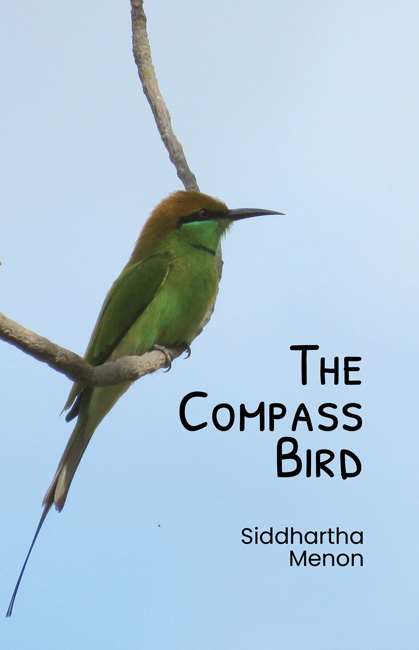
Observant and meditative, lit with gentle whimsy, Siddhartha Menon’s work on the animal world leads us from ornithology to ontology, detail to dazzling insight, in a wingbeat. Here is a book in which the reverie of snails, the ‘mynahness’ of mynahs, the unhurried gaze of nilgai, becomes a way to reflect on all the eternal questions—time, belonging, love, purpose, a world ‘stained with stillness’, in which ‘those who attend have the last word’. One of the most delightful new books of poetry I have read this year.
– Arundhathi Subramaniam
Related products
-
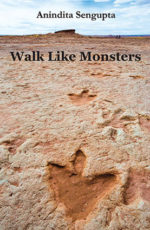
Walk Like Monsters
$12About the Book
These are late night poems of the body that sing also of catastrophe, how wide it is, how easy, like ‘being in one place instead of another.’ Anindita Sengupta’s new book is hot, harrowing and masterful. It will stay with me for a long time. ~ Jeet Thayil Anindita Sengupta is a poet of the precise line, the measured image, of mediated passion, the sure ending. Her observation is acute, her politics seldom theatrical and her passage from one world to another and from the object to the spirit smooth and subtle. Her poetry proves that silk can wound and knife can flower. ~ K. Satchidanandan “They rise in this landscape, the ancients – old loves, myths, cities, secret revolutions. Anindita Sengupta’s language is forever old and forever new. Fretful, explosive, terrifying. Her poetry will leave you with beautiful scars.” ~ Janice Pariat
-
-
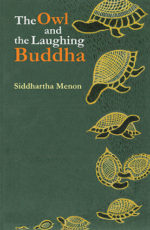
The Owl and the Laughing Buddha
$12About the Book
The poems in The Owl and the Laughing Buddha bring a ‘lighthouse sweep of attentiveness’ to their subjects. This is a book about noting, from the title poem’s companionable but contrasting figures on a writing desk to the devastating aftermath of a cloudburst in the mountains, and from a flier’s eye-view to a walker’s – and a mole’s. Here are poems interested in gods and figures of myth, and in observing houses, trees, birds and other creatures in a changing neighbourhood; poems that talk shop with fellow poets and respond to works of art and culture; and poems that watch our responses to the daily catastrophes that sometimes constitute ‘news’ – whose interest is no less a matter of whimsy, perhaps, than some of the tales narrated in the final section of the book. Yet the poems rest on an implicit conviction that everything must be given its due and treated seriously – though not solemnly, for it is mirth, after all, that is the laughing Buddha’s centre of gravity. Treading margins between the real and the imagined, the concerned and the tongue-in-cheek, this is Menon’s third collection of poems.
-
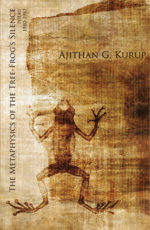
The Metaphysics of the Tree-Frog’s Silence
$12About the Book
It is our loss that we did not know Ajithan Kurup’s work when he was alive, and we did not celebrate his brave and lonely project: to render the unsayable into language. He cannot be imitated or replaced, only admired.- Jeet Thayil
To enter Ajithan G. Kurup’s poetic world is to risk, in the words of his title poem, dancing “headlong down precipices.” It’s rare to find a contemporary poet who dares near-unattainable heights and fearful depths on dancing words – words that may sometimes seem far-fetched or invented but which, in fact, are inspired variants or archaic forms of those more usually used: “sempstress” instead of “seamstress”, “enow” instead of “enough”, “trode” instead of “trod”.-ADIL JUSSAWALLA
-

Frazil
$16About the Book
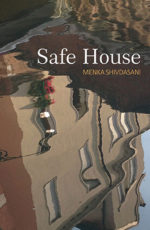
Menka Shivdasani’s poetry is both original and strikingly unusual, not just her tangential way of putting things across, but also how thought process and imagination run away with the poem, and make it exciting. An experience is translated into another experience and then gets mixed with fancy in a juice blender. Chopping lettuce, she’ll be assailed by visions—burning bride, politician, a ‘wounded Hiroshima’, and finally a finger-chopping Nazi. A poem about separation will end with her handling ‘alien porcelain’ at a tea party. For over three decades the excitement she brings to her fine poetry has never deserted her.
-

Zingonia Zingonechya Kavita
$10About the Book
b.1967 is an internationally well-known Marathi poet, editor, publisher and translator. His published works include Chautishiparyantchya Kavita Poems Till Thirty-Four, Thambtach Yet Nahi Just Cant Stop and Ya Roommadhye Aale Ki Life Suru Hote The Moment You Enter This Room, Life Begins. His poems have been translated into English, French, Spanish, German, Urdu, Arabic, Gujarati, Bengali, Hindi, Oriya, Tamil, Telugu, Kannada and Malayalam. The celebrated poet and translator Dilip Chitre translated Chautishiparyantchya Kavita into English and titled the book Virus Alert which then has been translated into Spanish-Alarma De Virus by Zingonia Zingone and in Irish as Folireamh Vris by Gabriel Rosenstock.