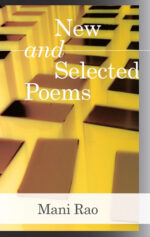
-

My Home is Dissent
$16About the Book
Pooja Ugrani listens to nature amidst the thump-thump-thump of construction. Forest fires, dragons and rabbits materialise without warning, a series of ambushes that test the city-dweller’s hard-won survival instincts. Words stick their tongues out, cheekily unfamiliar. Ugrani participates physically in the making of her poems, not only through photos, but also through the palpability of the body’s smears, spills and stains. Here is a poet testing her wings, where dissension may well be a heartbeat away from dissection.
—SAMPURNA CHATTARJI, author of Unmappable Moves and Space Gulliver.Pooja’s poems do what women’s poetry has been doing forever. They shut their mouth so tight that the stifled words ricochet back in and make their hearts thud like a talking drum. And they sign it off with today's date. – MAITHREYI KARNOOR, novelist and author.
Pooja Ugrani constructs poems as one might build a home; brick by tender brick, with the mortar of memory, desire, and defiance. Her verse moves fluidly between the everyday and the elemental, where the domestic is never mundane but a site of quiet resistance and reimagining. This world of words measures the dimensions of love, labour, and loss through the delicate instruments of memory, architecture, and motherhood. She writes of labour, love, and dissent as acts of design – as deliberate gestures that hold the self together.
Ugrani’s dissent is luminous, not loud. It hums through acts of nurture, through refusal, through the courage to remain soft in a world that demands armour. Formally supple and sensorial, cerebral and sensuous, her poems fold the architectural and the emotional into one continuum.
– SRIVIDYA SIVAKUMAR, poet. -
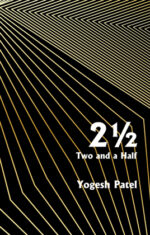
Two and a Half
$16About the Book
Yogesh Patel's poems in "2½" are “sparks of fire”, igniting language into flames of inspiration in a world that fails us, but only if we permit it. Patel magnifies the
humanitarian failures in our world society with poetry of vision that is at once daring and profoundly humane. These are tales of hopes…and lost dreams, rising out of the simmering ash of society's arrested conscience, into the healing blaze of universal truths. One cannot fail to be inspired by the power of compassion in these poems.
– James Ragan, author of ‘The Hunger Wall’ and ‘The Chanter’s Reed’ and
recipient of a Poetry Society of America citation and Swan Foundation Humanitarian
Award==============
These poems are filled with recurring potent images of place and personal histories which successfully invite the reader into intimate spaces. Those spaces include everything from socks to shaving brush but also bravely address disturbing and distressing subject matter. The violence at the heart of this collection is never expressed directly but infuses the poetry, so that the reader is left shaken and thoughtful.
– Maura Dooley, Judge’s comment, Aryamati Prize 2023
-

Variations on Silence
$16About the Book
Throughout Variations on Silence, Nadia Mifsud draws us into intimate scenes and gestures,
as if overhearing lovers mid-conversation. The central figure – almost mythic in scale – is
silence itself, which Mifsud imbues with weight, texture, physical presence. Silence shelters,
stirs, shakes, unwinds, “tastes / of red soil and conifer.” Miriam Calleja’s translation conveys
the ache and longing of that silence with a sensual clarity rare in English. A fabulous book.
– John Wall Barger, The Elephant of SilenceAs Dante said, love is what moves the sun and the other stars – but it is also what flows
through all things, binding them together. This is what breathes in the silences – namely, in
the poems – of Nadia Mifsud : a listening rooted in love, which through love transforms and
reintegrates lovers into the cosmos, restoring the world to something deeply connected to
our humanity. Calleja’s admirable translation – herself a poet – captures this dynamic with
striking clarity and preserves it as the central energy of the work. The encounter between
these two poets ultimately offers us a book of poetry, not merely a book of poems – I repeat:
a cohesive and coherent work, held together by a vision both profound and vast. Ovid’s
Metamorphoses, Rilke’s Duino Elegies… The poetry found in this book is capable of
traversing time and resisting it, of crossing space to bind us – irrevocably – to this cosmos,
and in that bond, to reveal the secret of life.– Pietro Federico, Most of the Stars
Every verb in Nadia Mifsud's work shimmers, echoes, and rappels down the cliffside of a
stanza. Valences expand through repetition; "waves like jaws" locate the oceanic motion. One physically hears and feels the island of Malta in the tension between the isolation,
refrain, and the sea returning to shore, empty-handed. Miriam Calleja's attentive translation brings these affects and "sea-scented places" into English without forsaking the resonances and echoes of "cockleshells" past. Variations on Silence touches the hem where displacement circles the idea of place and results in lyric. The mode is modern; the echoes are ancient; the book is irresistible.– Alina Stefanescu, My Heresies
-

Folie Á Deux
$18About the Book
Jennifer Robertson’s first book of poems, Folie à Deux, introduces us to an assured and sophisticated new voice in the world of Anglophone poetry in India. Robertson celebrates the sensuousness, the warm flesh of language. Her poems sharpen our awareness of things viscerally experienced, our memories of things held and cherished, our desire to secure forever the ephemeral yet compelling images of photography and cinema. In her handling, the resonance of the breath crafted into sound takes concrete occupancy of its environment, becomes a percussive force; she writes: “I wonder about sound invading space, wounding, astounding space and stories rising like a Phoenix.”
Here is a poet who captivates us, enchants us into spaces that “have two doors and no exit”.
– Ranjit Hoskote, author of Jonahwhale
Jennifer Robertson’s poems invite us to a world of “intimate strangeness” where poetry is “nuts and waywardness” and poets are “hoodlums” who leave behind “delinquencies” as their legacy. Although thickly silted with references to literature, painting and cinema, this is not a world of glibness or slick cultural sophistication. A throbbing vein of disquiet runs through Folie à Deux reminding us of relationships that could lean towards “darkness and magic”; lives lived in “intermission” with fragments spilling over “in the dark, under the seat”; and a self that yearns to drown into “a sunken civilisation”. This is a poetry of crafted surfaces and unexpected trenches, beeping microwaves and buried cities – allusive and “alluvial” all at once. Folie à Deux is a strong, self-assured début.
– Arundhathi Subramaniam, author of Wild Women
Lexically restless, geodesic, and unapologetically omnivorous, Jennifer Robertson’s Folie à Deux is a dialectic that considers the fulcra of observance and animacy, liberation and stagnancy, tranquility and obsession. Robertson’s poetry applies a painterly heat to our bodies, and readers to scratch at persona, and to map a self through the historical detritus of art and signs. What disturbs me most about this book is that, ravenously, Robertson “reinvents time travel”.
– Jhani Randhawa, author of Time Regime
-
-

Bewilderness
$30About the Book
Devashish Makhija’s Bewilderness announces its visceral bridging of self and nature in its title. The baffling challenges are outside the self, coming at the self as a profusion of stimuli from the mega-city, nature’s receding kingdom, and the horrors of the political. But they are inside the self too, as it fashions itself from fragments of childhood memory, responses to paintings that hold out inspiration, and empathetic connections forged with vulnerable Others in predicaments of distress. These poems bear resonant witness to the age in which they are written – an age governed by the call of the siren and the insistence of the curfew, the militarization of civil life and the degradation of rivers and mountains. Bewilderness captivates us with its vividly palpable images, its exhilarating shifts of tempo, and its plangent, deeply moving tonality.
– Ranjit Hoskote
-
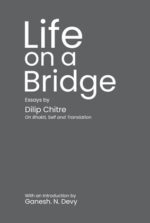
Life on a Bridge
$30About the Book
The essays and transcripts of Dilip Chitre brought together here are valuable in themselves as they offer a commentary on the Indian sense of tradition and the contemporary attitudes to literature. Every piece is of interest in itself. But, their greater worth lies in that they articulate the perspective of one of our most admirable poets on many issues that mattered to him. Taken together, they provide a basis for fathoming his poetry and should help us in making a more nuanced sense of it. Chitre was a fascinating poet, but it is not possible to say that his poetry was easily accessible to most of his readers. Like W. B. Yeats, he weaves in his poems experiences that arise in a given moment (such as the felling of a tree in his father’s house) together with many layers of timeless human quests and anxieties. He brings together silence and euphoria in an imagistic mix that is difficult to name with any precision. It is hence that this
volume of his comments, essays, lectures and other texts should be of importance for the lovers of Dilip Chitre’s literary works.– Ganesh N Devy
-
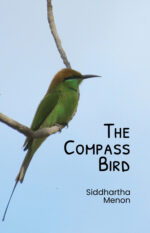
The Compass Bird
$15About the Book
Observant and meditative, lit with gentle whimsy, Siddhartha Menon’s work on the animal world leads us from ornithology to ontology, detail to dazzling insight, in a wingbeat. Here is a book in which the reverie of snails, the ‘mynahness’ of mynahs, the unhurried gaze of nilgai, becomes a way to reflect on all the eternal questions—time, belonging, love, purpose, a world ‘stained with stillness’, in which ‘those who attend have the last word’. One of the most delightful new books of poetry I have read this year.
– Arundhathi Subramaniam
-

All That I Wanna Do (Marathi)
$16About the Book
Dear Sanjeev,
I read your poem yesterday ( last evening). Globalisation, and the consequent private Americanisation, corporatisation, computers, mobiles, mall culture and the decline of humanity
in every aspect of life is your concern, and mine too. That you and I have felt that comes with this new kind of life, and the regret that we feel because we cannot deter this decline or escape from it, the sarcastic presentation of the never-ending story of our contemporary miseries appear in your in the poem one after another; and interestingly (your) style neither accepts any poetic form nor it is written in any poetic language, and just as you were exhausted while carving a new definition of poetry, I was exhausted while reading your poem – this is what precisely I want to tell you by writing this exhausting second sentence. What you have expressed in this poem is the philosophy of this new way of life. Of course, I think it's significant that while presenting this philosophy afresh, you haven’t pretended that you are a philosopher!
Yours
Hemant Divate
August 28, 2004 -

All that I Wanna Do (English)
$16About Book
Dear Sanjeev
I read your poem yesterday ( last evening). Globalisation, and the consequent private Americanisation, corporatisation, computers, mobiles, mall culture and the decline of humanity in every aspect of life is your concern, and mine too.
That you and I have felt that comes with this new kind of life, and the regret that we feel because we cannot deter this decline or escape from it, the sarcastic presentation of the never-ending story of our contemporary miseries appear in your in the poem one after another; and interestingly (your) style neither accepts any poetic form nor it is written in any poetic language, and just as you were exhausted while carving a new definition of poetry, I was exhausted while reading your poem – this is what precisely I want to tell you by writing this exhausting second sentence.
What you have expressed in this poem is the philosophy of this new way of life.
Of course, I think it’s significant that while presenting this philosophy afresh, you haven’t pretended that you are a philosopher!
Yours
Hemant Divate
August 28, 2004
-
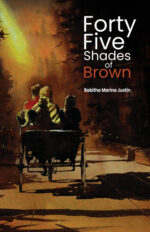
Forty Five Shades of Brown
$16About the Book
Babitha Marina Justin’s poems, woven around self, nature, and body, have an organic architecture, gothic or temple-like, with metaphors working like sculpted images or murals around a central experience. They are honest, at times confessional, often with memories from childhood and adolescence for their raw materials; but they do not shy away from natural calamities and existential crises. Babitha's poems are at once deeply Indian and instinctively feminine in their deployment of images and the organization of experiences.
– K SatchidanandanBabitha Marina Justin has a distinct voice that is passionately lyrical and personal to the point of abandon, and in these COVID times, poetry too has also taken a Corona-Shaped turn. Her world is not only herself, but her neighbourhood, and the larger country which she peppers with a persistent historical awareness, of the Muziris and the Jews. She celebrates their joys and mourns the murky, screaming out the lurking fury in her unique verses.
– Sivakami Velliangiri -
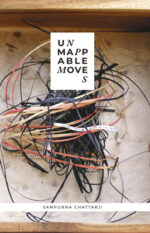
Unmappable Moves
$20About the Book
Reading Unmappable Moves, I had the strangest sensation of time expanding and closing in. These are taut, enigmatic poems—lightning flashes with bright, insistent heartbeats.—TISHANI DOSHILethal tales of sex and death that left me pining for more of Sampurna Chattarji’s mysterious lyric inventions.—JEET THAYIL -
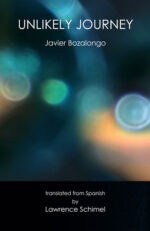
UNLIKELY JOURNEY
$12About the Book
As happens on all trips, in the pages of this book we find unforeseen questions and unexpected landscapes. These verses are transparent because they speak to us not about what is intuited or remembered but what is seen while trying to establish order, specify limits, and vanquish shadows.
-
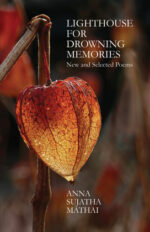
Lighthouse for drowning memories
$16About the Book
It’s in Delhi, dystopian as ever, that Sujatha Mathai continues to live and write today, and I fear her words—“I cannot save my city / Against the degradation of dust”—will echo long into the future, acquiring new meanings. And yet I’m so happy to read a new book of hers, to see that she’s still writing her poems sharp and clear as glass, full of sympathy for the world and those who suffer. It makes me feel that literature survives and helps us survive, that it carries more continuity than we think.
— Vivek Narayanan
Assistant Professor, Department of English, George Mason University -

Only the Forest Knows
$20About the Book
“Wings sense what they must”. And poets too. In her third poetry collection, Anindita Sengupta receives and transmits the hues of a planet mad with want, fear, breakdown. At the heart of a maelstrom of (in)humanity and conflagration, dispossession and disease, her poems bite and rage and mourn. From forage fish to polar bears, she is enmeshed and implicated. With her, we sense the natural world’s mysteries as apprehensible, but “not teachable”. In these poems, breath is the seam that will rip and tear; pain the only climate we can count on. As we embrace deception and vulnerability, we coil in and out of the quieter spaces we contain and are contained by. Hers is our hunger to understand, even hope, so that we might begin again to believe in “small miracles”, to persist, like the algae, “in a world without light.”
– Sampurna Chattarji
Anindita Sengupta asks: “How to speak of violence without /repeating it. What language? What tone? What / memory?” Throughout this coruscating collection, her fluid and inventive poiesis attempts to answer these questions, weaving contingent and deeply human meanings out of personal and collective trauma. Only the Forest Knows is a profoundly accomplished, intelligent work. Sengupta creates an urgent, sensual language that speaks out of the raw contradictions and anguish of the present. This is a poetry tempered by fire, loss and sorrow that
yet, as Rilke said, “nevertheless still praises”: a hard-won beauty that is its own hope.—Alison Croggon
-
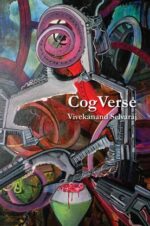
CogVerse
$20About the Book
Vivekanand Selvaraj’s debut book of poems, ‘Cog Verse’ has clever cogs that rotate and fit snugly into the amiable cog machine in succinct poetry. His prose poetry dealing with the internal life of a freshman and the business of medicine as a profession is unflinchingly incisive. Speaking of his ancestors and grandparents on both sides, nowhere does he forget his Tamil ethos and the book comes off as startlingly original.
— Sivakami Velliangiri
_____________________
Here, in these poems, the object-worlds of a pre-liberalized India rub shoulders with the pandemic present, incongruent, yet strangely essential. Here, failure is rebellion, and rebellion in itself, becomes an illusion. Yet, Selvaraj’s poems document a severe critique of the institutions we hold as pristine – the medical school, the hospital, the deep state. Oftentimes, this critique is that of an insider, who, in spite of the said critique, feels depleted, hopeless, leaving us – the readers – asking for more. And, it is often done through careful manipulation of the white spaces on a page, unconventional line-break and a playful engagement with the very idea of lyric subjectivity.
— Nandini Dhar
___________________
Vivekanand is a poet of spaces. He isn’t interested in the broader themes of things that happen every day. But he is still interested in the façade of equanimity, everyday cruelty, and mundanity. These poems are Vivekanand’s way of chronicling stories for posterity, but also because everyone else has simply forgotten to catalogue them. These aren’t poems you’ve read before. Vivekanand isn’t a poet you’ve met before. Unique in his writing and assured in his voice, Vivekanand’s CogVerse is a necessary addition to your poetry collection.
—- Manjiri Indurkar
-

Stray Poems
$20About the Book
Abhay K. strikes such a cheerful, sensual and sunny note in so many of his individual poems…with a pure, ringing sound and rhythm all of his own.
—Gabriel Rosenstock, Poet, Ireland
Abhay K. is a trusted guide to modern poetry, to the journey in which we are seeking truth, peace and justice…feel the spirit of God coursing through his lines.
—Indran Amirthanayagam, Poet, USA
About the Book
Stray Poems takes you on a poetic ride across the world, to the moon and planets in our Solar System and to the far reaches of the Universe and then back to our glorious Earth! Bon Voyage!
-
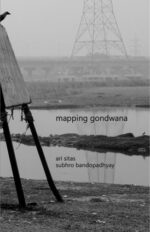
Mapping Gondwana
$16About the Book
I was moved by the ways in which, at key moments in the dialogue, rhythms shift, and instead of call-response between the poems, we go into each poet’s memory – a call-response between present and past. As they traversed back and forth between private parallel hum – after all, hum is “we” in Hindi – and direct synapse, I loved how freely they responded to both inner reverie and external stimuli. In some of Ari’s poems it felt like he was revisiting earlier trips to India – so that the duet was not restricted to what has just been received but what has always been residual – suggesting collaboration as a pretext – for return? Ari’s riverine contemplations counterpoint Subhro’s archetypal majhi (the boatman) made unmetaphorical. From Tagore’s golden boat to Subhro’s carbon kayak, what rapids have been crossed?
—Sampurna Chattarji
-

Vital Signs
$16About The Book
What happens when you pay attention to which foot leads – when you walk? Or when we really attend to the pleasures of eating, or of a changing sky? What if we realised that paradise is found all around us – Shangri La behind bus stops?
Amlanjyoti Goswami’s poetry is full of these Vital Signs, these details of wonder. Stringing words on a high wire, his is a rare ability to pause time, so we can look, really look, and live. Even the act of repairing a shoe can be meditative and philosophical in his hands. And within the glimpses of grand ideas there is a humility, a reminder that life is there to be felt, touched, lived, in the quietest of moments.
The laureate of ‘the idea of forever, inside an instant’, Amlan’s poetry carries within it, that most unfashionable of qualities – a sense of grace – but also the quiet wisdom that a life is a series of sensations that become memories. He shows us how the mythic can be ordinary, and how the ordinary becomes mythic. –Rishi Dastidar