| Author | |
|---|---|
| Imprint | |
| Language | |
| Edition | |
| Pages | 116 |
| Binding |
About the Book
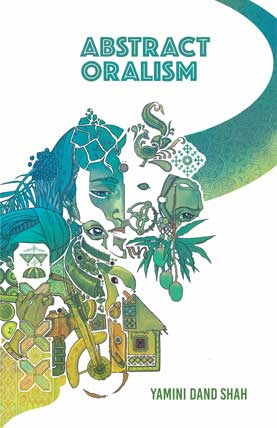
Yamini Dand Shah, with this new book Abstract Oralism, captures both precisely and remarkably the mysterious and elusive world of the Kachchh of Western Gujarat. Her metaphors and similes transport the reader towards this ancient terrain where Indus Valley peoples once flourished. Conceptually advanced and sophisticated, the poetry of this book causes us to reconsider our place in the world: in the light of the author’s extraordinary perception that translates earthly experience into a uniquely beautiful expression of the human condition.
-KEVIN MCGRATH, Poet Laureate, Harvard University
In the ‘Abstract Oralism’, Yamini reveals the beguiling mythic and mimetic history of the dangerously luminous, sensuous, and ephemeral beauty of the desert of Rann of Kachchh leaving us astonished and redeemed at once. ‘Sifting through soiled pages of an anti-modern, abridged dictionary’ of memories, she weaves embroidered tales of palaeolithic biographies of forgotten people in an experimental genre of speech-therapy with fierce emotional power. By turns poignant, playful and ironic, Yamini’s deceptively layered linguistic dreamscapes break new ground in experiencing hallucinatory minimalism in poetry. A mesmerizing debut!
-ASHWANI KUMAR, Poet, Writer and Public Policy Researcher
Related products
-
Mapping Gondwana
$16About the Book
I was moved by the ways in which, at key moments in the dialogue, rhythms shift, and instead of call-response between the poems, we go into each poet’s memory – a call-response between present and past. As they traversed back and forth between private parallel hum – after all, hum is “we” in Hindi – and direct synapse, I loved how freely they responded to both inner reverie and external stimuli. In some of Ari’s poems it felt like he was revisiting earlier trips to India – so that the duet was not restricted to what has just been received but what has always been residual – suggesting collaboration as a pretext – for return? Ari’s riverine contemplations counterpoint Subhro’s archetypal majhi (the boatman) made unmetaphorical. From Tagore’s golden boat to Subhro’s carbon kayak, what rapids have been crossed?
—Sampurna Chattarji
-
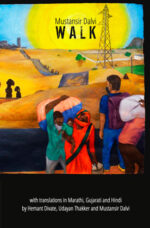
WALK
$20About the Book
This is a breath-taking experiment involving three poets, four languages, a pandemic and a million miles of migration. You will not find a bleeding heart here nor any cheap sentiment. Here is a watchful eye and a savage tongue. Here is a calligrapher’s pen and a bow to Ezra Pound. Mustansir Dalvi’s poetry has always meant something more to me than the best words in the best order. Here he shows us the order of things in a disordered world and we are humbled by this act of bravery and of empathy.
Jerry Pinto, poet and translator
Asylum, I want a poem and other poems
First published as an e-chapbook by Yavanika Press in that dreadful plague year, 2020, Mustansir Dalvi’s brilliant and memorable WALK is an act of homage to the suffering of those millions of Indians, already living precariously between village and metropolis, who were turned into migrants in their own land – forced to walk thousands of miles home, on what was effectively a death march, by a callous State and a society that improvises rather than systematising effective forms of compassion.
WALK now returns, under the Poetrywala imprint, as a surging polyphony. Dalvi is joined in this splendid quadriga of a book by Hemant Divate and Udayan Thakker, who have translated these poems into Marathi and Gujarati respectively; the author has rendered himself into a vibrant Hindi. This relay of versions is completed by Sudhir Patwardhan’s painterly testimony to the anguish of the Covid refugees caught up in a humanitarian catastrophe. A poet and translator, Dalvi infuses his writing with multilingual resonance and quicksilver diversity, shuttling among idioms and registers, in-group argot and makeshift patois. As befits the gravity and universal urgency of its subject, this book will reach readers in four languages simultaneously, saying to them, to us: Never forget!
Ranjit Hoskote, Poet, art critic and cultural theorist
-
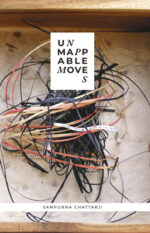
Unmappable Moves
$20About the Book
Reading Unmappable Moves, I had the strangest sensation of time expanding and closing in. These are taut, enigmatic poems—lightning flashes with bright, insistent heartbeats.—TISHANI DOSHILethal tales of sex and death that left me pining for more of Sampurna Chattarji’s mysterious lyric inventions.—JEET THAYIL -

Folie Á Deux
$18About the Book
Jennifer Robertson’s first book of poems, Folie à Deux, introduces us to an assured and sophisticated new voice in the world of Anglophone poetry in India. Robertson celebrates the sensuousness, the warm flesh of language. Her poems sharpen our awareness of things viscerally experienced, our memories of things held and cherished, our desire to secure forever the ephemeral yet compelling images of photography and cinema. In her handling, the resonance of the breath crafted into sound takes concrete occupancy of its environment, becomes a percussive force; she writes: “I wonder about sound invading space, wounding, astounding space and stories rising like a Phoenix.”
Here is a poet who captivates us, enchants us into spaces that “have two doors and no exit”.
– Ranjit Hoskote, author of Jonahwhale
Jennifer Robertson’s poems invite us to a world of “intimate strangeness” where poetry is “nuts and waywardness” and poets are “hoodlums” who leave behind “delinquencies” as their legacy. Although thickly silted with references to literature, painting and cinema, this is not a world of glibness or slick cultural sophistication. A throbbing vein of disquiet runs through Folie à Deux reminding us of relationships that could lean towards “darkness and magic”; lives lived in “intermission” with fragments spilling over “in the dark, under the seat”; and a self that yearns to drown into “a sunken civilisation”. This is a poetry of crafted surfaces and unexpected trenches, beeping microwaves and buried cities – allusive and “alluvial” all at once. Folie à Deux is a strong, self-assured début.
– Arundhathi Subramaniam, author of Wild Women
Lexically restless, geodesic, and unapologetically omnivorous, Jennifer Robertson’s Folie à Deux is a dialectic that considers the fulcra of observance and animacy, liberation and stagnancy, tranquility and obsession. Robertson’s poetry applies a painterly heat to our bodies, and readers to scratch at persona, and to map a self through the historical detritus of art and signs. What disturbs me most about this book is that, ravenously, Robertson “reinvents time travel”.
– Jhani Randhawa, author of Time Regime
-
-
-
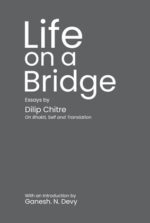
Life on a Bridge
$30About the Book
The essays and transcripts of Dilip Chitre brought together here are valuable in themselves as they offer a commentary on the Indian sense of tradition and the contemporary attitudes to literature. Every piece is of interest in itself. But, their greater worth lies in that they articulate the perspective of one of our most admirable poets on many issues that mattered to him. Taken together, they provide a basis for fathoming his poetry and should help us in making a more nuanced sense of it. Chitre was a fascinating poet, but it is not possible to say that his poetry was easily accessible to most of his readers. Like W. B. Yeats, he weaves in his poems experiences that arise in a given moment (such as the felling of a tree in his father’s house) together with many layers of timeless human quests and anxieties. He brings together silence and euphoria in an imagistic mix that is difficult to name with any precision. It is hence that this
volume of his comments, essays, lectures and other texts should be of importance for the lovers of Dilip Chitre’s literary works.– Ganesh N Devy
-
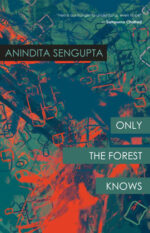
Only the Forest Knows
$20About the Book
“Wings sense what they must”. And poets too. In her third poetry collection, Anindita Sengupta receives and transmits the hues of a planet mad with want, fear, breakdown. At the heart of a maelstrom of (in)humanity and conflagration, dispossession and disease, her poems bite and rage and mourn. From forage fish to polar bears, she is enmeshed and implicated. With her, we sense the natural world’s mysteries as apprehensible, but “not teachable”. In these poems, breath is the seam that will rip and tear; pain the only climate we can count on. As we embrace deception and vulnerability, we coil in and out of the quieter spaces we contain and are contained by. Hers is our hunger to understand, even hope, so that we might begin again to believe in “small miracles”, to persist, like the algae, “in a world without light.”
– Sampurna Chattarji
Anindita Sengupta asks: “How to speak of violence without /repeating it. What language? What tone? What / memory?” Throughout this coruscating collection, her fluid and inventive poiesis attempts to answer these questions, weaving contingent and deeply human meanings out of personal and collective trauma. Only the Forest Knows is a profoundly accomplished, intelligent work. Sengupta creates an urgent, sensual language that speaks out of the raw contradictions and anguish of the present. This is a poetry tempered by fire, loss and sorrow that
yet, as Rilke said, “nevertheless still praises”: a hard-won beauty that is its own hope.—Alison Croggon