
About the Book
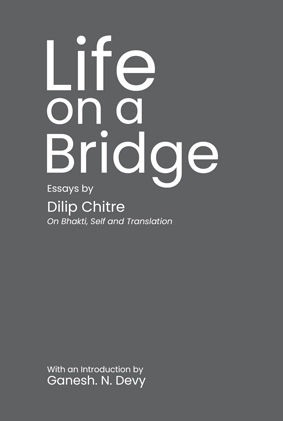
The essays and transcripts of Dilip Chitre brought together here are valuable in themselves as they offer a commentary on the Indian sense of tradition and the contemporary attitudes to literature. Every piece is of interest in itself. But, their greater worth lies in that they articulate the perspective of one of our most admirable poets on many issues that mattered to him. Taken together, they provide a basis for fathoming his poetry and should help us in making a more nuanced sense of it. Chitre was a fascinating poet, but it is not possible to say that his poetry was easily accessible to most of his readers. Like W. B. Yeats, he weaves in his poems experiences that arise in a given moment (such as the felling of a tree in his father’s house) together with many layers of timeless human quests and anxieties. He brings together silence and euphoria in an imagistic mix that is difficult to name with any precision. It is hence that this
volume of his comments, essays, lectures and other texts should be of importance for the lovers of Dilip Chitre’s literary works.
– Ganesh N Devy
Related products
-

Three Stories – Jibanananda Das
$10About the Book
Reading Jibanananda Das’s stories is like entering straight into the middle-class Bengali mind with its desire, ambition, morbidity and despair. Through the narratives around three men whose melancholy defines the structure of these three stories, the writer re-examines the concepts of success and failure, desire and fulfillment, love and weariness, ennui and death. While the insights are those of a poet, these stories marked by Jibanananda’s deep involvement with Bengali landscape, cuisine and culture, transcend his lyrical impulse to become proper, if technically innovative, short stories with the touch of a master of the genre. Chandak Chattarji’s English versions have been able to capture the provincial setting and style of the original narratives keeping intact their nuanced psychological implications and larger insights into the human condition.’ – K. Satchidanandan ‘It has been a privilege to discover Das the writer of fiction through Chandak Chattarji’s elegant and sensitive translation of three of the master’s short stories, ‘Chhaya Nat’ (‘Shadow Play’), ‘Gram o Shohorer Galpo’ (‘Tale of City and Village’), and ‘Bilash’ (which retains its original title here).’ – Ranjit Hoskote
-
-
Salt & Pepper
$20About the Book
Salt and Pepper, Sukrita’s selected poems, present an eloquent, word-induced
silence articulated with remarkable ease. In the centre of the
multisensory, reflective silence dwells memory that pesters and heals, and
shapes a deeper understanding of self and existence, taking one beyond the
mere unmasking of a past. What adds luminosity to Sukrita’s densely textured
poems is the layered and fluid exploration of life experience, without any sense
of closure or finality. — Shafey Kidwai—-
Words are not just words, there is a long journey of emotion, thought and
experience behind them with which Sukrita weaves the weft and the warp of her
poems in shades of Salt and Pepper.— Nirupama Dutt
Girija Sharma: Silence emerges in these poems as a powerful metaphor in the interplay of
images which are impressionistic, symbolic and existential all at once. All noise is cancelled
–what remain are words in the purest form building a symphony of silence.
—-
Madhavi Apte: Sukrita’s poems are on the one hand illusive and on the other potent like her
own modern, abstract paintings. Most poems combine the elements of a mystique, the erotic
and the emotional, personal and impersonal. The poems are grounded and yet ethereal.
Basudhara Roy : Many-layered, teasing in its apparent simplicity, and haunting in its
profundity…Animated by her painter’s consciousness, Sukrita’s images are terse, pictorial
and at the same time, both concrete and abstract.
The compression, precision, lightness and luminosity of these poems is undeniable. There is,
in them, a simplicity, intensity and finesse that characterizes classical Eastern forms like the
haiku and the tanka.—–
Shyista Khan: the poems reflect an unmediated subjectivity… The
poetic consciousness borders between self-effacement and self
assertion…. -
The Compass Bird
$15About the Book
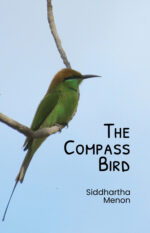
Observant and meditative, lit with gentle whimsy, Siddhartha Menon’s work on the animal world leads us from ornithology to ontology, detail to dazzling insight, in a wingbeat. Here is a book in which the reverie of snails, the ‘mynahness’ of mynahs, the unhurried gaze of nilgai, becomes a way to reflect on all the eternal questions—time, belonging, love, purpose, a world ‘stained with stillness’, in which ‘those who attend have the last word’. One of the most delightful new books of poetry I have read this year.
– Arundhathi Subramaniam
-

Nivdak AbhidhaNantar
$50About the Book
अभिधा सुरू असताना ग्लोबलायझेशझेनची प्रक्रिया सुरू झाली होती. आमच्या काही कविता आणि याच दरम्यान स्वतःला आलेलं जगण्याचं नवं भान, ग्लोबलायझेशझेनमुळेमुळे बदललेला भोवताल आणि या सर्वांमुळे उमजलेले लिहिण्याचंही नवीन भान ह्या ‘अभिधा’मधून आम्ही दिलेल्या किंवा आम्ही मिळविलेल्या काही गोष्टी.
१९९९ मध्ये अभिधा नंतर सुरू केलं तेव्हा ग्लोबलायझेशझेनचा परिणाम असलेले साहित्य आम्ही प्रसिद्ध करू असे धोरण होते आणि २०१४ साली अभिधानंतर बंद करेपर्यंत आम्ही ते लावून धरले. ग्लोबलायझेशनंतर जीवनाप्रमाणे साहित्यही बदलत होतं. हा बदल पकडण्याचा, डॉक्युमेण्ट करण्याचा, नवीन साहित्य लोकांपर्यंत पोहोचविण्याचा उद्देश होता. हा अवकाश ग्लोबलायझेशन’नंतर’चा आणि एका अर्थाने ‘अभिधा”नंतरचा’ अवकाश होता. या पुस्तकातून अभिधानंतरमध्ये प्रकाशित झालेल्या निवडक कविता, लेख, मुलाखती आणि संपादकीय देत आहोत. या सर्व लिखाणां मधून ग्लोबलायझेशन आणि डिजिटालायझेशनंतर निरंतर बदलत असलेली भाषा, संस्कृती,आणि जगणं अधोरेखित होतं. मराठीत सध्या लिहिणाऱ्या, वाचणाऱ्या, विचार करणाऱ्या, भाषेची आणि संस्कृतीची चिंता करणाऱ्या आणि भाषेसाठी झगडणाऱ्या लोकांसाठी हे पुस्तक खूप महत्त्वाचा दस्तऐवज ठरू शकेल याची खात्री आहे.
Feeling happy to see great documentation of our work in Marathi from the late nineteen nineties. Abhidhanantar was a major movement in Marathi that self-consciously highlighted the transformation of our society and culture due to the processes of the post-1989 phase of hyper globalisation that has created the world as we understand today. Our generation was at
the cusp of the dying old analogue world that the modernist and identitarian generation of the Cold War period we had inherited, and the emergent new world of digital natives we gave birth to. Our poetry, world view and thinking documents this shift and this was the periodical that provided the platform to express this discourse. It brought together and created not only new voices like Sanjeev Khandekar, Saleel Wagh, Shridhar Tilwe, Hemant Divate, Manya Joshi, Nitin Kulkarni, Mangesh Narayanrao Kale, Arun Kale, Varjesh Solanki and Nitin Rindhe among many
others but also created a new readership in Marathi.– Sachin Ketkar
-

Where Is the Mouth of That Word?
$16About the Book
I breathed. I looked up. I saw her standing in the line of fire, “simply standing/on the last line of
this page”, asking, as she looked me in the eye, “Where are you reading from?”And that, dear readers, who are about to encounter Maryam’s poems for the first time, is the
question.
You can Google her, you can hear her speak 1 , you can explore her intersecting engagements as an essayist, translator, and academic.
But first, you can find her here, as I did, in a selection of her poems – from early to later, from the spoken word to the “vocal infection of the page”, from rant to reflection, plea to command.
You could, in obeyance, “Turn the page, and leave!”
You could be sentenced
to an expired word:
(Silence)You could hear the tanin (echo) of Sepehri’s hich (nothingness) reverberating at the same frequency with which you see Dali’s ‘The Echo of the Void’ hovering in your line of vision.
You could, and you will.
For now, all that matters is knowing (asking!) where you read from.
And as for the title we eventually chose – where is the mouth of that word?
Wherever there is one – fearless enough to speak it.– Sampurna Chattarji
-
Unmappable Moves
$20About the Book
Reading Unmappable Moves, I had the strangest sensation of time expanding and closing in. These are taut, enigmatic poems—lightning flashes with bright, insistent heartbeats.—TISHANI DOSHILethal tales of sex and death that left me pining for more of Sampurna Chattarji’s mysterious lyric inventions.—JEET THAYIL