About the Book
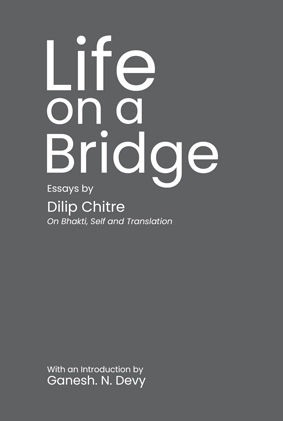
The essays and transcripts of Dilip Chitre brought together here are valuable in themselves as they offer a commentary on the Indian sense of tradition and the contemporary attitudes to literature. Every piece is of interest in itself. But, their greater worth lies in that they articulate the perspective of one of our most admirable poets on many issues that mattered to him. Taken together, they provide a basis for fathoming his poetry and should help us in making a more nuanced sense of it. Chitre was a fascinating poet, but it is not possible to say that his poetry was easily accessible to most of his readers. Like W. B. Yeats, he weaves in his poems experiences that arise in a given moment (such as the felling of a tree in his father’s house) together with many layers of timeless human quests and anxieties. He brings together silence and euphoria in an imagistic mix that is difficult to name with any precision. It is hence that this
volume of his comments, essays, lectures and other texts should be of importance for the lovers of Dilip Chitre’s literary works.
– Ganesh N Devy
Related products
-

Three Stories – Jibanananda Das
$10About the Book
Reading Jibanananda Das’s stories is like entering straight into the middle-class Bengali mind with its desire, ambition, morbidity and despair. Through the narratives around three men whose melancholy defines the structure of these three stories, the writer re-examines the concepts of success and failure, desire and fulfillment, love and weariness, ennui and death. While the insights are those of a poet, these stories marked by Jibanananda’s deep involvement with Bengali landscape, cuisine and culture, transcend his lyrical impulse to become proper, if technically innovative, short stories with the touch of a master of the genre. Chandak Chattarji’s English versions have been able to capture the provincial setting and style of the original narratives keeping intact their nuanced psychological implications and larger insights into the human condition.’ – K. Satchidanandan ‘It has been a privilege to discover Das the writer of fiction through Chandak Chattarji’s elegant and sensitive translation of three of the master’s short stories, ‘Chhaya Nat’ (‘Shadow Play’), ‘Gram o Shohorer Galpo’ (‘Tale of City and Village’), and ‘Bilash’ (which retains its original title here).’ – Ranjit Hoskote
-
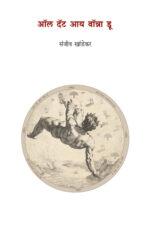
All That I Wanna Do (Marathi)
$16About the Book
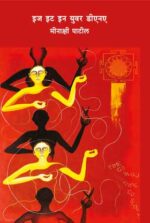
Dear Sanjeev,
I read your poem yesterday ( last evening). Globalisation, and the consequent private Americanisation, corporatisation, computers, mobiles, mall culture and the decline of humanity
in every aspect of life is your concern, and mine too. That you and I have felt that comes with this new kind of life, and the regret that we feel because we cannot deter this decline or escape from it, the sarcastic presentation of the never-ending story of our contemporary miseries appear in your in the poem one after another; and interestingly (your) style neither accepts any poetic form nor it is written in any poetic language, and just as you were exhausted while carving a new definition of poetry, I was exhausted while reading your poem – this is what precisely I want to tell you by writing this exhausting second sentence. What you have expressed in this poem is the philosophy of this new way of life. Of course, I think it's significant that while presenting this philosophy afresh, you haven’t pretended that you are a philosopher!
Yours
Hemant Divate
August 28, 2004 -
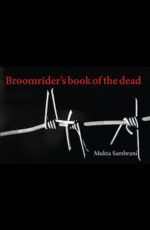
Broomrider’s book of the dead
$26About the Book
Mukta Sambrani’s The woman in this room isn’t lonely is a book of surprising intensity and imagination. Sambrani has a lyricism and fanciful imagination seldom seen in English-language poetry in recent decades. A poem about a man and woman in bed is anything but sentimental. Sambrani’s economy, independence of mind, hard-headedness and irony combine into a rapidly dramatic scene, which within twelve lines becomes grotesquely comic…By now there is a tradition in Indian poems of the coming of poetry as something mysterious. Sambrani’s version is totally unexpected. Bruce King, Modern Indian Poetry in English. Mukta Sambrani’s poems in Broomrider’s book of the dead are notable for their extreme strangeness. The book-length sequence is presented as the working manuscript of its fictional protagonist, Anna Albuquar, whose project is to ‘renegotiate the idea of authorship.’ There are asides, hesitations, false starts, instructions to the reader, and throughout, a steadfast regard for language. Jeet Thayil in Fulcrum and Bloodaxe book of contemporary Indian poets Broomrider’s Book of the Dead…is experimental in every sense… a crowded collage and an eloquent concoction that will make you look up all the references it states or implies…Sambrani said that her protagonist was obsessed with capturing memory “beyond constraints of time and place, beyond decay, illness and the failing of the body. She is obsessed with writing about writing. I am curious about the architecture of our experience. As we move toward a world that is hyper-digitised, our psyches become more and more of an orchestration of fragments of media, sights, sounds, words and visuals. Anna’s writing leans back to lean forward. It captures the history of writing through writing in a world that constructs itself out of fragments of media.Lora Tomas in The Sunday Guardian
-
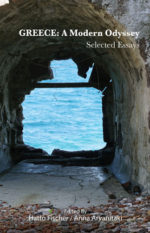
Greece, a modern Odyssey: selected essays
$24About the Book
This outstanding collection of personal essays, sharp analysis, unusual photographs, and poetic reflections focuses on Greece and its people as they found themselves in the eye of a storm that continues to shake Europe and the world. Ranging widely from economics and politics to social and environmental issues, and from cultural and diasporic interactions to literature and the arts, the essays and other materials have been put together in ways that attract, inform, and challenge the reader no matter where she or he may reside. Presenting a roster of distinguished contributors, the editors offer a variety of perspectives, points of information, and allusions, which substantially add to ongoing debates on how individuals and groups may proceed in challenging circumstances. Greece: A Modern Odyssey is being published by Mumbai-based Paperwall Media & Publishing, in memory of the late Hatto Fischer, the German poet and philosopher who lived in Greece and brought this volume together with his wife Anna Arvanitaki.