About the Book
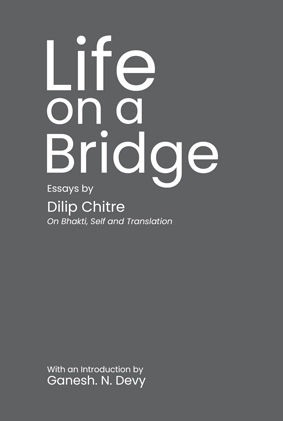
The essays and transcripts of Dilip Chitre brought together here are valuable in themselves as they offer a commentary on the Indian sense of tradition and the contemporary attitudes to literature. Every piece is of interest in itself. But, their greater worth lies in that they articulate the perspective of one of our most admirable poets on many issues that mattered to him. Taken together, they provide a basis for fathoming his poetry and should help us in making a more nuanced sense of it. Chitre was a fascinating poet, but it is not possible to say that his poetry was easily accessible to most of his readers. Like W. B. Yeats, he weaves in his poems experiences that arise in a given moment (such as the felling of a tree in his father’s house) together with many layers of timeless human quests and anxieties. He brings together silence and euphoria in an imagistic mix that is difficult to name with any precision. It is hence that this
volume of his comments, essays, lectures and other texts should be of importance for the lovers of Dilip Chitre’s literary works.
– Ganesh N Devy
Related products
-
Unmappable Moves
$20About the Book
Reading Unmappable Moves, I had the strangest sensation of time expanding and closing in. These are taut, enigmatic poems—lightning flashes with bright, insistent heartbeats.—TISHANI DOSHILethal tales of sex and death that left me pining for more of Sampurna Chattarji’s mysterious lyric inventions.—JEET THAYIL -

All that I Wanna Do (English)
$16About Book
Dear Sanjeev
I read your poem yesterday ( last evening). Globalisation, and the consequent private Americanisation, corporatisation, computers, mobiles, mall culture and the decline of humanity in every aspect of life is your concern, and mine too.
That you and I have felt that comes with this new kind of life, and the regret that we feel because we cannot deter this decline or escape from it, the sarcastic presentation of the never-ending story of our contemporary miseries appear in your in the poem one after another; and interestingly (your) style neither accepts any poetic form nor it is written in any poetic language, and just as you were exhausted while carving a new definition of poetry, I was exhausted while reading your poem – this is what precisely I want to tell you by writing this exhausting second sentence.
What you have expressed in this poem is the philosophy of this new way of life.
Of course, I think it’s significant that while presenting this philosophy afresh, you haven’t pretended that you are a philosopher!
Yours
Hemant Divate
August 28, 2004
-

Where Is the Mouth of That Word?
$16About the Book
I breathed. I looked up. I saw her standing in the line of fire, “simply standing/on the last line of
this page”, asking, as she looked me in the eye, “Where are you reading from?”And that, dear readers, who are about to encounter Maryam’s poems for the first time, is the
question.
You can Google her, you can hear her speak 1 , you can explore her intersecting engagements as an essayist, translator, and academic.
But first, you can find her here, as I did, in a selection of her poems – from early to later, from the spoken word to the “vocal infection of the page”, from rant to reflection, plea to command.
You could, in obeyance, “Turn the page, and leave!”
You could be sentenced
to an expired word:
(Silence)You could hear the tanin (echo) of Sepehri’s hich (nothingness) reverberating at the same frequency with which you see Dali’s ‘The Echo of the Void’ hovering in your line of vision.
You could, and you will.
For now, all that matters is knowing (asking!) where you read from.
And as for the title we eventually chose – where is the mouth of that word?
Wherever there is one – fearless enough to speak it.– Sampurna Chattarji
-

Variations on Silence
$16About the Book
Throughout Variations on Silence, Nadia Mifsud draws us into intimate scenes and gestures,
as if overhearing lovers mid-conversation. The central figure – almost mythic in scale – is
silence itself, which Mifsud imbues with weight, texture, physical presence. Silence shelters,
stirs, shakes, unwinds, “tastes / of red soil and conifer.” Miriam Calleja’s translation conveys
the ache and longing of that silence with a sensual clarity rare in English. A fabulous book.
– John Wall Barger, The Elephant of SilenceAs Dante said, love is what moves the sun and the other stars – but it is also what flows
through all things, binding them together. This is what breathes in the silences – namely, in
the poems – of Nadia Mifsud : a listening rooted in love, which through love transforms and
reintegrates lovers into the cosmos, restoring the world to something deeply connected to
our humanity. Calleja’s admirable translation – herself a poet – captures this dynamic with
striking clarity and preserves it as the central energy of the work. The encounter between
these two poets ultimately offers us a book of poetry, not merely a book of poems – I repeat:
a cohesive and coherent work, held together by a vision both profound and vast. Ovid’s
Metamorphoses, Rilke’s Duino Elegies… The poetry found in this book is capable of
traversing time and resisting it, of crossing space to bind us – irrevocably – to this cosmos,
and in that bond, to reveal the secret of life.– Pietro Federico, Most of the Stars
Every verb in Nadia Mifsud's work shimmers, echoes, and rappels down the cliffside of a
stanza. Valences expand through repetition; "waves like jaws" locate the oceanic motion. One physically hears and feels the island of Malta in the tension between the isolation,
refrain, and the sea returning to shore, empty-handed. Miriam Calleja's attentive translation brings these affects and "sea-scented places" into English without forsaking the resonances and echoes of "cockleshells" past. Variations on Silence touches the hem where displacement circles the idea of place and results in lyric. The mode is modern; the echoes are ancient; the book is irresistible.– Alina Stefanescu, My Heresies
-

Nivdak AbhidhaNantar
$50About the Book
अभिधा सुरू असताना ग्लोबलायझेशझेनची प्रक्रिया सुरू झाली होती. आमच्या काही कविता आणि याच दरम्यान स्वतःला आलेलं जगण्याचं नवं भान, ग्लोबलायझेशझेनमुळेमुळे बदललेला भोवताल आणि या सर्वांमुळे उमजलेले लिहिण्याचंही नवीन भान ह्या ‘अभिधा’मधून आम्ही दिलेल्या किंवा आम्ही मिळविलेल्या काही गोष्टी.
१९९९ मध्ये अभिधा नंतर सुरू केलं तेव्हा ग्लोबलायझेशझेनचा परिणाम असलेले साहित्य आम्ही प्रसिद्ध करू असे धोरण होते आणि २०१४ साली अभिधानंतर बंद करेपर्यंत आम्ही ते लावून धरले. ग्लोबलायझेशनंतर जीवनाप्रमाणे साहित्यही बदलत होतं. हा बदल पकडण्याचा, डॉक्युमेण्ट करण्याचा, नवीन साहित्य लोकांपर्यंत पोहोचविण्याचा उद्देश होता. हा अवकाश ग्लोबलायझेशन’नंतर’चा आणि एका अर्थाने ‘अभिधा”नंतरचा’ अवकाश होता. या पुस्तकातून अभिधानंतरमध्ये प्रकाशित झालेल्या निवडक कविता, लेख, मुलाखती आणि संपादकीय देत आहोत. या सर्व लिखाणां मधून ग्लोबलायझेशन आणि डिजिटालायझेशनंतर निरंतर बदलत असलेली भाषा, संस्कृती,आणि जगणं अधोरेखित होतं. मराठीत सध्या लिहिणाऱ्या, वाचणाऱ्या, विचार करणाऱ्या, भाषेची आणि संस्कृतीची चिंता करणाऱ्या आणि भाषेसाठी झगडणाऱ्या लोकांसाठी हे पुस्तक खूप महत्त्वाचा दस्तऐवज ठरू शकेल याची खात्री आहे.
Feeling happy to see great documentation of our work in Marathi from the late nineteen nineties. Abhidhanantar was a major movement in Marathi that self-consciously highlighted the transformation of our society and culture due to the processes of the post-1989 phase of hyper globalisation that has created the world as we understand today. Our generation was at
the cusp of the dying old analogue world that the modernist and identitarian generation of the Cold War period we had inherited, and the emergent new world of digital natives we gave birth to. Our poetry, world view and thinking documents this shift and this was the periodical that provided the platform to express this discourse. It brought together and created not only new voices like Sanjeev Khandekar, Saleel Wagh, Shridhar Tilwe, Hemant Divate, Manya Joshi, Nitin Kulkarni, Mangesh Narayanrao Kale, Arun Kale, Varjesh Solanki and Nitin Rindhe among many
others but also created a new readership in Marathi.– Sachin Ketkar