About the Book
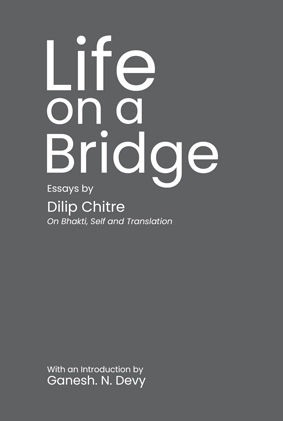
The essays and transcripts of Dilip Chitre brought together here are valuable in themselves as they offer a commentary on the Indian sense of tradition and the contemporary attitudes to literature. Every piece is of interest in itself. But, their greater worth lies in that they articulate the perspective of one of our most admirable poets on many issues that mattered to him. Taken together, they provide a basis for fathoming his poetry and should help us in making a more nuanced sense of it. Chitre was a fascinating poet, but it is not possible to say that his poetry was easily accessible to most of his readers. Like W. B. Yeats, he weaves in his poems experiences that arise in a given moment (such as the felling of a tree in his father’s house) together with many layers of timeless human quests and anxieties. He brings together silence and euphoria in an imagistic mix that is difficult to name with any precision. It is hence that this
volume of his comments, essays, lectures and other texts should be of importance for the lovers of Dilip Chitre’s literary works.
– Ganesh N Devy
Related products
-

Nivdak AbhidhaNantar
$50About the Book
अभिधा सुरू असताना ग्लोबलायझेशझेनची प्रक्रिया सुरू झाली होती. आमच्या काही कविता आणि याच दरम्यान स्वतःला आलेलं जगण्याचं नवं भान, ग्लोबलायझेशझेनमुळेमुळे बदललेला भोवताल आणि या सर्वांमुळे उमजलेले लिहिण्याचंही नवीन भान ह्या ‘अभिधा’मधून आम्ही दिलेल्या किंवा आम्ही मिळविलेल्या काही गोष्टी.
१९९९ मध्ये अभिधा नंतर सुरू केलं तेव्हा ग्लोबलायझेशझेनचा परिणाम असलेले साहित्य आम्ही प्रसिद्ध करू असे धोरण होते आणि २०१४ साली अभिधानंतर बंद करेपर्यंत आम्ही ते लावून धरले. ग्लोबलायझेशनंतर जीवनाप्रमाणे साहित्यही बदलत होतं. हा बदल पकडण्याचा, डॉक्युमेण्ट करण्याचा, नवीन साहित्य लोकांपर्यंत पोहोचविण्याचा उद्देश होता. हा अवकाश ग्लोबलायझेशन’नंतर’चा आणि एका अर्थाने ‘अभिधा”नंतरचा’ अवकाश होता. या पुस्तकातून अभिधानंतरमध्ये प्रकाशित झालेल्या निवडक कविता, लेख, मुलाखती आणि संपादकीय देत आहोत. या सर्व लिखाणां मधून ग्लोबलायझेशन आणि डिजिटालायझेशनंतर निरंतर बदलत असलेली भाषा, संस्कृती,आणि जगणं अधोरेखित होतं. मराठीत सध्या लिहिणाऱ्या, वाचणाऱ्या, विचार करणाऱ्या, भाषेची आणि संस्कृतीची चिंता करणाऱ्या आणि भाषेसाठी झगडणाऱ्या लोकांसाठी हे पुस्तक खूप महत्त्वाचा दस्तऐवज ठरू शकेल याची खात्री आहे.
Feeling happy to see great documentation of our work in Marathi from the late nineteen nineties. Abhidhanantar was a major movement in Marathi that self-consciously highlighted the transformation of our society and culture due to the processes of the post-1989 phase of hyper globalisation that has created the world as we understand today. Our generation was at
the cusp of the dying old analogue world that the modernist and identitarian generation of the Cold War period we had inherited, and the emergent new world of digital natives we gave birth to. Our poetry, world view and thinking documents this shift and this was the periodical that provided the platform to express this discourse. It brought together and created not only new voices like Sanjeev Khandekar, Saleel Wagh, Shridhar Tilwe, Hemant Divate, Manya Joshi, Nitin Kulkarni, Mangesh Narayanrao Kale, Arun Kale, Varjesh Solanki and Nitin Rindhe among many
others but also created a new readership in Marathi.– Sachin Ketkar
-

The Ruined Millionaire: New Selected Poems 2002–2022
$4About the Book
“Mazer, along with his northeastern companions Nikolayev and Kapovich – of the further norths and further easts – make jubilant singing verse as they step through the western wreckage. This must be remembered, say the only poets who’ll matter, so I must write in the ways of memory.” — Glyn Maxwell, from the Preface
“These poems are like trees that contain and protect and conceal themselves from themselves. Each wears a rough coat over the sap, the heart, the rainwater and scars. In so many ways the bark of a tree is a scroll with its messages written out of and into its experience. Mazer’s poems know they are beautiful the way the wooden rills on a tree are elegant, made of history, of romance and pride.” — Fanny Howe
“Ben Mazer is a true inheritor of John Ashbery’s legacy, specifically the Ashbery of Self-Portrait in a Convex Mirror. Like that classic of American poetry, The Ruined Millionaire ironically also suits the contemporary European scene. In translation, Mazer’s new selected poems could just as easily fit on a shelf of the best contemporary Polish or French poetry. Anglophone readers are lucky to have them available to us first.” — John Hennessy
“When Shakespeare meets Ben Mazer at the Mermaid Tavern he will hand Ben this book. ‘Shakespherian’ the Bard will say. ‘And more.’ Another poet at the end of the bar will nod and remark ‘There are No Dry Salvages there.’ Then Will will read ‘Monsieur Barbary Brecht’ to all and they will all be surprised by joy. You will be too when you read these poems: matchless, immortal, and, like all great poetry, unexplainable.” — Joe Green
“‘Start with the rain’: there is a great deal of rain in Ben Mazer’s poetry, often in darkness and whipped by wind. One might speak of a poetic of the torrential, given the irresistible forward sweep of his poems as they move through overlapping territories of memory and history and dream. He advances through the damp corridors of a foundered world, in which the debris (and the vocabulary and the contentions) of centuries has piled up, and the voices of poets and movie actors and a multitude of others re-echo like displaced wraiths. There are constant surprises—cascades of rhyme and apparitions from a history become ghostly, like ‘Caligari, tortured in oblong angles, / beer garden, mental institute, who mangles / memory’—but no matter how allusive or wildly improvisational, no matter how extraordinarily profuse in their range of reference, the lines are never digressive. The past woven into their ‘deep syntax / of auditory visuality’ is a living past: they exist in an urgent present, whether ‘driving thus into the heart of pain’ or momentarily perceiving Fred Astaire and Ginger Rogers, in the last reel of Top Hat, ‘looming and large as any of the designs of God.’ Whatever elements become part of this poetry are distilled with sustained intensity into one substance, a music appropriate to ‘that hour / when memory settles / on the evening / darkness its liquid / history of masks.'” — Geoffrey O’Brien“‘In a soup you never know / what you’ll run into next. All the ingredients repeat, / but you encounter some of them for the first time.’ This is the savory gumbo out of which Ben Mazer has made his poems. At times maddeningly elliptical, at times this ‘ellipticality’ is what moves or tickles or interests you most. The editor of Delmore Schwartz, Hart Crane, and John Crowe Ransom (among others) is himself a poet very much worth savoring.” — Lloyd Schwartz, Pulitzer Prize-winning critic and author of Who’s on First? New and Selected Poems.
“What we can’t think to say, what we don’t know how to say, whether of experience cosmic or minute, he says. The white picket fence that is always intense, the little house between the two big ones, what a movie is. His comparisons are wildly accurate but they aren’t really comparisons at all. They come from similar and related as easily as far away and disparate places or thoughts, which is remarkable for its multidimensionality of seeing. His metaphors are never arbitrary or half convincing, but come from the unconscious. And the sounds fit the sense—there are lines to rival Yeats. And he can sustain a long poem without lagging. Only one who feels every nuance, who suffers intense emotions could write such great poems.” — Ruth Lepson
“The year’s most essential book of poetry.” — Michael Londra in SpoKe
-

Midnight Verbs
$18About the Book
“What used to be borders is now you,” writes Marko Pogačar in this beautiful, inimitable
collection of poems, giving us a world of post-war Yugoslavia where “TV shows start with
familiar scenes.” What is the poet to do in this world? The poet demands the “green skull of
an apple.” It is a world where eggs chirp, newspapers rustle, and the dead are near. What is it,
this syntax of seeing one's country with full honesty, without any lyric filters? How does it
become so dazzlingly lyrical, nevertheless? “I dislike walking on a person's left side,” the
poet admits. “I shove the night into an evil e-mail / and send it to the entire nation.” And
behind him we see the world, “beautiful, like a burning guillotine.” It is blessed, this
strangeness of abandon, after all is lost. And yet, not all is lost. What is happening here? Real
poetry is happening. Lyric fire. I know it when instead of writing a comment on the book, I
just want to keep quoting. For poetry is a mystery that is communicated before it is
understood. Marko Pogačar is the real thing, and I am especially grateful to Andrea Jurjević
for these crisp, beautiful translations.
—Ilya Kaminsky
History is a constant and defining character in poetry where the most memorable lines
brilliantly combine dark, dry humor with a direct treatment of the physical. There we
discover a mad desire for laughter. For reckoning with rules. With borders. With God. Marko
Pogačar is a poet of expressive power and specificity. Almost every poem is intense and
scandalous, dejected and intelligent, or a poetic whirlwind of all of the above that’s not to be
messed with.
—Claudiu Komartin
Pogačar's poetry is original, layered, equivocal, and rich in references. Like Brodsky, Pogačar
turns to history, but his associations are more reminiscent of John Ashbery and the delightful
strangeness of Tomaž Šalamun.
—Martín López-VegaMarko Pogačar crafts rich, lush poems in a more consistent and refreshing manner than other
poets. His poetry is filled with images that are tough to visualize. His use of language is
rarely referential; it's more in the service of creating linguistic realities, those that exist only in words. Pogačar seems to be constantly testing the ability of language to create worlds.
— Irena Matijašević -
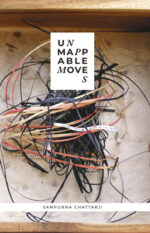
Unmappable Moves
$20About the Book
Reading Unmappable Moves, I had the strangest sensation of time expanding and closing in. These are taut, enigmatic poems—lightning flashes with bright, insistent heartbeats.—TISHANI DOSHILethal tales of sex and death that left me pining for more of Sampurna Chattarji’s mysterious lyric inventions.—JEET THAYIL -
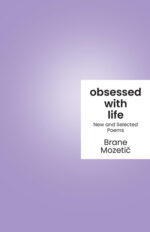
Obsessed with Life
$10About the Book
“Mozetič’s verse conjures a distinctly gay way of looking at the world. It is both placid and paranoid, opening the world into paper-thin layers of sex, loneness and non-disingenuous self-reflection. His lyric has a remarkable flow, his language is persuasively simple, and his tone is forthright, all of which give the shattered heart at the core of this book a strange magnetic force.”
– Akhil Katyal, poet, translator, scholar and queer activist
-
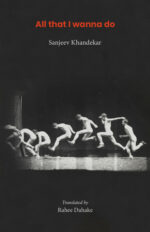
All that I Wanna Do (English)
$16About Book
Dear Sanjeev
I read your poem yesterday ( last evening). Globalisation, and the consequent private Americanisation, corporatisation, computers, mobiles, mall culture and the decline of humanity in every aspect of life is your concern, and mine too.
That you and I have felt that comes with this new kind of life, and the regret that we feel because we cannot deter this decline or escape from it, the sarcastic presentation of the never-ending story of our contemporary miseries appear in your in the poem one after another; and interestingly (your) style neither accepts any poetic form nor it is written in any poetic language, and just as you were exhausted while carving a new definition of poetry, I was exhausted while reading your poem – this is what precisely I want to tell you by writing this exhausting second sentence.
What you have expressed in this poem is the philosophy of this new way of life.
Of course, I think it’s significant that while presenting this philosophy afresh, you haven’t pretended that you are a philosopher!
Yours
Hemant Divate
August 28, 2004
-
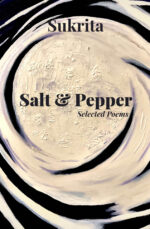
Salt & Pepper
$20About the Book
Salt and Pepper, Sukrita’s selected poems, present an eloquent, word-induced
silence articulated with remarkable ease. In the centre of the
multisensory, reflective silence dwells memory that pesters and heals, and
shapes a deeper understanding of self and existence, taking one beyond the
mere unmasking of a past. What adds luminosity to Sukrita’s densely textured
poems is the layered and fluid exploration of life experience, without any sense
of closure or finality. — Shafey Kidwai—-
Words are not just words, there is a long journey of emotion, thought and
experience behind them with which Sukrita weaves the weft and the warp of her
poems in shades of Salt and Pepper.— Nirupama Dutt
Girija Sharma: Silence emerges in these poems as a powerful metaphor in the interplay of
images which are impressionistic, symbolic and existential all at once. All noise is cancelled
–what remain are words in the purest form building a symphony of silence.
—-
Madhavi Apte: Sukrita’s poems are on the one hand illusive and on the other potent like her
own modern, abstract paintings. Most poems combine the elements of a mystique, the erotic
and the emotional, personal and impersonal. The poems are grounded and yet ethereal.
Basudhara Roy : Many-layered, teasing in its apparent simplicity, and haunting in its
profundity…Animated by her painter’s consciousness, Sukrita’s images are terse, pictorial
and at the same time, both concrete and abstract.
The compression, precision, lightness and luminosity of these poems is undeniable. There is,
in them, a simplicity, intensity and finesse that characterizes classical Eastern forms like the
haiku and the tanka.—–
Shyista Khan: the poems reflect an unmediated subjectivity… The
poetic consciousness borders between self-effacement and self
assertion….