
| Author | |
|---|---|
| Translated by | |
| Edited by | |
| Imprint | |
| Publication Year | 2018 |
| Language | Bengali, English |
| Edition | 1st |
| Binding | Paperback |
| Pages | 90 |

Aerial Roots
$12
Out of stock
Related products
-
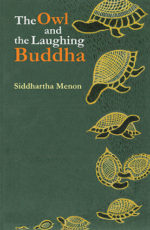
The Owl and the Laughing Buddha
$12About the Book
The poems in The Owl and the Laughing Buddha bring a ‘lighthouse sweep of attentiveness’ to their subjects. This is a book about noting, from the title poem’s companionable but contrasting figures on a writing desk to the devastating aftermath of a cloudburst in the mountains, and from a flier’s eye-view to a walker’s – and a mole’s. Here are poems interested in gods and figures of myth, and in observing houses, trees, birds and other creatures in a changing neighbourhood; poems that talk shop with fellow poets and respond to works of art and culture; and poems that watch our responses to the daily catastrophes that sometimes constitute ‘news’ – whose interest is no less a matter of whimsy, perhaps, than some of the tales narrated in the final section of the book. Yet the poems rest on an implicit conviction that everything must be given its due and treated seriously – though not solemnly, for it is mirth, after all, that is the laughing Buddha’s centre of gravity. Treading margins between the real and the imagined, the concerned and the tongue-in-cheek, this is Menon’s third collection of poems.
-

Light, the Temptation
$10About the Book
In Zingonia’s new poems it is a similar exercise that is happening. Instead of justifying the ways of God to men, these poems seem to me to be the ways of men and women to God. This daring act of a moment of surrender to the pristine unity of every thing cements the diverse poems here into one epic of mutations and metamorphoses. In this world the persona an Algerian beggar can merge into one of Jesus. Atoms and stars partake of the same reality as a flower. The fractured fates of Shen Fu, Maurice Utrillo and Max Jacob, which are acts of recurrent human tragedy become settings of Divine Comedy. Though the thrust of Zingonia’s poems is indubitably mystical, their mysticism goes beyond orthodoxies and heterodoxies of what is generally considered mystical. Their laconic beauty has the palpability of something militantly this- worldly as if Eternity is indissolubly in love with creations of time. At this point my words want to go back to the eloquent silence of these poems. I am sure other readers of this remarkable work will find these poems as enchanting and enlightening as I did. ‘Light, the Temptation’ is not a work to be read and abandoned. It invites us to contemplate on the rich resonances of its deceptively simple expressions in order to return the world to the world, ourselves to ourselves, meanings to our world where faceless robots are marching blindly towards irredeemable emptiness. – H S Shivaprakash (an excerpt from his introductory note)
-
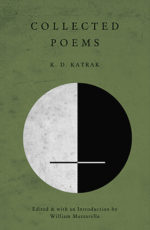
Collected Poems
$20About the Book
Adman, householder, mystic, public intellectual and ashram devotee, Kersy Katrak (1936-2007) has never quite received his due as a poet. Katrak’s ‘lush, provocative, and very readable’verse has, with its rare but persistent appearance in anthologies of Indian poetry in English, remained in a curious way at once unforgotten and unrecognized. This book aims, at long last,to remedy this state of affairs. It is the very first comprehensive collection of Katrak’s poetic work, most of it long out of print,some of it previously published only in hard-to-find periodicals. Katrak’s poetry resonates powerfully with Wallace Steven’s observation that ‘It is equal to living in a tragic land, To live in a tragic time’. His concerns remain,palpably,our concerns: a search for the everyday alchemy that might translate the visceral potentials of collective life into generative forms of belonging. This problem of the relation between inner energies and outer forms is at the core of Katrak’s work as a poet and a mystic. And it is what binds his esoteric commitments to his career in advertising. The anthropologist William Mazzarella’s critical introduction to the present volume is the first substantive exploration of these connections in Katrak’s life and work.
-
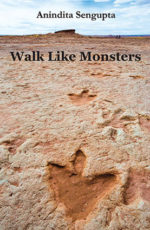
Walk Like Monsters
$12About the Book
These are late night poems of the body that sing also of catastrophe, how wide it is, how easy, like ‘being in one place instead of another.’ Anindita Sengupta’s new book is hot, harrowing and masterful. It will stay with me for a long time. ~ Jeet Thayil Anindita Sengupta is a poet of the precise line, the measured image, of mediated passion, the sure ending. Her observation is acute, her politics seldom theatrical and her passage from one world to another and from the object to the spirit smooth and subtle. Her poetry proves that silk can wound and knife can flower. ~ K. Satchidanandan “They rise in this landscape, the ancients – old loves, myths, cities, secret revolutions. Anindita Sengupta’s language is forever old and forever new. Fretful, explosive, terrifying. Her poetry will leave you with beautiful scars.” ~ Janice Pariat
-
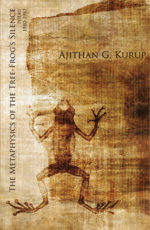
The Metaphysics of the Tree-Frog’s Silence
$12About the Book
It is our loss that we did not know Ajithan Kurup’s work when he was alive, and we did not celebrate his brave and lonely project: to render the unsayable into language. He cannot be imitated or replaced, only admired.- Jeet Thayil
To enter Ajithan G. Kurup’s poetic world is to risk, in the words of his title poem, dancing “headlong down precipices.” It’s rare to find a contemporary poet who dares near-unattainable heights and fearful depths on dancing words – words that may sometimes seem far-fetched or invented but which, in fact, are inspired variants or archaic forms of those more usually used: “sempstress” instead of “seamstress”, “enow” instead of “enough”, “trode” instead of “trod”.-ADIL JUSSAWALLA
-
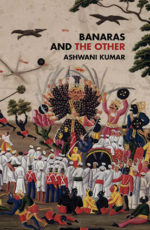
Banaras And The Other
$14About the Book
Ashwani Kumar’s poems in ‘Banaras and The Other” are a mischievous irreverence turned at times to the present and at times to the past. The personal and the political, memories and nostalgia, mythical characters and contemporary parodies mix and mingle in these poems in diverse proportions to produce a rare poetic energy that belongs entirely to our times of pain and paradox. –K. Satchidanandan
Ashwani Kumar’s Banaras and the Other captivates us as a delightful romp through myth, folklore and history. Read past the revelry, however, and you will see that it engages passionately and provocatively with the fissured, schismatic scenarios of 21st century India.–Ranjit Hoskote
-

Zingonia Zingonechya Kavita
$10About the Book
b.1967 is an internationally well-known Marathi poet, editor, publisher and translator. His published works include Chautishiparyantchya Kavita Poems Till Thirty-Four, Thambtach Yet Nahi Just Cant Stop and Ya Roommadhye Aale Ki Life Suru Hote The Moment You Enter This Room, Life Begins. His poems have been translated into English, French, Spanish, German, Urdu, Arabic, Gujarati, Bengali, Hindi, Oriya, Tamil, Telugu, Kannada and Malayalam. The celebrated poet and translator Dilip Chitre translated Chautishiparyantchya Kavita into English and titled the book Virus Alert which then has been translated into Spanish-Alarma De Virus by Zingonia Zingone and in Irish as Folireamh Vris by Gabriel Rosenstock.
-

Grab your heart & follow me
$3About the Book
“In my wonderland, there are only beginnings, ‘there is no end’. Plunge into this book of?poems by Claus Ankersen where cat-gods rule, babies are born with stargates for eyes, kisses are catalogued and the 12th pen writes of celebratory sins. Expand the eternity of now. Be nomad, tiger, ‘soulhuntress.’ Head-dive into the mysteries of the world. Dance