| Author | |
|---|---|
| Imprint | |
| Language | |
| Edition | |
| Publication Year | 2012 |
| Binding | |
| Pages | 82 |

$12
Out of stock
About the Book
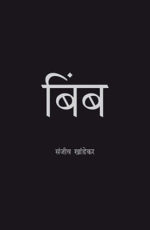
At the Seminar The door creaks like the wail of some small animal. I am terrified: the present speaker like the ones before him will make me aware of how little I know. Both of us open our mouths at the same time, he to read his paper, I to yawn.
Related products
-

Frazil
$16About the Book
Menka Shivdasani’s poetry is both original and strikingly unusual, not just her tangential way of putting things across, but also how thought process and imagination run away with the poem, and make it exciting. An experience is translated into another experience and then gets mixed with fancy in a juice blender. Chopping lettuce, she’ll be assailed by visions—burning bride, politician, a ‘wounded Hiroshima’, and finally a finger-chopping Nazi. A poem about separation will end with her handling ‘alien porcelain’ at a tea party. For over three decades the excitement she brings to her fine poetry has never deserted her.
-

Walk Like Monsters
$12About the Book
These are late night poems of the body that sing also of catastrophe, how wide it is, how easy, like ‘being in one place instead of another.’ Anindita Sengupta’s new book is hot, harrowing and masterful. It will stay with me for a long time. ~ Jeet Thayil Anindita Sengupta is a poet of the precise line, the measured image, of mediated passion, the sure ending. Her observation is acute, her politics seldom theatrical and her passage from one world to another and from the object to the spirit smooth and subtle. Her poetry proves that silk can wound and knife can flower. ~ K. Satchidanandan “They rise in this landscape, the ancients – old loves, myths, cities, secret revolutions. Anindita Sengupta’s language is forever old and forever new. Fretful, explosive, terrifying. Her poetry will leave you with beautiful scars.” ~ Janice Pariat
-

Grab your heart & follow me
$3About the Book
“In my wonderland, there are only beginnings, ‘there is no end’. Plunge into this book of?poems by Claus Ankersen where cat-gods rule, babies are born with stargates for eyes, kisses are catalogued and the 12th pen writes of celebratory sins. Expand the eternity of now. Be nomad, tiger, ‘soulhuntress.’ Head-dive into the mysteries of the world. Dance
-
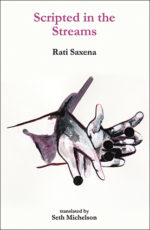
Scripted in the Streams
$12About the Books
There is an intense humanity in these poems by Rati Saxena, a humanity that ennobles all of us who are humble enough to listen. There is an empathy is these poems for all living things – for the spider, for the ant, for the owl – and a similar understanding of all things that may not be alive. -Alan Titley, Professor Emeritus of Modern Irish, University College, Cork It has travelled a long, long way this voice?and we welcome it as we would do a stranger, into the West where despair, decline and decay are seemingly permanent lodgers, Saxena’s lyrics arrive like a fresh breeze. New-born, fresh and smelling of the earth, her poems draw on the well of Indo-European tradition, the intimate links that bind the female psyche and the landscape in all its fecundity. -Dr Michel h’Aodha, University of Limerick Saxena allows for different aeons to melt into each other. She creates a world in which humans interact with insects and animals. We are all of and from the same source. The image of the snake is a powerful one to explain the frustrations of modern women in today’s India. Her vision makes a mockery of the boundaries around our lives and we sail with her through a magical world, coming into contact with the source of life itself. There are echoes of Flann O’ Brien in the delightful poem about the bicycle of her youth. Taboos and rituals will not enslave her and poetry finds its way into the washing on the line and the fire that bakes our daily bread. – Ceaiti Ni Bheildiuin, poet In this selection of the poems of Rati Saxena we are drawn into a world of imagery where deep respect is shown for the low -Brian O Conchubhair, University of Notre Dame, USA
-
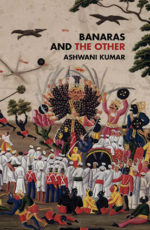
Banaras And The Other
$14About the Book
Ashwani Kumar’s poems in ‘Banaras and The Other” are a mischievous irreverence turned at times to the present and at times to the past. The personal and the political, memories and nostalgia, mythical characters and contemporary parodies mix and mingle in these poems in diverse proportions to produce a rare poetic energy that belongs entirely to our times of pain and paradox. –K. Satchidanandan
Ashwani Kumar’s Banaras and the Other captivates us as a delightful romp through myth, folklore and history. Read past the revelry, however, and you will see that it engages passionately and provocatively with the fissured, schismatic scenarios of 21st century India.–Ranjit Hoskote