
| Author | |
|---|---|
| Imprint | |
| Language | |
| Edition | |
| Publishing Year | |
| Pages | 124 |
| Binding |
Related products
-
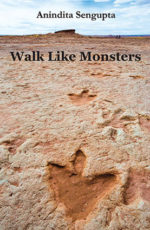
Walk Like Monsters
$12About the Book
These are late night poems of the body that sing also of catastrophe, how wide it is, how easy, like ‘being in one place instead of another.’ Anindita Sengupta’s new book is hot, harrowing and masterful. It will stay with me for a long time. ~ Jeet Thayil Anindita Sengupta is a poet of the precise line, the measured image, of mediated passion, the sure ending. Her observation is acute, her politics seldom theatrical and her passage from one world to another and from the object to the spirit smooth and subtle. Her poetry proves that silk can wound and knife can flower. ~ K. Satchidanandan “They rise in this landscape, the ancients – old loves, myths, cities, secret revolutions. Anindita Sengupta’s language is forever old and forever new. Fretful, explosive, terrifying. Her poetry will leave you with beautiful scars.” ~ Janice Pariat
-
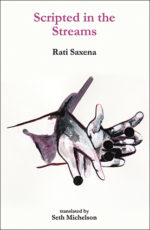
Scripted in the Streams
$12About the Books
There is an intense humanity in these poems by Rati Saxena, a humanity that ennobles all of us who are humble enough to listen. There is an empathy is these poems for all living things – for the spider, for the ant, for the owl – and a similar understanding of all things that may not be alive. -Alan Titley, Professor Emeritus of Modern Irish, University College, Cork It has travelled a long, long way this voice?and we welcome it as we would do a stranger, into the West where despair, decline and decay are seemingly permanent lodgers, Saxena’s lyrics arrive like a fresh breeze. New-born, fresh and smelling of the earth, her poems draw on the well of Indo-European tradition, the intimate links that bind the female psyche and the landscape in all its fecundity. -Dr Michel h’Aodha, University of Limerick Saxena allows for different aeons to melt into each other. She creates a world in which humans interact with insects and animals. We are all of and from the same source. The image of the snake is a powerful one to explain the frustrations of modern women in today’s India. Her vision makes a mockery of the boundaries around our lives and we sail with her through a magical world, coming into contact with the source of life itself. There are echoes of Flann O’ Brien in the delightful poem about the bicycle of her youth. Taboos and rituals will not enslave her and poetry finds its way into the washing on the line and the fire that bakes our daily bread. – Ceaiti Ni Bheildiuin, poet In this selection of the poems of Rati Saxena we are drawn into a world of imagery where deep respect is shown for the low -Brian O Conchubhair, University of Notre Dame, USA
-
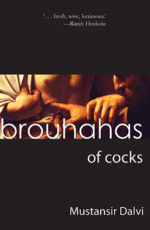
Brouhahas Of Cocks
$15About the Book
Hardback awakening The air is thick, and has revived my books, anticipating the first spell of a Bombay monsoon. Ambient moisture has slaked pages that shuffle and twist, arise to a wakefulness, unleaving. Feeling the discomfort of nearness,
-
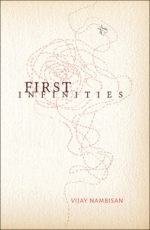
First Infinities
$12About the Book
Hell, or a state very much like it, does feature in Nambisan’s poetic underworld, which is deep, intricate and enticing. …… – From the Preface by Adil Jussawala Nambisan’s view of humankind is bleak, his view of the possibilities of poetry even bleak
-
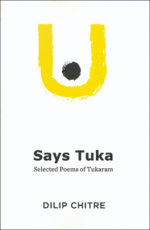
Says Tuka-Selected poems of Tukaram
$30About the Book
Tukaram was born in 1608 and vanished without a trace in 1650. what little we know of his life is a reconstruction from his own autobiographical poems, the contemporary poetess Bahinabai’s memoirs in verse, and the later biographer of Marathi poet-saints, Mahipati’s account. The rest is all folklore, though it cannot be dismissed on those grounds alone. Modern scholars such as the late V. S. Bendre have made arduous efforts to collate evidence from disparate contemporary sources to establish a well-researched biography of Tukaram. But even this is largely conjectural.
Tukaram is therefore not only the last great Bhakti poet in Marathi but he is also the first truly modern Marathi poet in terms of temper and thematic choice, technique and vision. He is certainly the most vital link between medieval and modern Marathi poetry. Tukaram’s stature in Marathi literature is comparable to that of Shakespeare in English or Goethe in German. He could be called the quintessential Marathi poet reflecting the genius of the language as well as its characteristic literary culture. There is no other Marathi writer who has so deeply and widely influenced Marathi literary culture since. Tukaram’s poetry has shaped the Marathi language, as it is spoken by 70 million people today and not just the literary language. Perhaps one should compare his influence with that of the King James version of the Bible upon speakers of the English language. For Tukaram’s poetry is also used by illiterate millions to voice their prayers or to express their love of God.