
| Author | |
|---|---|
| Translated by | |
| Imprint | |
| Language | |
| Pages | 48 |
| Binding | |
| Edition | |
| Publishing Year |
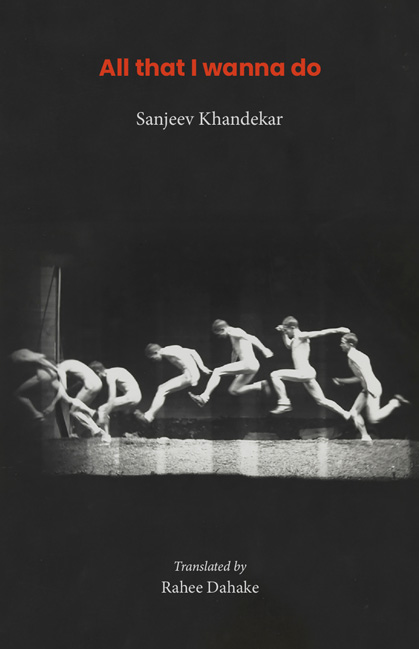
All that I Wanna Do (English)
$16
About Book
Dear Sanjeev
I read your poem yesterday ( last evening). Globalisation, and the consequent private Americanisation, corporatisation, computers, mobiles, mall culture and the decline of humanity in every aspect of life is your concern, and mine too.
That you and I have felt that comes with this new kind of life, and the regret that we feel because we cannot deter this decline or escape from it, the sarcastic presentation of the never-ending story of our contemporary miseries appear in your in the poem one after another; and interestingly (your) style neither accepts any poetic form nor it is written in any poetic language, and just as you were exhausted while carving a new definition of poetry, I was exhausted while reading your poem – this is what precisely I want to tell you by writing this exhausting second sentence.
What you have expressed in this poem is the philosophy of this new way of life.
Of course, I think it’s significant that while presenting this philosophy afresh, you haven’t pretended that you are a philosopher!
Yours
Hemant Divate
August 28, 2004
Related products
-

Frazil
$16About the Book
Menka Shivdasani’s poetry is both original and strikingly unusual, not just her tangential way of putting things across, but also how thought process and imagination run away with the poem, and make it exciting. An experience is translated into another experience and then gets mixed with fancy in a juice blender. Chopping lettuce, she’ll be assailed by visions—burning bride, politician, a ‘wounded Hiroshima’, and finally a finger-chopping Nazi. A poem about separation will end with her handling ‘alien porcelain’ at a tea party. For over three decades the excitement she brings to her fine poetry has never deserted her.
-
Banaras And The Other
$14About the Book
Ashwani Kumar’s poems in ‘Banaras and The Other” are a mischievous irreverence turned at times to the present and at times to the past. The personal and the political, memories and nostalgia, mythical characters and contemporary parodies mix and mingle in these poems in diverse proportions to produce a rare poetic energy that belongs entirely to our times of pain and paradox. –K. Satchidanandan
Ashwani Kumar’s Banaras and the Other captivates us as a delightful romp through myth, folklore and history. Read past the revelry, however, and you will see that it engages passionately and provocatively with the fissured, schismatic scenarios of 21st century India.–Ranjit Hoskote
-
The Owl and the Laughing Buddha
$12About the Book
The poems in The Owl and the Laughing Buddha bring a ‘lighthouse sweep of attentiveness’ to their subjects. This is a book about noting, from the title poem’s companionable but contrasting figures on a writing desk to the devastating aftermath of a cloudburst in the mountains, and from a flier’s eye-view to a walker’s – and a mole’s. Here are poems interested in gods and figures of myth, and in observing houses, trees, birds and other creatures in a changing neighbourhood; poems that talk shop with fellow poets and respond to works of art and culture; and poems that watch our responses to the daily catastrophes that sometimes constitute ‘news’ – whose interest is no less a matter of whimsy, perhaps, than some of the tales narrated in the final section of the book. Yet the poems rest on an implicit conviction that everything must be given its due and treated seriously – though not solemnly, for it is mirth, after all, that is the laughing Buddha’s centre of gravity. Treading margins between the real and the imagined, the concerned and the tongue-in-cheek, this is Menon’s third collection of poems.
-

Zingonia Zingonechya Kavita
$10About the Book
b.1967 is an internationally well-known Marathi poet, editor, publisher and translator. His published works include Chautishiparyantchya Kavita Poems Till Thirty-Four, Thambtach Yet Nahi Just Cant Stop and Ya Roommadhye Aale Ki Life Suru Hote The Moment You Enter This Room, Life Begins. His poems have been translated into English, French, Spanish, German, Urdu, Arabic, Gujarati, Bengali, Hindi, Oriya, Tamil, Telugu, Kannada and Malayalam. The celebrated poet and translator Dilip Chitre translated Chautishiparyantchya Kavita into English and titled the book Virus Alert which then has been translated into Spanish-Alarma De Virus by Zingonia Zingone and in Irish as Folireamh Vris by Gabriel Rosenstock.
-

Grab your heart & follow me
$3About the Book
“In my wonderland, there are only beginnings, ‘there is no end’. Plunge into this book of?poems by Claus Ankersen where cat-gods rule, babies are born with stargates for eyes, kisses are catalogued and the 12th pen writes of celebratory sins. Expand the eternity of now. Be nomad, tiger, ‘soulhuntress.’ Head-dive into the mysteries of the world. Dance
-
Scripted in the Streams
$12About the Books
There is an intense humanity in these poems by Rati Saxena, a humanity that ennobles all of us who are humble enough to listen. There is an empathy is these poems for all living things – for the spider, for the ant, for the owl – and a similar understanding of all things that may not be alive. -Alan Titley, Professor Emeritus of Modern Irish, University College, Cork It has travelled a long, long way this voice?and we welcome it as we would do a stranger, into the West where despair, decline and decay are seemingly permanent lodgers, Saxena’s lyrics arrive like a fresh breeze. New-born, fresh and smelling of the earth, her poems draw on the well of Indo-European tradition, the intimate links that bind the female psyche and the landscape in all its fecundity. -Dr Michel h’Aodha, University of Limerick Saxena allows for different aeons to melt into each other. She creates a world in which humans interact with insects and animals. We are all of and from the same source. The image of the snake is a powerful one to explain the frustrations of modern women in today’s India. Her vision makes a mockery of the boundaries around our lives and we sail with her through a magical world, coming into contact with the source of life itself. There are echoes of Flann O’ Brien in the delightful poem about the bicycle of her youth. Taboos and rituals will not enslave her and poetry finds its way into the washing on the line and the fire that bakes our daily bread. – Ceaiti Ni Bheildiuin, poet In this selection of the poems of Rati Saxena we are drawn into a world of imagery where deep respect is shown for the low -Brian O Conchubhair, University of Notre Dame, USA
-
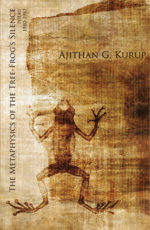
The Metaphysics of the Tree-Frog’s Silence
$12About the Book
It is our loss that we did not know Ajithan Kurup’s work when he was alive, and we did not celebrate his brave and lonely project: to render the unsayable into language. He cannot be imitated or replaced, only admired.- Jeet Thayil
To enter Ajithan G. Kurup’s poetic world is to risk, in the words of his title poem, dancing “headlong down precipices.” It’s rare to find a contemporary poet who dares near-unattainable heights and fearful depths on dancing words – words that may sometimes seem far-fetched or invented but which, in fact, are inspired variants or archaic forms of those more usually used: “sempstress” instead of “seamstress”, “enow” instead of “enough”, “trode” instead of “trod”.-ADIL JUSSAWALLA
-
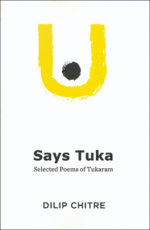
Says Tuka-Selected poems of Tukaram
$30About the Book
Tukaram was born in 1608 and vanished without a trace in 1650. what little we know of his life is a reconstruction from his own autobiographical poems, the contemporary poetess Bahinabai’s memoirs in verse, and the later biographer of Marathi poet-saints, Mahipati’s account. The rest is all folklore, though it cannot be dismissed on those grounds alone. Modern scholars such as the late V. S. Bendre have made arduous efforts to collate evidence from disparate contemporary sources to establish a well-researched biography of Tukaram. But even this is largely conjectural.
Tukaram is therefore not only the last great Bhakti poet in Marathi but he is also the first truly modern Marathi poet in terms of temper and thematic choice, technique and vision. He is certainly the most vital link between medieval and modern Marathi poetry. Tukaram’s stature in Marathi literature is comparable to that of Shakespeare in English or Goethe in German. He could be called the quintessential Marathi poet reflecting the genius of the language as well as its characteristic literary culture. There is no other Marathi writer who has so deeply and widely influenced Marathi literary culture since. Tukaram’s poetry has shaped the Marathi language, as it is spoken by 70 million people today and not just the literary language. Perhaps one should compare his influence with that of the King James version of the Bible upon speakers of the English language. For Tukaram’s poetry is also used by illiterate millions to voice their prayers or to express their love of God.