About the Book
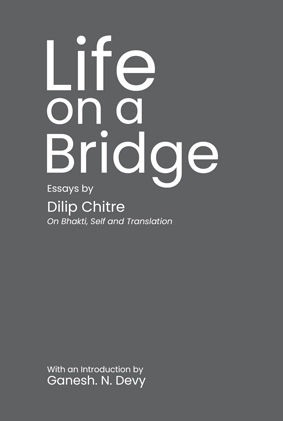
The essays and transcripts of Dilip Chitre brought together here are valuable in themselves as they offer a commentary on the Indian sense of tradition and the contemporary attitudes to literature. Every piece is of interest in itself. But, their greater worth lies in that they articulate the perspective of one of our most admirable poets on many issues that mattered to him. Taken together, they provide a basis for fathoming his poetry and should help us in making a more nuanced sense of it. Chitre was a fascinating poet, but it is not possible to say that his poetry was easily accessible to most of his readers. Like W. B. Yeats, he weaves in his poems experiences that arise in a given moment (such as the felling of a tree in his father’s house) together with many layers of timeless human quests and anxieties. He brings together silence and euphoria in an imagistic mix that is difficult to name with any precision. It is hence that this
volume of his comments, essays, lectures and other texts should be of importance for the lovers of Dilip Chitre’s literary works.
– Ganesh N Devy
Related products
-
Obsessed with Life
$10About the Book
“Mozetič’s verse conjures a distinctly gay way of looking at the world. It is both placid and paranoid, opening the world into paper-thin layers of sex, loneness and non-disingenuous self-reflection. His lyric has a remarkable flow, his language is persuasively simple, and his tone is forthright, all of which give the shattered heart at the core of this book a strange magnetic force.”
– Akhil Katyal, poet, translator, scholar and queer activist
-
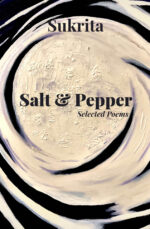
Salt & Pepper
$20About the Book
Salt and Pepper, Sukrita’s selected poems, present an eloquent, word-induced
silence articulated with remarkable ease. In the centre of the
multisensory, reflective silence dwells memory that pesters and heals, and
shapes a deeper understanding of self and existence, taking one beyond the
mere unmasking of a past. What adds luminosity to Sukrita’s densely textured
poems is the layered and fluid exploration of life experience, without any sense
of closure or finality. — Shafey Kidwai—-
Words are not just words, there is a long journey of emotion, thought and
experience behind them with which Sukrita weaves the weft and the warp of her
poems in shades of Salt and Pepper.— Nirupama Dutt
Girija Sharma: Silence emerges in these poems as a powerful metaphor in the interplay of
images which are impressionistic, symbolic and existential all at once. All noise is cancelled
–what remain are words in the purest form building a symphony of silence.
—-
Madhavi Apte: Sukrita’s poems are on the one hand illusive and on the other potent like her
own modern, abstract paintings. Most poems combine the elements of a mystique, the erotic
and the emotional, personal and impersonal. The poems are grounded and yet ethereal.
Basudhara Roy : Many-layered, teasing in its apparent simplicity, and haunting in its
profundity…Animated by her painter’s consciousness, Sukrita’s images are terse, pictorial
and at the same time, both concrete and abstract.
The compression, precision, lightness and luminosity of these poems is undeniable. There is,
in them, a simplicity, intensity and finesse that characterizes classical Eastern forms like the
haiku and the tanka.—–
Shyista Khan: the poems reflect an unmediated subjectivity… The
poetic consciousness borders between self-effacement and self
assertion…. -
The Magic Hand of Chance
$24ABOUT THE BOOK
Covering a range of subjects, mainly to do with poetry, its daily interventions, its work, this book adds to the selections of Adil Jussawalla’s prose that have appeared before: in Maps for a Mortal Moon, and in I Dreamt a Horse Fell from the Sky. In his chapter on Jussawalla in a forthcoming book, Vidyan Ravinthiran says ‘[His} time-shifts don’t feel erratic because his prose only becomes inexact when to do so seems the only option – when it comes to resisting subliminal pressures. Every sentence is saturated with thought, changes are rung on prior phrases, in a manner inspired by real-world vexations but not without an element of self-relishing play.’
Poetrywala is happy to offer you more such prose.
‘To observe, to give witness, to hold in the memory the bereaved cow, the boy who has come to deliver the groceries, the poet in transit, the little boy who wet his pants laughing and who wept because a bird died, all these pass under the Jussawalla scanner, all these are transformed by the act of writing. Jussawalla’s fight against the Indian predilection for amnesia is relentless. He will not let you forget.’ – Jerry Pinto, from his Introduction in Maps for a Mortal Moon
‘Jussawalla’s curiosity is patently omnivorous and extends far into many disciplines and knowledges, drawing not least on Parsi, Hindu and Christian sources, science and social science, local politics or birdwatching. A continual subtheme throughout is the memory of Britain and Europe in the post-war years… considered not from an outsider’s point of view but with the deepest sympathy.’
– Vivek Narayanan, from his Introduction in I Dreamt a Horse Fell from the Sky
-
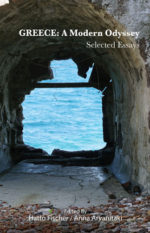
Greece, a modern Odyssey: selected essays
$24About the Book
This outstanding collection of personal essays, sharp analysis, unusual photographs, and poetic reflections focuses on Greece and its people as they found themselves in the eye of a storm that continues to shake Europe and the world. Ranging widely from economics and politics to social and environmental issues, and from cultural and diasporic interactions to literature and the arts, the essays and other materials have been put together in ways that attract, inform, and challenge the reader no matter where she or he may reside. Presenting a roster of distinguished contributors, the editors offer a variety of perspectives, points of information, and allusions, which substantially add to ongoing debates on how individuals and groups may proceed in challenging circumstances. Greece: A Modern Odyssey is being published by Mumbai-based Paperwall Media & Publishing, in memory of the late Hatto Fischer, the German poet and philosopher who lived in Greece and brought this volume together with his wife Anna Arvanitaki.
-

Nivdak AbhidhaNantar
$50About the Book
अभिधा सुरू असताना ग्लोबलायझेशझेनची प्रक्रिया सुरू झाली होती. आमच्या काही कविता आणि याच दरम्यान स्वतःला आलेलं जगण्याचं नवं भान, ग्लोबलायझेशझेनमुळेमुळे बदललेला भोवताल आणि या सर्वांमुळे उमजलेले लिहिण्याचंही नवीन भान ह्या ‘अभिधा’मधून आम्ही दिलेल्या किंवा आम्ही मिळविलेल्या काही गोष्टी.
१९९९ मध्ये अभिधा नंतर सुरू केलं तेव्हा ग्लोबलायझेशझेनचा परिणाम असलेले साहित्य आम्ही प्रसिद्ध करू असे धोरण होते आणि २०१४ साली अभिधानंतर बंद करेपर्यंत आम्ही ते लावून धरले. ग्लोबलायझेशनंतर जीवनाप्रमाणे साहित्यही बदलत होतं. हा बदल पकडण्याचा, डॉक्युमेण्ट करण्याचा, नवीन साहित्य लोकांपर्यंत पोहोचविण्याचा उद्देश होता. हा अवकाश ग्लोबलायझेशन’नंतर’चा आणि एका अर्थाने ‘अभिधा”नंतरचा’ अवकाश होता. या पुस्तकातून अभिधानंतरमध्ये प्रकाशित झालेल्या निवडक कविता, लेख, मुलाखती आणि संपादकीय देत आहोत. या सर्व लिखाणां मधून ग्लोबलायझेशन आणि डिजिटालायझेशनंतर निरंतर बदलत असलेली भाषा, संस्कृती,आणि जगणं अधोरेखित होतं. मराठीत सध्या लिहिणाऱ्या, वाचणाऱ्या, विचार करणाऱ्या, भाषेची आणि संस्कृतीची चिंता करणाऱ्या आणि भाषेसाठी झगडणाऱ्या लोकांसाठी हे पुस्तक खूप महत्त्वाचा दस्तऐवज ठरू शकेल याची खात्री आहे.
Feeling happy to see great documentation of our work in Marathi from the late nineteen nineties. Abhidhanantar was a major movement in Marathi that self-consciously highlighted the transformation of our society and culture due to the processes of the post-1989 phase of hyper globalisation that has created the world as we understand today. Our generation was at
the cusp of the dying old analogue world that the modernist and identitarian generation of the Cold War period we had inherited, and the emergent new world of digital natives we gave birth to. Our poetry, world view and thinking documents this shift and this was the periodical that provided the platform to express this discourse. It brought together and created not only new voices like Sanjeev Khandekar, Saleel Wagh, Shridhar Tilwe, Hemant Divate, Manya Joshi, Nitin Kulkarni, Mangesh Narayanrao Kale, Arun Kale, Varjesh Solanki and Nitin Rindhe among many
others but also created a new readership in Marathi.– Sachin Ketkar